
Best Drop-Out Fuse: Essential Guide for Safe Power Distribution
2026-07-30
Ensuring reliable power distribution starts with choosing the right protection devices, and a drop-out fuse plays a critical role in safeguarding electrical networks. In this essential guide, we explore what makes the best drop-out fuse, how it enhances safety, and why quality matters. Along the way, you’ll discover how Lugao delivers dependable solutions that meet modern grid demands. Whether you’re upgrading existing infrastructure or designing a new system, this article will help you make informed decisions with confidence.
Why Your Power System Depends on the Right Drop-Out Fuse
A drop-out fuse isn’t just another component on the pole — it’s the silent guardian that steps in when things go wrong. When a fault current surges through the line, the fuse element melts and the holder drops open, creating a visible break that instantly isolates the trouble spot. That visual cue alone saves line crews hours of hunting, but the real value runs deeper: a properly selected fuse prevents momentary glitches from turning into cascading outages, keeping your transformers and downstream equipment from taking a beating they don’t have to.
Get the rating or characteristics wrong, though, and you’re inviting nuisance blows on startup inrush or, worse, a fuse that hesitates when it should act fast. High-voltage distribution throws unique curveballs — coordination with upstream reclosers, fault levels that shift with the seasons, mechanical stress from ice and wind. A fuse that’s too eager opens on harmless transients; one that’s too sluggish lets fault current linger, heating conductors and aging insulation well before the breaker upstream even notices. That’s why experienced engineers treat fuse selection as a precise matching exercise, not a grab from the warehouse bin.
Beyond the technical specs, the right drop-out fuse pays off in operational durability. Cheaply made fuse tubes absorb moisture, swell, and refuse to drop cleanly after years in the weather; quality ones shed water and keep their mechanical integrity. The difference becomes painfully clear during storm restoration, when every stuck holder means more time in the bucket and longer minutes ticking by with customers in the dark. In that sense, the humble dropout fuse is a tiny investment in uptime — and getting it right keeps the lights on without drama.
Selecting a Drop-Out Fuse That Handles Your Load Without Fail
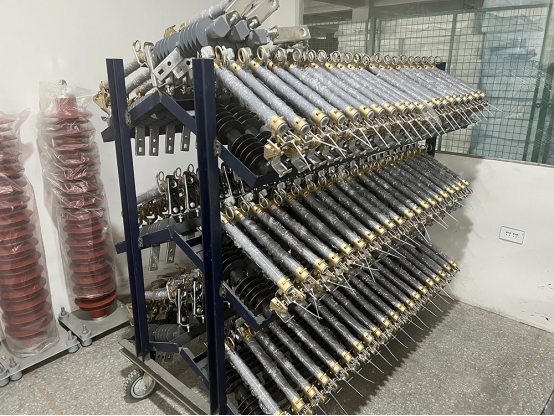
Picking the right dropout fuse starts with a clear picture of your load profile—both normal running current and the momentary inrush spikes that happen when motors or transformers kick in. A fuse rated too close to steady-state load can nuisance-blow during routine starts, while one sized far above leaves the circuit under-protected. Factor in ambient temperature, too, because heat around the fuse body changes its melting curve. Field experience shows that a margin of about 15–20% above the maximum continuous current, adjusted for hot-weather derating, often keeps things quiet without sacrificing safety.
Beyond the numbers, think about the real-world conditions your fuse will live in. Coastal salt spray, dust from agricultural operations, or vibration from nearby heavy machinery can degrade a fuse link or the hinge contacts over time. That’s when premium materials—like silver-plated contacts and a rugged porcelain or polymer housing—pay off. Double-check the fuse holder’s mechanical alignment: a slightly crooked mount can create hot spots at the contact point, leading to premature failure even if the amp rating was right on paper.
Finally, match the fuse’s time-current characteristics to your upstream coordination and the type of downstream equipment you’re protecting. For transformer circuits, a dual-element or time-delay link handles the magnetizing inrush gracefully. For short, heavily loaded laterals, a fast-clearing link might be needed to limit damage during faults. It’s not just about picking a rating—it’s about how the fuse behaves at 0.1 seconds, 1 second, and 10 seconds. A well-chosen dropout fuse can run for years without a blink, so a little extra time spent on coordination curves now can save a lot of midnight callouts later.
The Hidden Risks of Ignoring Fuse Coordination
When fuses are selected without considering coordination, minor faults can cascade into major outages. A small overcurrent on a branch circuit should only blow the local fuse, but mismatched ratings or slow response times often cause upstream fuses to open unnecessarily. This chain reaction shuts down entire sections of a facility that should have remained powered, turning a quick fix into hours of costly downtime.
Beyond nuisance tripping, coordination failures wear down equipment before a fault event even occurs. Fuses that routinely carry currents near their melting point degrade faster, eventually opening under normal load conditions. The thermal stress on cables and connections goes unnoticed until insulation breaks down or a terminal burns up, leaving you with a repair bill that dwarfs the cost of proper protection design.
Safety gets compromised in ways that lurk beneath the surface. If a fuse doesn't clear quickly enough, arc flash energy skyrockets, putting anyone near the panel at risk. Personnel follow lockout procedures trusting the circuit is dead, but a blown fuse upstream can leave a parallel feed energized—a trap that only reveals itself when someone tests for voltage. These hidden hazards persist because no one checks coordination after the initial installation, assuming the system will behave as intended years later.
Installation Steps That Even Seasoned Electricians Overlook
Many electricians breeze through the basics without giving a second thought to the orientation of wire nuts. Twisting them on feels second nature, but if the connector isn't seated perfectly straight, vibrations over time can loosen the bond just enough to cause arcing or intermittent faults. It's a small detail that rarely gets flagged during an inspection, yet it's behind a surprising number of callbacks for flickering lights or dead outlets.
Another step that often goes unchecked is verifying the torque on breaker and neutral bar connections straight out of the box. Even brand-new panels sometimes have screws that are only finger-tight, and assuming the factory set them correctly is a gamble. A quick pass with a calibrated torque screwdriver not only meets code but also prevents hot spots that slowly degrade the conductor insulation long before the problem becomes obvious.
Finally, consider the phase balancing on multi-wire branch circuits during a panel upgrade. It's tempting to land the new circuits wherever they fit neatly, but neglecting to distribute the loads evenly across both legs can lead to neutral overloading and nuisance tripping down the road. Taking an extra ten minutes with a clamp meter to map out the existing loads can save hours of troubleshooting later.
How to Spot a Fuse That’s About to Fail
Physical signs are usually the first giveaway. Take a close look at the fuse window if it has one. A blown fuse often shows a broken filament or a dark, cloudy appearance. You might also notice discoloration of the glass or plastic body—brownish marks or blackening suggest overheating. Give it a sniff, too; a burnt smell near the fuse box can indicate internal damage before the fuse fails completely.
Behavioral cues are just as telling. If you notice an electrical component acting erratically—say, a radio that cuts out intermittently or a dome light that flickers—it could mean the corresponding fuse is on its way out. Pay attention to circuits that fail, then mysteriously start working again. This intermittent operation often points to a weak connection inside the fuse that hasn’t fully melted through yet. Also, if a device draws more current than normal before it stops working, the fuse might be partially compromised.
Multimeter testing removes the guesswork. Set your meter to continuity or resistance mode, remove the suspected fuse from its slot, and probe both terminals. A good fuse should have near-zero resistance. If you get a high or fluctuating reading, the element is degraded. For a loaded test, check for voltage drop across the fuse while the circuit is live—excessive drop signals internal resistance building up. Even if the fuse hasn’t popped, these measurements can warn you of a hot spot that will eventually fail.
Upgrading Your Grid: When Drop-Out Fuses Are the Smart Choice
Modern utility networks face constant pressure to balance reliability and cost. When it’s time to upgrade aging infrastructure, drop-out fuses often emerge as a quietly strategic component. Unlike complex circuit breakers or reclosers, these devices offer a straightforward, visual disconnect that simplifies fault isolation. Their mechanical simplicity translates directly into faster restoration times and fewer hours spent troubleshooting, making them especially valuable in rural or hard-to-reach sections of the grid where every minute of downtime hits harder.
The real advantage becomes clear during routine maintenance and seasonal load shifts. A crew can quickly tell from a distance whether a fuse has operated, eliminating guesswork that can eat up precious field hours. This visibility, combined with the ability to coordinate protection schemes without sophisticated communication gear, makes drop-out fuses a practical choice for utilities that need to do more with less. They integrate seamlessly with older overhead lines, acting as a bridge between legacy equipment and future smart-grid investments without forcing an all-at-once overhaul.
What’s often overlooked is their role in wildfire mitigation and safety. In dry, high-risk areas, a fuse that physically drops open creates an unmistakable air gap, reducing the chance of restrikes that can ignite vegetation. This passive safety feature, paired with their low cost per unit, means utilities can affordably harden miles of line against both electrical faults and environmental hazards. Upgrading with drop-out fuses isn’t about chasing the latest technology trend—it’s about making a deliberate, field-proven decision that strengthens the grid where it matters most.
FAQ
A drop-out fuse is a protective device that disconnects a circuit when excessive current flows. It has a fusible element inside a carrier that melts during a fault. Once the element melts, the carrier drops open by gravity, creating a visible gap to isolate the faulty section.
Transformers are costly and vulnerable to overloads and short circuits. Drop-out fuses clear faults quickly, protect the transformer from damage, and the visible dropout makes it easy for line crews to spot the problem location at a glance.
Match the voltage and current ratings to your system, check the interrupting capacity for fault levels, and choose a design that withstands local weather—look for robust insulators, corrosion-resistant contacts, and a reliable dropout mechanism.
Yes, they combine time-delay characteristics for temporary overloads and fast clearing for high-magnitude faults. The fuse link is engineered to carry normal loads but melt quickly when current exceeds a preset threshold, covering both scenarios.
No. After a trip, the fuse link is destroyed. You must replace the fuse holder with a new link before re-closing. This ensures the fault is cleared first—reclosing on a persistent fault could cause damage or hazards.
The visible open gap guarantees isolation, so crews can lock out and tag the line without doubt. That physical break is a clear ‘off’ state, preventing accidental energization and giving a safe working condition.
A circuit breaker can be reset remotely and handles frequent operations, but it’s more complex and expensive. Drop-out fuses are simpler, cheaper, and give a visual break—ideal for protecting transformers and laterals where resetting isn’t needed remotely.
Use fuse holders with silver-plated contacts to resist corrosion, apply dielectric grease on moving parts, and occasionally exercise the dropout mechanism. Also, keep wildlife guards intact to prevent accidental trips caused by animals.
Conclusion
A reliable power distribution network hinges on components that rarely steal the spotlight, and the drop-out fuse is a prime example. It’s not just a sacrificial link; it’s a critical defense mechanism that isolates faults before they cascade into widespread outages. Getting it right means matching the fuse’s characteristics precisely to your system’s load and fault current levels, ensuring it blows only when it should—and not during harmless surges. This is where coordination becomes non-negotiable: a poorly coordinated fuse can allow downstream faults to trigger upstream protection, darkening far more customers than necessary. Seasoned electricians know that even subtle installation mistakes, like improper alignment or insufficient contact pressure, can cause premature wear or erratic operation. And while these units are designed to operate in harsh environments, early failure signs—discoloration, hairline cracks, or sagging fuse elements—are often missed until a disruptive trip occurs.
Beyond reactive replacement, strategic upgrades to modern drop-out fuses can transform grid resilience. They bring enhanced arc quenching, higher interrupting ratings, and easier visual status checks, slashing maintenance time and outage duration. For aging installations, swapping outdated models for designs with solid-silver fuse links or composite insulators isn’t just a performance boost; it’s a safety imperative. Load growth often pushes legacy fuses beyond their intended range, turning them into weak links that compromise both equipment and personnel. The smartest decision you can make is treating these devices as active participants in system protection rather than passive breakers. By staying attentive to their condition, respecting coordination studies, and insisting on meticulous installation, you secure a quieter, safer, and more resilient power supply for the long haul.
Contact Us
Contact Person: Doreen
Email: [email protected]
Tel/WhatsApp: 8618057712366
Website: https://www.liugaopower.com/