
Best TECO Frequency Converter Solutions for Industrial Motor Control
2026-06-30
When it comes to optimizing industrial motor control, TECO frequency converters are a top choice for reliability and efficiency. But finding the right solution and support can be a challenge. That’s where Soochee steps in, offering tailored TECO drive solutions with expert guidance. Whether you’re upgrading an existing system or starting fresh, discover how the right frequency converter can transform your operations.
Core Advantages of TECO Inverters in Motor Management
TECO inverters stand out through their adaptive torque control, which automatically fine-tunes motor output based on real-time load conditions. This not only smooths out operation across variable speeds but also curtails mechanical stress on belts and bearings, effectively prolonging equipment life without manual intervention.
Built with an emphasis on energy intelligence, these drives go beyond simple speed regulation. They actively monitor power consumption patterns and adjust the magnetizing current to match the actual workload. In partial-load scenarios, the inverter reduces unnecessary energy draw, often cutting electricity usage by 20-40% compared to fixed-speed starters.
Reliability in demanding environments is another hallmark. TECO designs incorporate conformally coated boards and reactive power compensation that mitigates harmonic distortion. This means fewer nuisance trips, cooler motor running temperatures, and consistent performance even when line voltages fluctuate or dust and humidity are present.
Tailored Speed Regulation for Diverse Industrial Loads
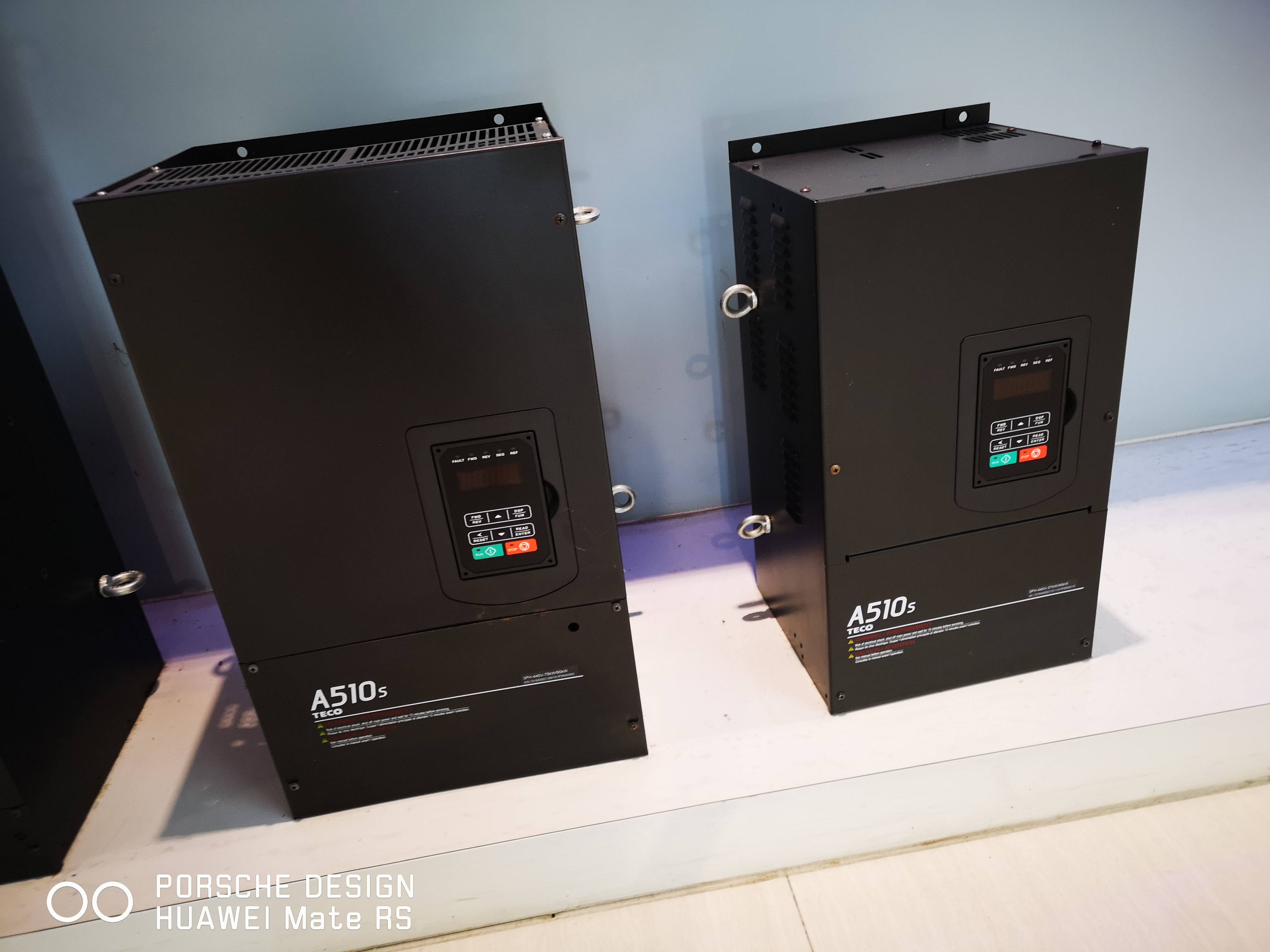
Industrial settings rarely present a uniform set of demands—motors driving centrifugal pumps behave very differently from those running heavy-duty conveyors or precision spindles. Standard speed control often falls short because a fan might need a quadratic torque curve while a crane hoist requires constant torque across a wide range. Recognizing these distinctions, drive systems now incorporate load-specific parameter sets that can be fine-tuned during commissioning. This avoids the one-size-fits-all trap, letting operators match acceleration ramps, voltage-frequency profiles, and braking characteristics to the actual mechanical behavior of the driven equipment.
Achieving this level of customization hinges on understanding the underlying torque-speed relationship. For variable-torque applications like blowers, reducing speed yields dramatic energy savings thanks to cubic power curves, but the control must be tuned to prevent instability at low frequencies. Constant-torque loads—mixers, extruders, positive displacement pumps—demand steady pulling force from standstill to top speed, which calls for enhanced low-speed current handling and sometimes sensorless vector control to maintain robustness. Meanwhile, constant-horsepower scenarios seen in machine tool spindles require the drive to weaken the field above base speed, a delicate balancing act that prevents overheating while preserving cutting performance.
Beyond the basics, modern regulators leverage adaptive algorithms that learn from ongoing operations. Instead of static presets, they monitor current ripple, thermal cycling, and mechanical resonance, adjusting pulse-width modulation patterns or slip compensation in real time. Such embedded intelligence proves invaluable in facilities where production lines frequently change over—bottling plants switching between lightweight and viscous fluids, for instance. The outcome is not just efficient motor use, but also extended equipment life, smoother starts, and fewer nuisance trips, all flowing from a control philosophy that treats each load on its own terms.
Energy Efficiency Breakthroughs with Advanced Drive Technology
Modern drive systems are rewriting the rules of energy consumption in industrial settings. By leveraging advanced algorithms that continuously adapt motor speed and torque to match real-time load demands, these systems dramatically slash waste. Unlike older setups that run at constant speeds regardless of need, intelligent drives trim electricity use by as much as 30% in typical applications. The shift from fixed-speed to variable-speed operation means pumps, fans, and compressors no longer draw full power when partial output suffices, delivering immediate savings without compromising performance.
What sets groundbreaking drive technology apart is its ability to recover energy that would otherwise be lost. Regenerative braking in electric vehicles and elevators feeds power back into the system, turning deceleration into a source of usable energy. In heavy machinery, flywheel-based storage captures momentum during pauses and releases it during surges, smoothing out consumption spikes from the grid. These approaches don't just improve efficiency figures—they fundamentally change how facilities manage peak load charges and reduce strain on electrical infrastructure.
The software edge is equally transformative. Predictive control models analyse patterns in production cycles, weather conditions, or occupancy to pre-adjust drive parameters before demand shifts. A chiller in a commercial building, for instance, might slow its compressor in anticipation of falling outside temperatures, maintaining comfort while cutting runtime. Machine learning refinements further fine-tune these behaviours over weeks and months, extracting gains that static settings could never achieve. Combined with more efficient power semiconductors like silicon carbide, these smart drives are making previously unattainable efficiency levels the new baseline.
Real-World Applications Across Heavy Industries
Mining operations have shifted from reactive maintenance to continuous equipment monitoring, where vibration patterns and thermal signatures from grinding mills and haul trucks feed into diagnostic algorithms. When a bearing begins to degrade, alerts reach crews hours before failure, letting them swap components during scheduled downtime. This approach has slashed unplanned stoppages by double digits, keeping material flowing from pit to port.
Steel plants now run automated surface inspection rigs that scan hot-rolled coils at line speed, flagging pits, scratches, and scale defects without slowing production. Meanwhile, blast furnace operators adjust fuel blends based on real-time chemical composition data, cutting coke consumption while maintaining target iron quality. These updates happen in the control room, not in a lab, shrinking the feedback loop from hours to seconds.
In shipyards, augmented reality overlays project weld paths and dimensional checks directly onto hull sections, helping fabricators place stiffeners within millimeter tolerances. For refineries, virtual replicas of distillation columns run thousands of what-if scenarios overnight, identifying pressure and temperature tweaks that boost throughput without risking a physical unit. The common thread is a shift from guesswork to data-driven precision in environments where margins matter and errors carry steep consequences.
Simplified Integration and Smart Connectivity Features
Setting up new devices shouldn’t feel like decoding a puzzle. Simplified integration strips away the unnecessary steps—no more juggling multiple apps or wrestling with cryptic configurations. From the moment you plug in, the system recognizes your hardware and walks you through a straightforward, guided process. It’s designed to adapt to what you’ve already got, so adding a printer, scanner, or smart sensor becomes a natural extension of your workflow, not a weekend project.
Smart connectivity picks up where basic pairing leaves off. Instead of forcing you to manually switch networks or tweak settings every time you move from your desk to the living room, the system proactively maintains the best link. It learns your habits—prioritizing the video call over the background download, or seamlessly routing data across wired and wireless paths without a hiccup. The result is a network that feels invisible, yet always keeps your devices perfectly in sync.
What truly sets this apart is how it handles the unexpected. A dropped connection triggers an instant, automatic re-route, often before you even notice. Compatibility isn’t an afterthought either; older peripherals and the latest IoT gadgets find common ground through adaptive protocols that sidestep the usual compatibility headaches. It’s connectivity that works the way you do—effortlessly bridging gaps and letting you focus on what you actually need to get done.
Maintenance and Long-Term Reliability Insights
Consistent upkeep routines often uncover subtle wear patterns that might otherwise go unnoticed. Regular inspections of seals, fasteners, and fluid levels don't just prevent sudden failures—they build a detailed history that refines your preventive schedule over time. By documenting even minor anomalies, you create a feedback loop that sharpens your understanding of component lifespans and environmental impacts.
Reliability isn't a static target; it shifts as equipment ages and operating conditions evolve. When you track metrics like mean time between repairs and failure modes, you start seeing clusters that point to systemic weaknesses rather than isolated incidents. This data helps you decide when to upgrade parts proactively, redistribute loads, or adjust environmental controls before small issues cascade into costly downtime.
Long-term dependability often hinges on the quality of your spare parts and the skill of your technicians. Using substandard replacements or allowing shortcuts during reassembly can quietly erode performance, creating intermittent problems that defy diagnosis. Investing in OEM components and continuous training pays off not in flashy gains but in the absence of nagging, repeat failures that drain resources and trust over the years.
FAQ
They stand out due to their robust build and straightforward setup, which cuts down commissioning time on the factory floor. You also get reliable torque control at low speeds without needing external sensors, a feature many competitors treat as an expensive add-on.
Many TECO models come with conformal coating on critical boards and reinforced enclosures rated for harsh conditions. This means they can keep running in places where standard drives would trip or fail prematurely—think cement plants or paper mills.
Absolutely. They support common fieldbus protocols like Modbus, Profibus, and EtherCAT out of the box, and the parameter mapping is consistent across their ranges. Maintenance teams usually find the transition smooth because the terminals and menu logic stay familiar.
It depends on your load profile, but users frequently report 20–50% reductions on centrifugal loads when switching from fixed-speed operation. The built-in PID sleep function and automatic energy optimization routines help squeeze out extra savings that basic V/Hz drives miss.
Look at the A510 or MV510 series. They handle frequent starts, stops, and brake control with dedicated firmware for lifting. The zero-speed torque capability and fast current limit response prevent load sag, which is critical for safety in overhead crane operations.
They offer a PC-based software tool that backs up parameter sets, clones them across drives in minutes, and gives you a clear trend graph during auto-tuning. Some techs just carry a pre-configured keypad that uploads the master file with one button—no laptop needed on site.
Conclusion
TECO frequency converters have established themselves as a benchmark in industrial motor control by combining robust performance with intelligent adaptability. At the heart of their design is a sophisticated motor management architecture that delivers precise torque and speed regulation across a wide range of loads, from heavy-duty conveyors to precision pumps. The inverters excel in scenarios where operating conditions fluctuate, automatically adjusting output parameters to maintain stability and protect connected equipment. This adaptability is reinforced by advanced energy-saving algorithms that monitor real-time demand and reduce consumption significantly during partial load conditions, often achieving payback periods that surprise facility managers. Beyond raw efficiency, the drives incorporate harmonic mitigation and smooth acceleration profiles, which extend motor lifespans and minimize mechanical stress.
In demanding sectors like steel, cement, and mining, TECO solutions have proven their worth through years of uninterrupted service in harsh environments. They integrate seamlessly with existing plant networks via standardized fieldbus protocols and offer intuitive configuration tools that cut commissioning time by a substantial margin. The smart connectivity features enable remote monitoring and predictive maintenance, allowing operators to preempt issues before they escalate into costly downtime. Long-term reliability is underpinned by ruggedized components and a modular design that simplifies servicing, while comprehensive diagnostic functions provide clear insights into drive health. This blend of practical innovation and dependable engineering makes TECO inverters a strategic choice for industries seeking to modernize motor control without sacrificing operational continuity.
Contact Us
Contact Person: Jenny Jaa
Email: [email protected]
Tel/WhatsApp: 0086 152 9510 6006
Website: https://www.china-motor-supplier.com