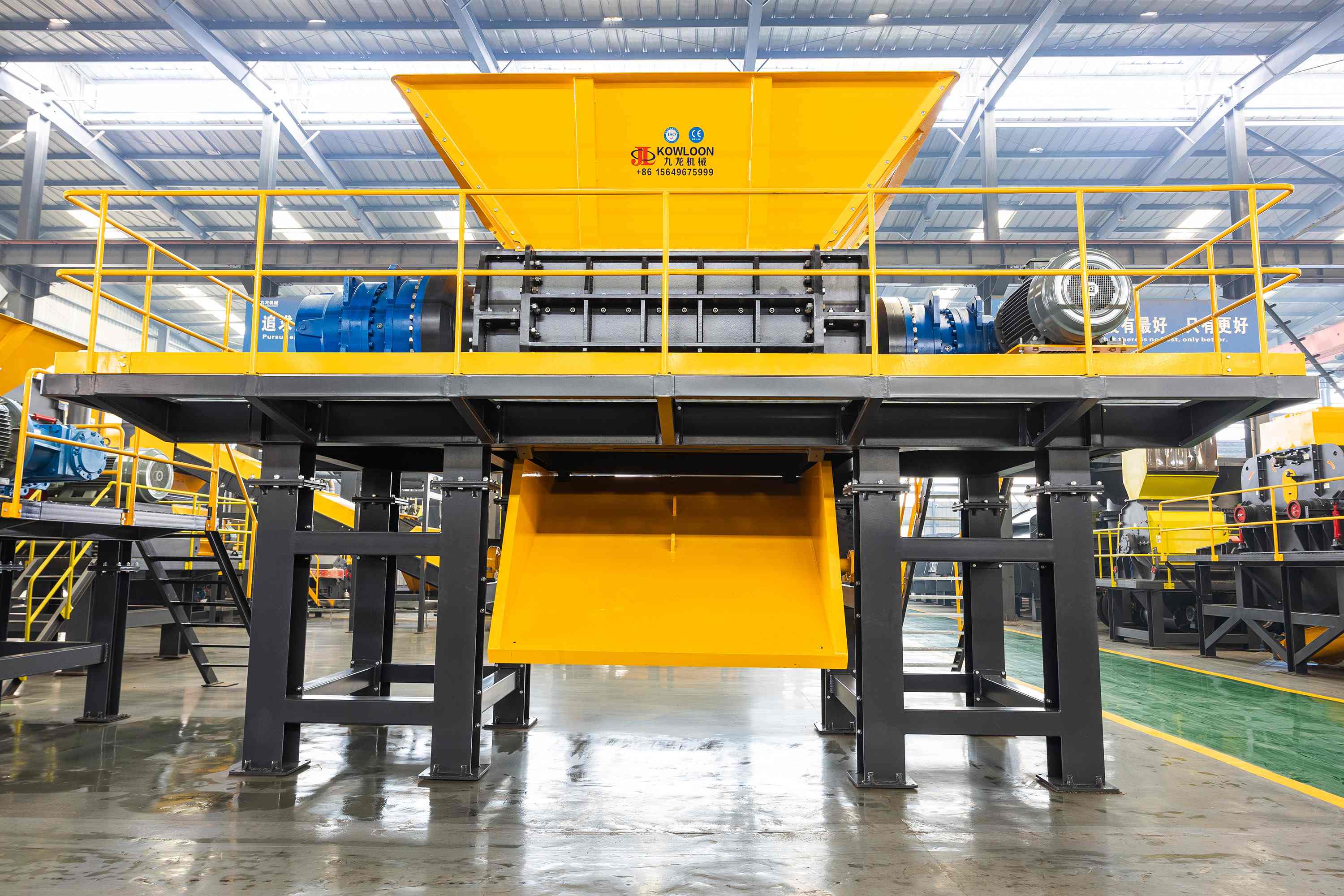
Biomass Shredder Factory Essentials for Consistent Feedstock Preparation
2026-11-16
Inconsistent feedstock is the silent saboteur of biomass operations—uneven chip sizes clog conveyors, spike energy consumption, and throw off combustion or gasification rates. That’s why the real work starts long before the reactor or boiler: it starts at the shredder. Choosing a biomass shredder factory setup that matches your raw material, moisture level, and output target is not a minor detail; it determines whether your downstream process hums or stumbles. At Kowloon Machinery, we’ve seen how the right shredding configuration turns unpredictable agricultural waste into a steady, specification-grade feedstock. In this post, we’ll unpack the factory essentials—from rotor design to screen selection—that keep your preparation line consistent, efficient, and ready to scale.
Rotor and Knife Geometry Sets the Baseline for Particle Uniformity
Particle uniformity in size reduction starts long before a mill ever runs—it is built into the geometry of the rotor and knives. The angle at which a knife meets the material, the clearance between rotating and stationary edges, and the number of cutting faces all determine whether a particle gets sliced cleanly, fractured by impact, or torn. A small shift in rake angle changes the balance from cutting to crushing, which produces a wider spread of particle sizes. Getting this baseline right means later screening or classification has far less work to do.
Rotor design influences how often each particle sees a cutting edge. Open rotors with fewer blades allow material to circulate and can create more fines from repeated impacts, while dense multi-knife rotors tend to deliver more consistent cuts per pass. The knife profile matters too: a steep edge favors initial penetration, but a shallower bevel can improve durability and maintain a predictable cut gap over longer runs. When the geometry holds a stable gap, heat build-up drops and particle size stays more repeatable from batch to batch.
The interplay between rotor speed and knife geometry sets an effective shear rate that directly affects particle distribution. Higher speeds can mask poor geometry by forcing material through, but this often widens the distribution and increases dust. A well-matched rotor and knife setup achieves uniform particle reduction at moderate speeds, reducing both energy use and wear. That baseline geometry is what makes downstream uniformity possible, not just a matter of adjusting screens or sieves after the fact.
Pre-Shred Moisture Checks Prevent Costly Clogging and Inconsistent Output
Ignoring moisture levels before shredding is a quick way to turn a smooth operation into a clogged mess. Wet or damp material sticks to blades, wraps around rotors, and forces frequent shutdowns that eat into both time and budget. A simple pre-shred moisture check—using a handheld meter or a grab sample tested on-site—reveals whether the feedstock needs drying, blending, or a slower feed rate. Operators who make this check routine see fewer jams, less wear on cutting edges, and a steadier stream of uniformly sized output.
Inconsistent moisture also plays havoc with downstream processing. Too much water produces clumps that shred unevenly, while overly dry material can create excessive dust and brittle fragments that shatter unpredictably. By logging moisture readings at the intake point and adjusting the shredder settings accordingly, facilities can hold a tighter particle size distribution without constant manual intervention. This proactive step often reduces energy consumption per ton, since the machine isn't fighting through sticky, resistant material.
Beyond the mechanical benefits, moisture checks help avoid hidden costs like rejected batches or rework. A load that shreds poorly due to high moisture may fail to meet specification for pelletizing, composting, or refuse-derived fuel production, forcing a second pass or disposal. Making the check part of the standard receiving protocol—not an afterthought—keeps output consistent and protects the bottom line from surprise downtime.
Calibrating Infeed Conveyor Speed to Match Material Density
Getting infeed conveyor speed right for different material densities is less about precise math and more about watching how the product actually behaves on the belt. Dense materials like wet sand or metal scrap will pile up quickly and overload downstream equipment if the belt runs too fast. Lighter, fluffier materials can leave gaps and starve the process when the belt is too slow. Start by setting a conservative speed for a new batch, then adjust upward only after you see a steady, even layer moving past the discharge point.
A practical approach is to use a weigh scale or drive motor current as your guide. When density increases, you'll usually see the motor working harder at the same speed, which means you need to dial the speed back to keep the feed rate consistent. If your line doesn't have feedback sensors, mark a short section of the belt and time how long it takes for that section to clear the hopper. Compare that with the depth of material on the belt; if the depth is uneven or the belt is struggling, tweak the frequency inverter in small increments of about two to five percent and give it a few minutes to settle before judging the result.
Keep in mind that density isn't the only thing that changes between batches. Moisture, particle size distribution, and even how the material is loaded into the hopper can shift the effective density on the infeed. Because of this, it's worth logging the best speed setting for each material type and rechecking it whenever you get a new supplier or after heavy rain if you store material outdoors. Avoid the temptation to make large jumps in speed; sudden changes can cause the belt to slip, spill product, or confuse downstream sensors that have already been tuned to a steadier flow.
Screen Aperture Choice and Replacement Cycles for Stable Feedstock Size
Choosing the right screen aperture is less about hitting an exact number and more about managing the spread of particle sizes that leave the deck. Aperture size directly influences how much near-size material can pass, which in turn affects both throughput and the stability of the downstream feed. If the openings are too tight, you end up with excessive recirculation and a higher share of fines that may not be wanted; too loose and oversized particles slip through, creating variability in the next stage. Matching the aperture to the target feedstock range often means running small-scale trials with the actual material, since factors like particle shape, moisture, and bulk density shift the effective cut point well away from the nominal opening.
Replacement cycles should be tied to wear patterns rather than a fixed calendar schedule. As screens wear, the apertures become larger and the wire or plate edges round off, which changes the separation curve even if the screen still looks intact. Blinding and pegging also reduce open area, forcing the same feed through fewer holes and altering residence time on the deck. A practical approach is to track the average particle size of a calibrated sample every few hundred operating hours, then replace the screen when that value drifts beyond the acceptable band—not when visible damage appears. This keeps the feedstock size stable without unnecessary downtime from premature changes or quality drift from overdue ones.
Many sites find that keeping a short log of screen hours, feed rate, and the percentage of out-of-spec particles makes it easier to spot the real replacement interval. One screen may last three months in dry, free-flowing material but only a few weeks when moisture rises or abrasive fines are present. By linking aperture choice to the process requirement and letting replacement timing follow measured drift instead of guesswork, the entire downstream line gets a more consistent material size, which reduces load swings and improves overall stability.
Torque Management Strategies That Reduce Jamming on Variable Feedstocks
Variable feedstocks introduce rapid shifts in material density, moisture content, and fiber length, which can spike torque and seize rotors. A static torque limit often reacts too late or trips unnecessarily, so the better approach is to monitor torque in real time and adjust feed rate before resistance climbs into the danger zone. For example, when a shredder sees a sudden rise from woody stems to wet leaves, the control system can momentarily slow the infeed conveyor or reduce rotor speed while maintaining cutting force.
Some operations add auto-reversing cycles tied to torque thresholds. Instead of waiting for a full jam, the drive briefly reverses the rotor or auger to clear the material wad, then resumes forward motion at a slightly lower feed rate. Hydraulic torque limiters with adjustable relief pressure work well for mechanical overload, but they do not adapt as quickly as a variable frequency drive that continuously matches torque output to load. In batch-fed systems, pre-blending dry and wet fractions or shredding large diameter pieces first can flatten the torque peaks.
Beyond control logic, the cutting geometry itself plays a role. Wider chip clearance or a steeper shear angle reduces the force needed to cut through tough fibers, while individually replaceable teeth help maintain a consistent torque profile as edges wear. Calibrating torque sensors after each maintenance interval keeps the response curve accurate, preventing false trips that lead operators to disable protections and eventually cause hard jams.
Integrating Dust Control and Fire Prevention Without Slowing Production
Dust accumulation and ignition risks often force facilities into a false choice between safety and throughput. The key is designing control systems that operate in the background, not as periodic interruptions. For instance, localized exhaust hoods with self-cleaning filters can capture combustible dust at the source without requiring line stoppages for manual cleaning. Pairing these with automated abort gates and spark detection inside ductwork means a potential ignition is quenched in milliseconds, long before it becomes a shutdown event.
Another layer is the use of very fine water mist or dry fog systems that knock down airborne dust without drenching raw materials or creating slurry that clogs conveyors. These systems can be triggered by optical sensors that detect dust concentration spikes, so water is only released when needed, avoiding moisture-related slowdowns in processing. At the same time, fire-resistant barriers and self-activating suppression agents can be embedded into high-risk zones like silos and bucket elevators, keeping protection invisible to the normal production rhythm.
The real difference comes from treating dust control and fire prevention as a single, data-driven subsystem. Vibration sensors on dust collectors, temperature probes in bearing housings, and pressure differential monitors across filters all feed into a central logic that schedules maintenance only when thresholds drift—not on a fixed calendar. This predictive approach means bins are emptied, filters are pulsed, and hot spots are cooled during brief, planned micro-pauses that fit naturally into product changeovers or routine inspection windows. Production never stops; it simply absorbs safety as part of its own cadence.
FAQ
The key factors include selecting shredders with adjustable screen sizes, maintaining a steady moisture content in the input material, implementing a robust preventative maintenance schedule, and training operators to recognize early signs of uneven wear or clogging. You also need a layout that minimizes material handling distances to avoid fluctuations in feed rate.
Uniformity comes from a combination of real-time monitoring of rotor speed and amperage, using screens with consistent hole diameters, and periodically rotating or replacing hammers and anvils before they become dull. Additionally, blending incoming feedstock from different batches can smooth out variations in wood density and moisture.
Many operators neglect checking the alignment of the drive belts and couplings, which can drift over time and cause subtle vibration that affects cut quality. Also, cleaning out the air intake and cooling fins on motors, lubricating the bearings on a strict interval, and inspecting the condition of the discharge conveyor scrapers are frequently skipped until a breakdown occurs.
High moisture makes the material more pliable and can lead to tearing instead of clean cutting, producing longer, stringier particles and increasing energy consumption. Very dry material becomes brittle and can create excessive fines. Keeping moisture between 15% and 25% for most woody biomass usually gives a predictable particle shape and size while minimizing dust.
Install interlocked access doors and use a lockout-tagout system that takes less than two minutes to execute. Position emergency stop cables along the entire infeed and discharge lines so workers can react instantly. Schedule a five-minute pre-shift inspection where operators check for loose guards, foreign objects in the hopper, and any unusual noise from the rotor bearings.
Look for a shredder with a heavy-duty rotor that resists deflection under load, reversible hammers that can be flipped to expose fresh cutting edges, and a hydraulic screen cradle that allows quick screen changes without disassembling the machine. A variable speed infeed conveyor that automatically adjusts based on motor load is also vital for avoiding surges that create inconsistent output.
Start by checking the screen for wear or damage, as a cracked or elongated hole will let larger pieces through. Next, inspect the gap between the hammers and the screen; if the hammers are worn short, the clearance widens and reduces cutting efficiency. Finally, verify that the infeed rate has not dropped too low, which can cause material to bounce around instead of being pulled through the cutting zone.
Conclusion
Getting biomass shredding right starts well before material hits the rotor. The blade and rotor geometry must be matched to the feedstock's fiber structure—dull or mismatched knives create uneven chips that clog downstream handling. Regular checks on incoming moisture are equally important; over-wet material wraps around shafts and blinds screens, while overly dry stock can shatter unpredictably. Feed conveyor speed should be tuned to material density rather than left at a fixed rate. Dense hardwood or wet agricultural residue needs a slower feed to maintain cutting efficiency, whereas lighter straw can move faster without sacrificing particle size. Screen aperture selection, along with a strict replacement cycle, keeps output within the target size band and avoids the gradual drift that happens as holes wear and enlarge.
On the operational side, torque management is the first line of defense against jamming when feedstock varies hour to hour. Setting upper and lower torque limits lets the shredder automatically ease feed pressure or reverse briefly instead of stalling. This protects both the drivetrain and the knives. Dust control and fire prevention need to be designed into the airflow path, not bolted on afterward. A well-placed extraction hood and spark detection system can capture fines and shut down hot spots without adding friction to the production line. When these elements—geometry, moisture checks, feed calibration, screen discipline, torque limits, and integrated safety—are treated as one system, the result is steady, predictable feedstock preparation that keeps downstream gasifiers or pellet mills running without surprise downtime.
Contact Us
Contact Person: Ray
Email: [email protected]
Tel/WhatsApp: +86 13733817580
Website: https://www.zzkowloon.com/