
China HV Switchgear Advancements Driving Reliable Power Infrastructure
2026-09-06
When a 1,100 kV line trips in western China, the ripple effects can be felt hundreds of kilometers away. Preventing that cascade starts with switchgear that can clear a fault before operators even blink. That's the new reality driving China's HV switchgear advancements—and it's a story Chang Song has been part of for over a decade. From SF6-free designs to digital twins, the breakthroughs are not just about keeping lights on; they're about building a grid that can absorb tomorrow's demand. Here's what you need to know.
Rethinking Arc Interruption: China's Break from Legacy Switchgear
For decades, arc interruption in high-voltage switchgear leaned heavily on sulfur hexafluoride (SF6), a potent greenhouse gas with excellent dielectric and arc-quenching properties. Chinese engineers are now questioning that inheritance, pushing designs that replace SF6 with dry air, nitrogen, or vacuum interrupters scaled beyond their traditional medium-voltage niche. This shift is not a minor substitution; it demands a fundamental rethink of arc behavior, contact materials, and mechanical timing.
The break from legacy switchgear shows up in new hybrid architectures. Vacuum interrupters are paired with clean-air insulation systems to handle fault currents at transmission voltages, while solid-insulated busbars eliminate gas compartments altogether. Researchers use high-speed cameras and magnetohydrodynamic simulations to fine-tune electrode shapes and axial magnetic fields, achieving arc control that rivals SF6 without the environmental burden. These designs also require less maintenance because they avoid gas handling and leak monitoring.
The result is a quieter, more sustainable grid backbone. By rethinking arc interruption from first principles, China's manufacturers are moving away from imported SF6-based designs and creating domestic standards that prioritize lifecycle emissions and operational simplicity. This break from legacy switchgear is reshaping how substations are built, with compact footprint and modular insulation systems that can be deployed faster in dense urban and remote renewable energy sites alike.
Compact Gas-Insulated Designs Carving Out Space in Crowded Cities
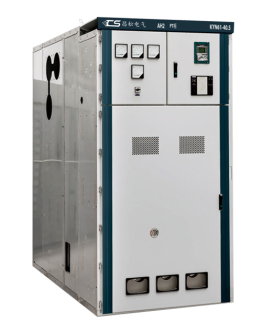
In dense urban centers, traditional air-insulated switchgear often consumes an entire building floor or an open yard. Compact gas-insulated designs shrink that footprint dramatically by sealing conductors and breakers inside grounded metal enclosures filled with insulating gas. A single bay can be reduced to a fraction of its former width, allowing substations to slip into basements, underground vaults, or narrow side streets without disrupting the surrounding streetscape.
The space savings go beyond the equipment itself. Without the need for tall air-clearance frames, these installations hide behind facades or beneath parks, while modular assembly lets crews add more circuits later without expanding the station's physical outline. In places like Tokyo or Hong Kong, where every square meter carries a premium, this approach turns a bulky utility node into an almost invisible piece of urban infrastructure.
Newer models also switch to alternative insulating gases that lower environmental impact and simplify ventilation demands for indoor use. The result is a quieter, lower-maintenance substation that blends into high-density blocks and supports rising electricity demand without claiming new land. For city planners and utilities alike, compact gas-insulated technology is less about trading performance for space than about finding a smarter fit in places that cannot afford to spread out.
The Quiet Farewell to SF6: Dry Air and Vacuum Take Center Stage
For decades, sulfur hexafluoride has been the invisible workhorse of medium-voltage switchgear, prized for its arc-quenching prowess and compact footprint. But the very properties that made it indispensable—extreme stability and a global warming potential tens of thousands of times that of carbon dioxide—have also sealed its fate. Regulatory pressure and corporate sustainability goals are now pushing manufacturers toward alternatives that don't sacrifice performance for conscience.
Dry air and vacuum interrupters are stepping out of the lab and into real-world substations. Vacuum technology, long dominant in circuit breakers, is proving equally adept at handling load-break duties once reserved for SF6. Meanwhile, dry air fills the insulation void, offering dielectric strength close enough to the old gas without the environmental hangover. The combination is elegant in its simplicity: no synthetic gases, no recycling headaches, just physics and engineering.
Utilities and industrial operators aren't just swapping one gas for another—they're rethinking switchgear design from the ground up. Higher operating temperatures, slightly larger enclosures, and revised maintenance intervals are all part of the trade-off. Yet the momentum is undeniable. Pilot projects across Europe and Asia are already demonstrating that a post-SF6 grid isn't a distant aspiration; it's a quiet transition happening right now, one transformer bay at a time.
Grid Sensing That Predicts Failures Before They Happen
Most grid failures don't start with a bang. They begin as subtle shifts—tiny temperature spikes at a splice, faint partial discharge in a cable joint, a connector loosening just enough to change impedance. Sensors spread across the network now read these micro-signals continuously, turning the grid into a living diagnostic surface rather than a passive collection of poles and wires.
The real breakthrough is the algorithm's sense of timing. Instead of flagging every anomaly, it weighs patterns against years of load and weather history to separate harmless drift from actual fatigue. A riser pole that runs 3°C hotter on calm nights might be ignored for months—until the model notices the same signature appeared before a partial flashover in two other districts. That's when it raises the alert, often weeks before the first visible arc.
Field crews get a prioritized list, not a flood of alarms. Each entry includes a probable cause, the confidence level, and the nearest access point. Maintenance shifts from scheduled guesswork to targeted intervention. Quiet parts of the grid stay quiet longer, while risky spots get attention before they turn into outages.
Linking Ultra-High Voltage Arteries to Local Distribution Capillaries
Moving electricity across vast distances begins with ultra-high voltage lines that behave like the body's largest arteries. These corridors carry massive amounts of power at 800 kilovolts or more, minimizing resistive losses as energy travels from remote hydro or solar plants toward populated regions. The engineering challenge lies not in the long haul itself, but in the seamless handoff where that concentrated flow must fan out into thousands of smaller routes.
That handoff happens at substations designed to step voltage down through several tiers. What arrives as a single 1,000 kV transmission line splits into 220 kV regional feeders, then 66 kV sub-transmission rings, before reaching the 11 kV or 400 V distribution mesh that threads through neighborhoods. Each reduction stage acts like a branching point in the circulatory system, reducing pressure and flow rate so the energy can be safely absorbed by homes, streetlights, and small businesses.
The final connection is less about raw capacity and more about control. Smart sensors and automatic reclosers now sit at the junction where medium-voltage lines meet low-voltage capillaries, adjusting to load shifts within seconds. This keeps the entire network balanced, allowing a single ultra-high voltage artery to serve hundreds of thousands of end points without overloading any single capillary. The result is a delivery system that feels invisible from the consumer side, yet relies on constant coordination between the trunk and its tiniest branches.
Fast Fault Clearing Without the Footprint: Hybrid Switchgear in Action
Imagine a fault occurring deep in your distribution network. Traditional switchgear might take a noticeable beat to isolate it, leaving equipment exposed to damaging currents. Hybrid switchgear changes that calculus entirely. By pairing vacuum interrupters with a gas-insulated busbar design, this equipment clears faults in a fraction of the time older systems require. The result is less stress on transformers, cables, and connected loads—and fewer unplanned outages that ripple across your operation.
What makes this speed possible isn't just faster breakers; it's the integration of sensing, protection, and interruption in a single compact envelope. Modern hybrid designs embed current and voltage sensors directly into the bushing, eliminating the need for separate instrument transformers and their associated wiring. That means the protection relay receives fault data almost instantaneously, triggering the interrupter before the current reaches its peak. In practical terms, a hybrid switchgear panel can clear a short circuit in under a half-cycle—something conventional air-insulated gear simply can't manage without a much larger footprint.
That footprint advantage is where hybrid switchgear truly shines in retrofit and densely packed installations. Because the gas-insulated busbar compartment shrinks the required clearance distances, a hybrid lineup can fit into roughly half the space of an equivalent air-insulated switchgear lineup. For utilities and industrial plants facing rising fault currents and aging infrastructure, this means they can upgrade protection levels without knocking down walls or sacrificing adjacent equipment. The technology doesn't just clear faults faster—it does so while freeing up valuable real estate, making it a practical choice for modernizing power distribution in constrained environments.
FAQ
Over the past decade, Chinese manufacturers have pushed gas-insulated switchgear (GIS) to higher voltage ratings while shrinking its footprint. Hybrid designs that combine traditional air-insulated busbars with compact gas compartments are now common in urban substations. The addition of embedded Rogowski coils and temperature sensors lets operators catch insulation degradation before it causes a flashover, which has sharply reduced unplanned outages.
Several firms have moved away from pure SF6 toward fluoronitrile-based gas mixtures with a global warming potential roughly 98% lower. Vacuum interrupting technology is also being scaled up to 145 kV and beyond, eliminating the need for SF6 in the interrupting chamber altogether. Pilot installations using dry air insulation have been running for a few years in coastal provinces, where humidity used to be a major barrier.
Modern switchgear panels often ship with partial discharge monitors, mechanical position sensors, and gas density transmitters that feed into a local edge gateway. Instead of fixed maintenance intervals, operators use condition-based alerts from these sensors to schedule servicing only when wear is actually detected. In some unmanned substations, a digital twin of the switchgear allows engineers to simulate fault scenarios remotely before dispatching a crew.
China's large wind and solar bases in the northwest need to move power to eastern load centers over thousands of kilometers. Ultra-high-voltage AC and DC switchgear, especially 1,100 kV GIS and hybrid switchgear, makes that possible by keeping losses low and clearing faults in milliseconds. At the renewable collection points, compact HV switchgear also helps stabilize voltage fluctuations caused by variable wind and solar output.
International buyers often demand compliance with IEC and IEEE standards that differ from Chinese GB standards, so manufacturers must run parallel type tests and adapt documentation. There is also lingering skepticism about long-term performance of some locally developed eco-friendly gas mixtures outside controlled lab conditions. Supply chain localization for key vacuum interrupter components remains a bottleneck when overseas projects require rapid delivery.
The high-altitude substations on the Qinghai-Tibet Plateau have used GIS rated for 4,500 meters, where reduced air density used to cause external insulation failures. In the humid Pearl River Delta, compact 550 kV GIS has kept urban substations running despite typhoon-driven salt spray and frequent lightning. A 1,100 kV GIS installation in eastern China has now logged more than five years of service with no forced outages, according to grid operator reports.
Utilities are starting to write procurement rules that favor low-global-warming-potential alternatives to SF6, which pushes manufacturers to invest in vacuum interrupters and dry-air insulation. This shift also simplifies decommissioning because there is no toxic gas to recover and recycle. Over the next decade, expect most new HV substations in urban areas to be SF6-free, while remote ultra-high-voltage installations may keep gas mixtures purely for technical performance reasons.
Conclusion
China's HV switchgear evolution now treats arc interruption not as a legacy constraint but as an open design variable. Engineers are discarding decades-old puffer and self-blast assumptions, pairing vacuum interrupters with magnetically driven arc rotation and faster dielectric recovery to handle higher short-circuit currents without ballooning breaker size. In dense urban corridors, compact gas-insulated switchgear has moved from substation basements to repurposed industrial floors, shrinking bay widths by more than a third while keeping maintenance corridors practical. The sharper departure, though, is the quiet phase-out of SF6: dry air and vacuum interrupters now dominate new 110–220 kV urban deployments, pushing leakage rates below 0.1% per year and removing the regulatory overhang that once made every GIS expansion a greenhouse-gas liability.
At the grid edge, embedded sensors now sample partial discharge, contact temperature, and mechanism timing continuously, turning switchgear from a passive fault-clearing device into a condition-forecasting node. Utilities use these streams to schedule intervention before a breaker's stored energy drops or a cable compartment shows early corona, cutting unplanned outages in pilot provinces by double digits. The same design language scales upward and downward: ultra-high-voltage trunk lines feed 1,000 kV GIS that finally hands off to 10 kV distribution switchgear without requiring massive transition yards, while hybrid switchgear combines the fast clearing of gas breakers with the small footprint of solid-insulated modules in substations where land costs more than equipment. That vertical coherence—from UHV arteries to neighborhood capillaries—is what makes China's switchgear push more than a component story; it is becoming the backbone of a measurably more reliable power infrastructure.
Contact Us
Contact Person: Tonglun Chen
Email: [email protected]
Tel/WhatsApp: 8618906642555
Website: https://www.cncsele.com