
Chocolate Enrober Supplier Selection Tips for Consistent Coating Quality
2026-11-16
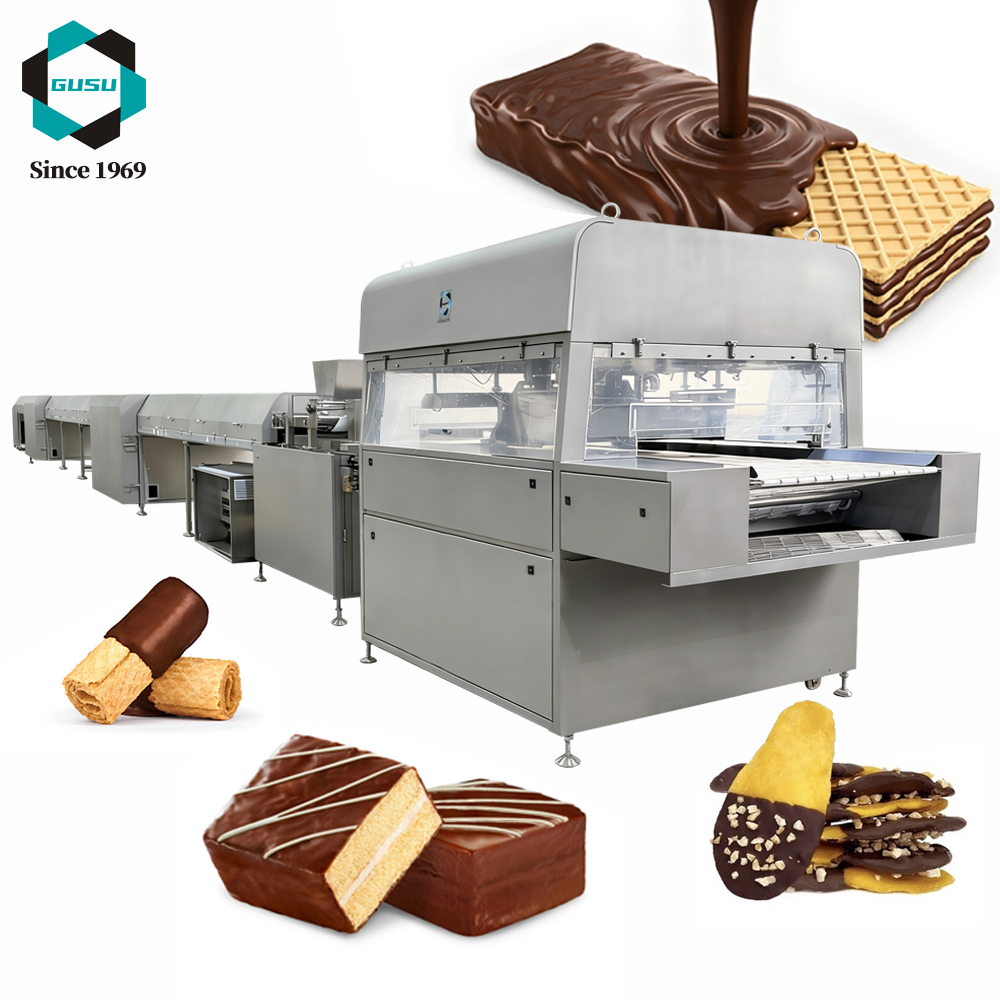
Getting a chocolate enrober that coats evenly isn’t just about horsepower or belt width—it’s about how well the machine handles your specific viscosity, temperature swings, and line speed. A poor supplier choice can leave you with streaked centres, blown feet, and costly rework. That’s why we’ve put together the selection tips that actually matter. From build details to after-sales support, this guide walks through what separates dependable equipment from a risky purchase—and how GUSU approaches the same standards. Before you compare quotes, here’s what to look for.
Verify Temperature Stability Under Real Production Loads
The real test of temperature stability isn't in a clean lab, but on a line running at full capacity with dozens of machines cycling, workers moving, and ambient conditions shifting through each shift. Production loads create heat patterns that simply don't show up in controlled trials. A drive that stays cool during a single test run might overheat when surrounded by other equipment, confined inside a cabinet, or forced to run nonstop for ten hours. That's why we pull temperature readings from units installed in active facilities, not just from test benches.
What stands out when you watch the data is how uneven the heat buildup can be. Most thermal issues come from brief, high-current draws during acceleration or braking cycles that only happen under real workflow demands. The steady-state numbers look fine; the spikes don't. By logging temperatures at multiple points on the housing, bus capacitors, and IGBT modules during actual production, we catch those transient peaks that would otherwise go unnoticed. Some of the worst cases appeared only when a line ran a specific product mix that forced rapid speed changes three or four times per minute.
Stability means more than surviving the worst-case spike. It means the internal temperature swing stays within a narrow band over repeated cycles, and the cooling path doesn't degrade when dust and fine debris build up on the heatsink. Field verification has shown that units which pass a factory burn-in can still drift after weeks on a real shop floor. So we track temperature behavior over extended runs, looking for creep in baseline readings and for any sign that the thermal interface material is losing effectiveness. The goal is not a single impressive number in a datasheet, but a temperature profile that holds steady when the machines around it are working hardest.
Ask How the Recovery System Handles Chocolate Reintroduction
Most protocols treat chocolate like a high-risk food and reintroduce it late, after simpler items have already passed. The reasoning is rarely about cocoa itself; it is usually about the sugar, dairy, or emulsifiers that travel with it. Before you try a full serving, ask whether the plan separates plain cocoa from milk chocolate or sweetened bars. That single distinction changes the odds of a clean read on your reaction.
A well-designed recovery system will give you a small, timed portion and tell you exactly what to watch for over the next 48 hours. If the answer is vague—"just see how you feel"—that is not a structured reintroduction. You want a clear sequence, a defined amount, and a rule for stopping or repeating the test. Otherwise a chocolate craving gets mistaken for a meaningful signal.
Inspect Curtain Formation and Blower Airflow as One System
A blower that moves plenty of air can still leave a doorway unprotected if the discharge pattern does not hold together. Watch the lower half of the air stream for flaring, curling, or a soft spot that lets outside air push through. The curtain should leave the nozzle cleanly, stay tight across the full width, and reach the floor or threshold without breaking apart.
Stand back and check the entire opening while the unit runs under normal building pressure. Use a smoke pencil, a thin strip of plastic, or even a damp hand to feel where the air is actually going at the floor, mid-height, and near the top. Stack pressure, nearby supply diffusers, exhaust fans, and wind can pull the curtain inward or outward even when the blower sounds strong.
When the curtain pattern looks weak, do not chase the blower adjustment alone. Check inlet screens, belt tension, rotation, and sheave settings while watching the air pattern change. A lower fan speed may produce a cleaner, more stable curtain than a higher speed that creates turbulence at the discharge. Record the airflow readings and the curtain shape together before and after any change so the system is verified as one behavior.
Run Your Own Coating Test Across the Full Belt Width
Most coating issues hide near the edges, not in the middle of the belt. Pull a sample strip that runs from one side frame to the other and check it under raking light before you trust a single-spot reading. Wide belts flex, wear unevenly, and build up residue at different rates, so a test that only covers the center third will miss exactly what causes rejects downstream.
Start with a clean, dry belt and run a short batch at your usual speed. Mark three or four positions across the width with tape on the frame, then measure film thickness, gloss, or tack at each mark immediately after the coating settles. Keep the edge sections in the test even if they will be trimmed later; they often reveal doctor blade pressure or gap drift long before the middle shows any change.
Record the numbers in a simple table, but trust what the surface tells you too. Streaks, thin bands, or a heavier deposit near one edge usually point to an adjustment that cannot be found by averaging the whole width. Make one mechanical change at a time and run the same pattern again. After two or three passes, the cross-belt profile becomes a practical baseline for your line, your material, and your operators.
Check Sanitary Design Details That Affect Daily Cleaning
Most cleaning bottlenecks trace back to choices made long before a shift starts. Look first at how surfaces meet: sharp inside corners, unpolished weld seams, and threaded fasteners trap moisture and product residue in places a brush cannot reach. A radiused corner or a continuous, ground-flush weld may seem like a small design call, but it changes whether a rinse actually removes soil or simply moves it sideways.
Pay attention to how equipment drains when it is idle. Flat ledges, closed channel bases, and unsealed joints between dissimilar materials collect standing water overnight, which turns a quick wipe-down into a recurring sanitation failure. Sloped surfaces, open framing, and gaskets that sit proud of the product zone let water leave the area and keep chemical contact time focused on actual residue.
Also check components that operators touch repeatedly. Hollow rollers, capped tube ends, and overlapping panels create cavities that are difficult to inspect and even harder to sanitize. If a detail cannot be seen, wetted, and reached within the daily routine, it will eventually become a source of contamination rather than a passive part of the line.
Compare Service Response and Spare Parts Before You Commit
A machine that cannot be fixed quickly is just as costly as one that breaks often. Before signing any purchase agreement, ask the seller to show you actual response times from customers in your region, not just a glossy brochure with a helpline number. Call that number on a Sunday afternoon and see who answers. The difference between a two-hour callback and a two-day wait becomes very real when your only production line is down and your client is already asking for a revised delivery date.
Spare parts are where many suppliers quietly increase their margins. A cheap initial quote means nothing if the consumables, filters, sensors, or drive belts are only stocked overseas and take three weeks to arrive. Request a written list of the ten most commonly replaced parts along with their local availability and price. Then compare that list across at least two vendors. One supplier may sell the machine for less but charge four times more for a replacement blade, turning your supposed saving into a long-term expense.
Do not fall for the phrase "we rarely see failures." Every machine fails eventually, and the real question is how fast the manufacturer can get you running again. Ask to speak with an existing customer who has already gone through a breakdown. Their story will tell you more than any datasheet. If the salesperson hesitates to connect you with someone, that hesitation is your answer. Commit only when you know the response time in writing and the spare parts shelf is not an empty promise.
FAQ
Look for someone who asks about your chocolate viscosity, target pickup weight, and room conditions before quoting a machine. If the conversation jumps straight to price or throughput, that is a warning sign. A supplier focused on consistency will want trial data or at least a detailed product profile, and they should be able to explain how their enrober holds temperature, controls the curtain, and handles bottom coat without relying on vague claims.
Ask how they control the chocolate curtain and bottom coat across the full belt width. A consistent coating starts with steady temper and even flow, so request a documented test or video from a similar product run. If a supplier hesitates to show real production footage or only offers polished brochures, keep looking.
More than most buyers expect. Request contacts at facilities running the same viscosity range and belt width for at least a year. Ask those operators about repeatability, maintenance frequency, and whether the supplier came back to fine-tune settings after installation. A machine that works in a demo lab does not always behave the same on your floor.
Look at the tempering unit's recovery time, the enrober's heated hood placement, and whether the sump is designed to avoid dead zones where chocolate can sit and thicken. Small things like jacketed piping and gentle agitation often matter more than a big brand name. If the supplier cannot explain their approach to these areas, treat that as a gap.
Ask how long a full wet-to-dry changeover takes with a two-person crew, and watch a real demonstration if possible. Consistent coating suffers when changeover is so slow that operators rush, skip steps, or leave residue that affects the next batch. Suppliers who design for tool-free belt removal and sloped drainage tend to help you stay consistent over time.
Yes, and do not settle for a trial with the supplier's chocolate and perfectly uniform centers. Your product may have size variation, different fat content, or a delicate center that breaks under a heavy curtain. A useful trial runs enough product to show edge-to-edge coverage, bottom thickness, and temper stability for at least 30 to 60 minutes.
Ask the supplier for the average response time on service calls and the location of spare parts stock. Then call one or two existing customers and ask what happened after the warranty period. Consistent coating depends on quick support for sensors, belts, and tempering units; a supplier with slow or distant service can leave you with drifting results for weeks.
Not necessarily. A fast belt with a heavy curtain can look impressive but create uneven bottom coat, air bubbles, or excessive pickup. Match belt speed and curtain thickness to your product's shape and target coating weight. The supplier should help you find that window rather than pushing maximum throughput as the main selling point.
Conclusion
A supplier can quote impressive specifications on paper, but what matters is how the enrober behaves when chocolate is moving through it hour after hour. Ask to see temperature readings from machines running at your expected throughput, not just a lab demo, because minor drift at the tempering stage quickly turns into streaking and uneven shell thickness. The recovery system deserves equal scrutiny: if returned chocolate is dumped back too quickly or without gentle remelting, it can carry unstable crystals into the main flow and undo all your tempering work. Look closely at how the curtain forms across the full width and how the blower airflow is tuned in relation to that curtain. These two are not separate adjustments; weak airflow can leave excess chocolate in pockets while strong airflow thins the coating at the edges, so the supplier should be able to explain their control strategy as a single integrated loop.
Before signing anything, run your own coating test on the actual belt width you intend to use, placing biscuits or centres at the edges, not just in the middle. This reveals pattern issues that spec sheets miss, such as heavier coverage on one side or tailing at the rear. Sanitary design is another area where short-term convenience shows up later. Look for open frame construction, tool-free belt removal, and sloped surfaces that drain rather than collect chocolate; if daily cleaning takes twice as long, line efficiency will suffer. Finally, compare how quickly a supplier can dispatch a technician and whether common wear parts sit in local inventory. A well-built enrober still needs prompt support, and waiting weeks for a drive belt or scraper blade can stall production far more than a slightly lower purchase price ever saves.
Contact Us
Contact Person: Zhang Wei
Email: [email protected]
Tel/WhatsApp: 8618662577837
Website: https://www.chocomachinery.com