
Cleanroom Engineering Manufacturer Evaluation Guide for Controlled Environments
2026-08-20
Cleanroom performance is often judged by particle counts, but the real differentiator is the engineering judgment that keeps those numbers stable over time. This guide moves past surface-level claims to evaluate manufacturers on the criteria that matter in controlled environments. Drawing on GENO Pharmatech's project insights, it highlights the questions most teams overlook until a contamination event forces them to look closer.
Cleanroom Certifications That Actually Signal Manufacturing Competence
A certification on paper doesn't tell you how the cleanroom behaves at 3 a.m. on a Tuesday. Look for manufacturers that specify their ISO class per operational activity, not just for an empty room at rest. If they can't tell you the difference between at-rest and operational particle counts, they probably haven't tested both.
Real competence shows up in the details: air change rates, HEPA filter integrity tests, pressure cascade between gowning and production zones, and recovery time after a door opens. Ask to see trend logs from continuous particle counters, not just a one-time certification snapshot. A facility that monitors in real time and can produce historical data is one that actually controls contamination.
Moreover, the relevant standard depends on what you're building. A cleanroom validated to ISO 14644-1 Class 7 might be fine for assembling electronics, but sterile medical devices demand EU GMP Grade C or better, with viable and non-viable monitoring. The manufacturer should be able to explain how their cleanroom classification aligns with your product's specific risk profile, not just put a logo on a website.
Pressure Testing Manufacturer Claims Before They Reach Your Facility
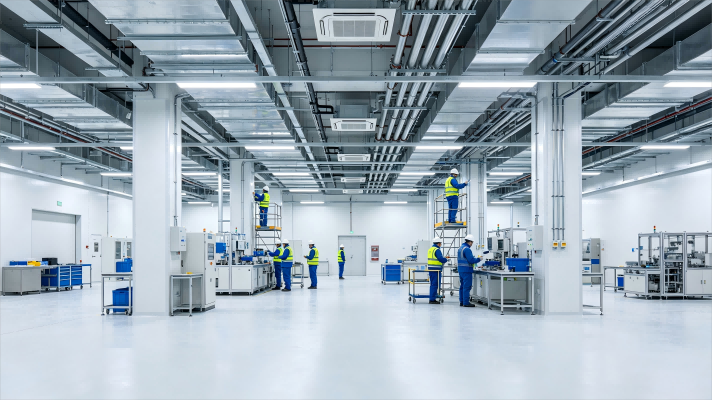
Don’t let a polished datasheet or a confident sales call set your expectations. Before any new component or material enters your facility, ask for the raw test reports—not just the summary. If a manufacturer claims a seal withstands 300°F and 150 psi, request the actual lab run, including failure points and batch-to-batch variation. Better yet, send samples to an independent lab under conditions that mimic your line’s worst hour, not the vendor’s best case.
Build a short but strict incoming verification protocol. For high-risk items, pull random samples from the shipment and run your own bench tests or coordinate a witnessed test at the supplier’s site. Check material certificates against the heat or lot numbers on the physical parts. If tolerances or surface finishes matter to your process, measure them yourself instead of relying on a printed spec. A supplier that hesitates to share raw data or pushes back on third-party testing is often revealing more than they intend.
Finally, hold every claim to a traceable standard. Ask for documentation that connects the tested batch to the exact units being shipped, and flag any substitution. For critical process inputs, maintain a short list of approved suppliers who have survived your pressure testing—not just those with the lowest quote. One failed gasket or sensor that reaches your floor can cost more than the entire savings from a questionable vendor, and you won’t know until the line stops.
Material Choices That Survive Aggressive Sterilization Without Degrading
Plastics don't all behave the same under repeated autoclave cycles or chemical sterilants. Polycarbonate cracks after a few dozen runs, while PPSU and PEEK hold their shape and clarity. The trick is to match the polymer not just to the temperature rating but to the specific sterilization chemistry—hydrogen peroxide gas plasma, for instance, attacks certain additives that steam leaves alone.
Silicone gets a lot of praise, but it can absorb hydrogen peroxide and then off-gas later, which wrecks sensitive electronics nearby. That's why many surgical robot covers now use fluoroelastomers instead. They cost three times more, yet they survive over 500 cycles without swelling or losing tear strength. Glass-filled nylon works for instrument trays, but only if you anneal it properly to avoid microcracks around the glass fibers.
Stainless steel and titanium are the obvious go-to materials, but even those degrade if the passivation layer gets scratched. Electropolishing helps, and so does switching to a harder alloy like 17-4 PH for hinges and locking mechanisms. The bottom line: test your material under the exact sterilization method your device will face, not just the generic ISO 10993-7 residual limits.
Modular Cleanroom Design: Flexibility Beyond the Sales Pitch
Most modular cleanroom providers emphasize speed and cost, but the deeper advantage is genuine reconfigurability. A well-designed modular system lets you remove or reposition wall panels, install new pass-through windows, or add an airlock without breaking into the surrounding facility structure. When a production process shifts from one product to another, the room's pressure cascade and airflow patterns may need to change as well. With modular construction, these adjustments can often happen over a few days instead of weeks, keeping downtime minimal and operations adaptive.
Relocation is another form of flexibility that rarely gets discussed. Unlike a traditional cleanroom built with drywall and epoxy, a modular unit can be taken apart, moved to a different building or site, and reassembled with much of the original infrastructure intact. That level of portability matters for companies in growth phases or those testing new markets. Utility routing inside the modular frame also supports change—fan filter units, temperature controls, and exhaust lines can be reconfigured without tearing down ceilings. The key is that modular doesn't have to mean a prefabricated box with fixed boundaries; it can be a change-ready platform that evolves alongside research and manufacturing needs.
The Hidden Costs Lurking in Cleanroom Maintenance Agreements
Many facilities sign a cleanroom maintenance contract based on the headline monthly rate, only to discover that routine filter changes, sensor calibration, and particle counter verification are treated as add-on services. The base agreement may cover little more than a visual inspection and basic HEPA fan function, while every meaningful preventive task triggers a separate work order with its own labor and travel fees. Over a 12-month period, these incremental charges can easily double the anticipated cost of ownership.
Another overlooked area is the cost of documentation and compliance reporting. If your quality system requires formal records for each service visit, the maintenance provider may charge per report, per data export, or for time spent aligning with your internal SOPs. Emergency call-outs, after-hours work, and the disposal of contaminated filters or cleaning chemicals are often billed at premium rates that are buried in the contract's schedule of fees rather than the main quote.
Before renewing, pull every line item from the previous year's invoices and compare it against what the agreement actually promised. Watch for automatic escalation clauses tied to proprietary spare parts, minimum monthly service charges during shutdown periods, and exclusions for gasket replacement or airflow balancing. A contract with a low base fee but a long list of exclusions is rarely cheaper than one that bundles comprehensive coverage.
Installation Expertise: The Unseen Variable in Cleanroom Performance
A cleanroom's certification report rarely hints at the decisions made on the install site. The torque applied to each filter clamp, the curing time allowed for sealant before airflow begins, and the flatness of a floor beneath raised panels all shape the room's actual performance. Yet none of these variables appear in the design specification. They live only in the judgment of the install crew, making expertise the quietest component of the entire build.
Consider the path of a single pipe through a cleanroom wall. Seal it too hastily and the pressure differential will draw unfiltered air through the microscopic gap, defeating the room's purpose. Install a fan filter unit with a half-degree tilt and the laminar flow begins to drift, creating dead zones that particle counters may not catch on a quiet afternoon. These failures are rarely dramatic; they accumulate slowly, showing up as recurring contamination events months later.
The strongest defense is to treat installation as a controlled process rather than a final step. Documenting sealant batch numbers, measuring torque in real time, and verifying surface cleanliness before sealing transforms craft into repeatable engineering. When the install team understands how each action affects airflow dynamics, they stop being assemblers and become the last line of quality control. That shift in mindset is what separates a cleanroom that performs on day one from one that performs on day 500.
FAQ
Look beyond equipment lists. Verify the manufacturer has completed projects under the same regulatory framework—such as EU GMP Annex 1 or FDA aseptic processing—and ask for performance data from those installations. Pay particular attention to their approach for air handling, terminal HEPA placement, and pressure cascade control, because those directly affect contamination risk.
Request computational fluid dynamics simulations along with measured particle counts from at least two comparable cleanrooms they built. Check whether the design includes adequate filter coverage, low-turbulence airflow patterns, and proper air change rates for your target ISO class. Do not accept a simple statement of compliance without site-specific calculations.
A cleanroom specialist should demonstrate strong knowledge of contamination control beyond construction—like selecting non-shedding materials, detailing flush joints, managing pressure differentials during construction, and planning for cleanroom cleaning protocols. General contractors often miss these details, leading to costly rework during validation.
Ask for detailed airflow diagrams, pressure cascade drawings, material certificates for cleanroom panels and sealants, filter efficiency test reports, and previous IQ/OQ/PQ protocols. The completeness of these documents often reflects how well the manufacturer understands the operational life of a controlled environment, not just the build phase.
It matters more than broad cleanroom experience. A semiconductor fab project may require strict temperature and humidity stability plus ESD control, while a cell therapy suite needs aseptic workflows and biosafety containment. If the manufacturer hasn't handled those specifics, you may end up teaching them on your own project timeline.
Cleanroom performance drifts without proper maintenance. Before signing, confirm their response time for filter replacement, availability of spare parts, and whether they offer calibration or retesting services. A partner that provides staff training on cleanroom behavior and maintenance schedules can save you from audit findings later.
Modern modular systems can achieve ISO 5 or better if the manufacturer uses precision panel joints, proper sealing, and engineered pressure retention. Ask for air leakage test data and particle count reports from existing modular installations similar to your required classification instead of assuming modular means lower quality.
Watch for proposals that omit specific filter efficiency ratings, avoid detailing pressure cascade values, or promise particle counts without defining measurement conditions. Also be wary of low bids that exclude commissioning, validation support, or as-built documentation—those costs will reappear later, usually after the cleanroom fails a performance test.
Conclusion
When evaluating a cleanroom engineering manufacturer, it helps to treat certifications as a starting point rather than a verdict. A certificate for ISO 14644-1 class 5 says little about microbial control in an aseptic fill line, and a manufacturer that cannot explain the test method behind each number should be treated with caution. Pressure their claims before they arrive at your dock: request particle count data from repeated door openings, equipment heat loads, and recovery after power loss. If the vendor hesitates to share raw data or only offers "typical" performance curves, walk away. Material choice follows the same logic. Panels, gaskets, and flooring that will face vaporized hydrogen peroxide or chlorine dioxide need cycle testing for microcracks, discoloration, and outgassing; a single soak test tells you almost nothing about long-term degradation.
Modular design is often oversold. The real question is whether a wall relocation can be done by your own maintenance crew without voiding the warranty, and whether the HVAC and electrical connections are genuinely plug-and-play or just bolted together. Maintenance contracts deserve a close reading too: some agreements quietly exclude fan filter replacement, sensor calibration, or emergency call-outs, which shifts those costs back to you at the worst possible time. Installation expertise is the variable no one budgets for. A crew that lasers the floor grid, shims every panel, and verifies airflow with a hot-wire anemometer will deliver a room that holds its class. A rushed crew that hides gaps under sealant will leave you chasing particle excursions for years. The manufacturer that can show you those installation tolerances and real performance data—not just polished renderings—is the one worth trusting.
Contact Us
Contact Person: Amy Yang
Email: [email protected]
Tel/WhatsApp: 008619330882686
Website: https://www.genopharmatech.com/