
Custom Ultrasonic Coating Systems for Precision Thin Film Deposition
2026-09-22
Micron-scale thin films don't forgive generic hardware. If your coating line still fights viscosity shifts, edge uniformity, or fragile substrates, a standard ultrasonic coater may be the bottleneck—not the solution. Siansonic builds custom ultrasonic coating systems around the exact fluid dynamics, substrate geometry, and throughput your process demands. The result is deposition that finally behaves like a controlled step, not an experiment. Here's a closer look at how that precision comes together.
Ultrasonic Nozzle Configurations Built Around Your Substrate Shape
Substrate geometry rarely fits a one-size-fits-all spray pattern. A flat sheet, a narrow tube, and a contoured medical part each demand a different fluid distribution approach. Instead of forcing a standard nozzle to work across these variations, the nozzle arrangement is designed from the actual surface profile outward, matching spray width, standoff distance, and impact angle to the part rather than asking the part to accommodate the spray.
For planar substrates, a linear row of low-flow ultrasonic nozzles can be spaced to create an even band across the full width without heavy edge buildup. Cylindrical or wire-shaped substrates benefit from a wrap-around annular nozzle that applies coating from all sides in a single pass, eliminating the need to rotate the part. For more complex three-dimensional shapes, angled nozzle clusters or short-stroke reciprocating mounts position the mist precisely where coverage is needed, avoiding shadowed recesses and over-spray on adjacent features.
This substrate-driven layout also changes day-to-day operation. Overspray drops, material consumption stays predictable, and coating thickness remains consistent from edge to edge. Because the nozzle configuration matches the actual part shape, there is less need for manual touch-ups or mid-run adjustments, even when shifting between different substrate geometries.
Droplet Size Control That Keeps Films Flawless at the Nanoscale
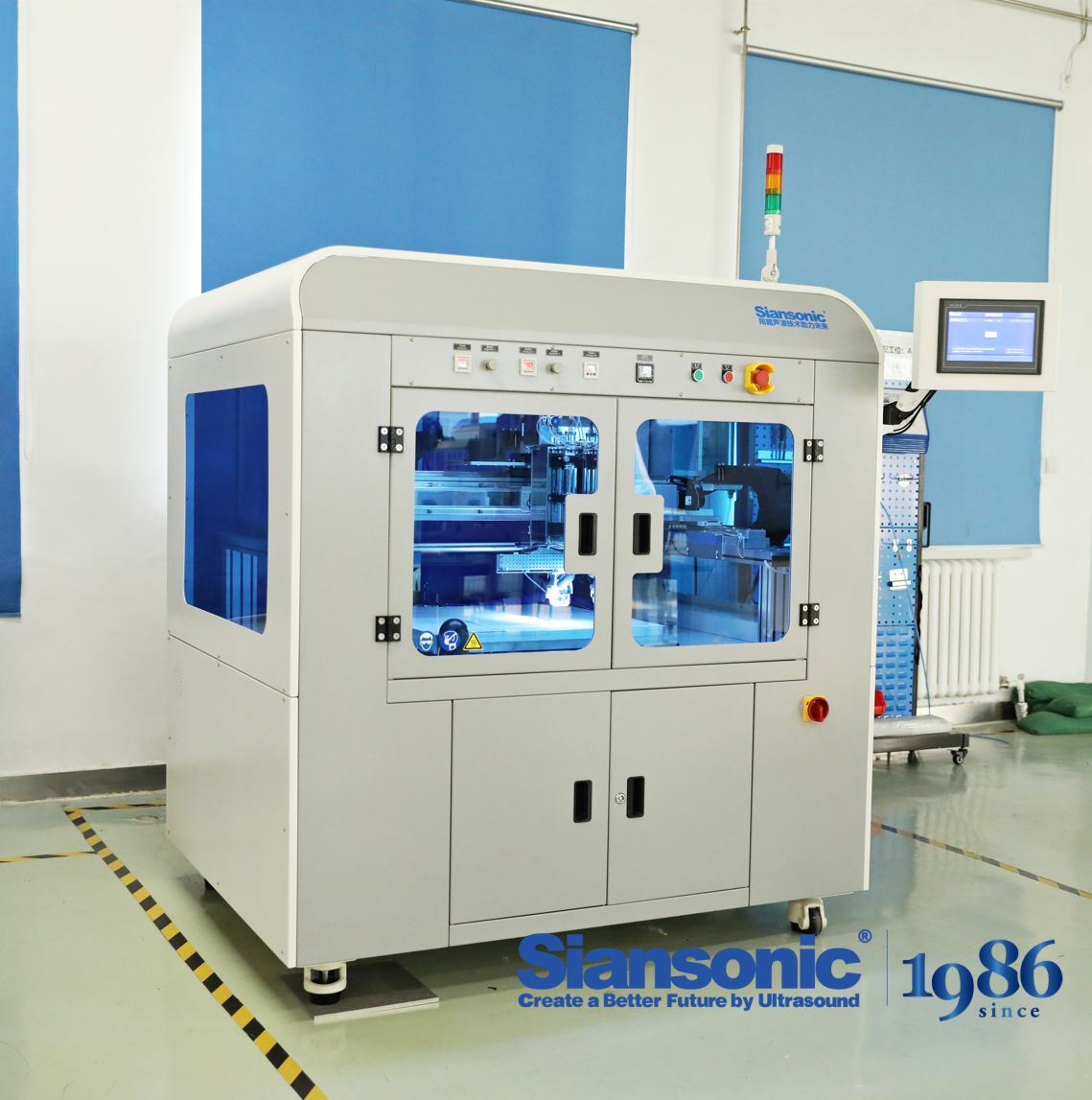
Achieving a pristine film at the nanoscale begins with mastering the diameter of every droplet before it ever touches the substrate. When droplets arrive with inconsistent volumes, they spread unevenly, leaving behind thin spots, pinholes, or ridge-like defects that become glaring under an electron microscope. By precisely tuning theatomization pressure, nozzle geometry, and solvent viscosity, researchers can narrow the droplet size distribution to within a few nanometers of the target. This uniformity ensures that each droplet carries nearly identical mass and momentum, allowing the liquid to merge into a continuous, defect-free layer instead of forming isolated islands that later crack or delaminate.
The relationship between droplet size and film quality becomes especially critical when coating high-aspect-ratio features or ultra-smooth substrates. Oversized droplets tend to splash or trap air bubbles at the impact point, while undersized ones may evaporate mid-flight, depositing dry particles rather than a wet film. A tightly controlled median diameter—often in the sub-micron range—lets the droplets land with just enough kinetic energy to spread and coalesce without disturbing previously deposited material. This delicate balance prevents the “coffee ring” effect and surface roughness that plague conventional spray or inkjet methods, yielding a film whose thickness varies by less than a few atomic layers across the entire wafer.
Practical implementation relies on real-time feedback rather than static settings. Laser diffraction or high-speed imaging monitors the droplet cloud continuously, adjusting the actuator frequency or carrier gas flow the moment the size drifts beyond tolerance. Such closed-loop control sidesteps the batch-to-batch variability that often goes unnoticed until final inspection. The payoff is a manufacturing process where flawless nanoscale films are not a lucky outcome but a repeatable standard—whether the goal is a barrier layer for flexible electronics, an anti-reflective coating, or a gate dielectric in next-generation transistors.
Inline Thickness Feedback Without Breaking Vacuum
Keeping the deposition environment sealed is non-negotiable for high-purity films. With inline thickness feedback, you watch the layer build moment by moment through a viewport or sensor array, adjusting rate or power on the fly while the vacuum remains undisturbed. This closed-loop control eliminates the guesswork that often forces engineers to vent, measure, and re-pump—only to find the first run was already off-target.
Quartz crystal monitors and optical reflectance probes are common workhorses here, but what sets modern systems apart is how seamlessly they feed data back to the deposition source. A slight drift in evaporation rate triggers an immediate compensation, not after the fact. The result is tighter thickness uniformity across the substrate and far fewer scrapped batches, especially in multi-layer stacks where each nanometer counts.
Even in production settings with high throughput, bypassing vacuum breaks saves hours of pump-down time and reduces exposure to moisture or oxygen. Inline feedback isn't just a convenience—it reframes process development. You can iterate on recipes without losing vacuum integrity, preserving film adhesion and interface cleanliness that would otherwise degrade with repeated venting.
Coating Chemistry Preservation for Heat-Sensitive Compounds
Heat-sensitive compounds like enzymes, probiotics, and certain vitamins lose function rapidly when exposed to drying temperatures above 60°C. A thin polysaccharide or protein coating can slow that loss dramatically. Maltodextrin, gum arabic, and whey protein isolate are common choices because they form a glassy shell around the active core, reducing heat transfer and shielding against moisture and oxygen. The coating does not need to be thick; a layer of just a few micrometers often preserves more than half of the original activity during spray drying or fluidized bed processing.
The key lies in matching coating chemistry to the compound's degradation pathway. For enzymes, a coating with a high glass transition temperature keeps the shell rigid and slow to conduct heat. For probiotics, adding a small amount of trehalose or sucrose to the coating mixture stabilizes cell membranes during the drying phase itself. Coacervation, where two oppositely charged polymers form a complex around droplets, works well for oils and lipophilic actives because it avoids the use of high heat from start to finish. The result is a shelf-stable powder that releases its payload only when exposed to the target conditions.
Poor coating uniformity is the main reason preservation fails. If some particles have cracks or thin spots, heat enters quickly and degrades the core. Layer-by-layer deposition, alternating cationic and anionic polyelectrolytes, lets manufacturers build a seamless barrier at room temperature. Another approach is to pre-coat with a lipid layer, then apply a secondary polymer shell. This dual-layer method is especially useful for vaccine adjuvants and volatile flavor oils, where even a brief temperature spike above 40°C can ruin the batch.
Modular Stages That Handle Fragile or Flexible Surfaces
Modular staging rarely treats the ground beneath it as an afterthought. When working over historic tile, aged hardwood, or delicate vinyl flooring, the system relies on a distributed load path rather than point pressure. Wide base plates and overlapping joint channels spread weight across a much larger footprint, so even a heavily loaded stage won't leave dents or compression marks. Adjustable feet allow millimeter-level leveling without forcing the deck into the floor, and non-marking contact pads eliminate scuffs during setup and teardown.
The real advantage appears with flexible surfaces that move under load. Instead of rigidly anchoring into the substrate, the modules float above it with restrained lateral movement. Elastomeric isolators between the stage frame and the floor absorb micro-shifts, preventing friction burns on sprung dance floors or cushioned vinyl. Where a traditional stage would tear or wrinkle the finish, these platforms let the underlying material flex naturally while keeping the upper deck stable for performers and equipment.
Installation crews also benefit from modular sequencing that minimizes repeated contact. Because each section locks to its neighbor before being lowered, the floor sees one controlled touch rather than dozens of dragging adjustments. For venues with irreplaceable surfaces, this means fewer repair cycles and faster changeovers without sacrificing load capacity or safety margins.
Reducing Overspray and Material Loss in High-Mix Labs
In high-mix labs, the same spray booth might handle a dozen different coating formulations in a single shift. Each product brings its own viscosity, surface tension, and target film thickness, yet many teams still run one or two blanket spray settings to save time. That shortcut quietly drives overspray up: wide fan patterns and high atomization pressure are kept “safe” for the most difficult coating, so every other material gets applied with far more mist than needed. The first real gain comes from treating spray parameters as product-specific, not booth-specific.
Programmable spray controllers make this practical without slowing down changeovers. Operators can store a short recipe per coating—fan width, fluid flow, atomizing air, and trigger point—then recall it when the next batch starts. Even simpler, using low-pressure HVLP or compliant guns with adjustable pattern regulators prevents the habit of cranking air up to cover sloppy technique. Small-volume labs also benefit from disposable cup liners and smaller fluid tips, which cut the amount of coating that ends up dried inside the gun or washed away during cleanup.
Beyond equipment, the difference usually shows up in how teams watch material use. Weighing cups before and after a run, or comparing actual coating consumption against the calculated wet-film requirement, flags drift early. If a particular color or resin consistently over-sprays, the issue is often a worn nozzle or a pressure setting that got bumped during cleaning. A five-minute weekly check of seals, needle packing, and air cap alignment prevents the slow creep back into wasteful patterns. Labs that keep these checks informal but consistent tend to see material loss drop without any new capital spending.
FAQ
They use high-frequency vibrations to break up coating liquid into fine, uniform droplets, enabling extremely controlled film thickness and minimal overspray.
Yes, nearly every aspect can be tailored—from nozzle configuration and liquid delivery to motion control and software—so the system matches your substrate size, coating pattern, and throughput targets.
Medical device manufacturing, fuel cell and solar cell production, electronics, and advanced glass coating, among others.
The gentle, low-velocity spray produces far less bounce-back and drift, so more of the coating ends up on the substrate rather than being wasted in the air or on surrounding equipment.
Everything from nanoparticle suspensions and conductive inks to photoresists, silicones, and bio-compatible polymers, depending on the nozzle and fluid delivery setup.
The software coordinates pump flow rate, ultrasonic power, stage speed, and path overlap, which lets you fine-tune wet film thickness and repeatability across batches.
They are usually designed as modular units with standard interfaces, so integration tends to be straightforward, especially when the vendor provides custom mounting and automation support.
It depends on the material and process, but wet films from tens of nanometers up to a few microns are typical, and multiple passes can build thicker coatings while preserving uniformity.
Conclusion
A genuinely customizable ultrasonic coating platform starts by matching nozzle geometry and spray pattern to the actual substrate, whether it is a narrow fiber, a curved lens, or an oddly shaped flexible sensor. This substrate-first approach avoids the compromises that come from forcing a standard nozzle onto a non-standard part. Instead of relying on general presets, the system lets you adjust excitation frequency and flow path to produce a narrow droplet size distribution, which is what keeps films smooth and defect-free when coating at nanoscale tolerances. Real-time thickness measurement integrated directly into the line means you can correct drift without opening the chamber or losing vacuum, saving both time and batch consistency.
The low-energy atomization at the core of ultrasonic coating also protects heat-sensitive chemistries, so active compounds, polymers, and biological materials retain their function after deposition. For fragile or flexible surfaces, modular stages with soft touch handling and adjustable working distance reduce contact stress while maintaining uniform coverage. In high-mix labs where material costs are constantly scrutinized, the tight spray envelope and low-velocity droplet cloud cut overspray dramatically. Because every setup is configured around the specific fluid and substrate rather than a generic catalog item, you end up with less waste, fewer coating defects, and a process that can be tuned quickly when the next material or geometry arrives.
Contact Us
Contact Person: Ivy Zhang
Email: [email protected]
Tel/WhatsApp: +86 1081502288
Website: https://www.siansonic.com/