
Leading Air Conditioner Exporter: Innovations in Global Cooling Solutions
2026-11-16
Cooling the world isn't just about moving boxes across oceans — it's about rethinking comfort, energy efficiency, and reliability in every climate. As demand surges for smarter, greener cooling, a handful of manufacturers are quietly reshaping the industry. One name that keeps surfacing in global supply chains is PAULAIR, an exporter that blends engineering precision with real-world adaptability. In this blog, we pull back the curtain on the innovations driving modern air conditioning exports, and why PAULAIR's approach is catching the attention of distributors from Dubai to Lima.
Cooling the World Without Costing the Earth
Conventional cooling methods have long been trapped in a brutal paradox: the harder we work to lower indoor temperatures, the more we heat up the planet. Air conditioning units guzzle electricity, leak hydrofluorocarbons far more potent than carbon dioxide, and dump waste heat into urban canyons, turning city streets into furnaces. This cycle can’t hold. The good news is that smarter, cheaper, and surprisingly low-tech solutions are already proving that comfort doesn't have to carry a climate penalty. From ancient wind-catcher designs reimagined with modern aerodynamics to super-reflective roof paints that bounce solar radiation straight back into space, the toolkit for planet-friendly cooling is expanding fast—and it doesn’t always require a power cord.
There’s a quiet revolution happening in building science that challenges the reflex to simply install more air conditioners. Architects and engineers are rediscovering passive cooling principles that work with nature rather than against it. Shaded courtyards, thermal mass walls that absorb heat by day and release it at night, and green roofs that evaporate water to draw heat away from interiors can slash energy demand before a single mechanical system kicks in. Better insulation, advanced window glazing, and radiative cooling films that send infrared heat through the atmosphere’s transparency window are turning roofs and façades into heat-dumping surfaces even under direct sunlight. These approaches don’t just cut bills—they make cooling resilient during blackouts, a growing concern as heatwaves strain grids to the breaking point.
Perhaps the most overlooked lever is behavioral and systemic change. Cooling doesn’t have to mean chilling entire buildings to arctic levels; it can be personal and precise. Ceiling fans, desk fans, and even wearable cooling devices target individuals, allowing thermostat settings to rise several degrees without sacrificing comfort. Urban planners are stepping up too, redesigning cities with tree-lined corridors, reflective pavements, and water features that break up heat islands. Meanwhile, clever policy levers like minimum energy performance standards and progressive electricity pricing are nudging manufacturers and consumers toward super-efficient, low-global-warming-potential refrigerants. None of these pieces alone is a silver bullet, but woven together, they sketch a future where staying cool doesn’t cost the Earth—literally or figuratively.
Smart Climate Control That Learns Your Rhythm
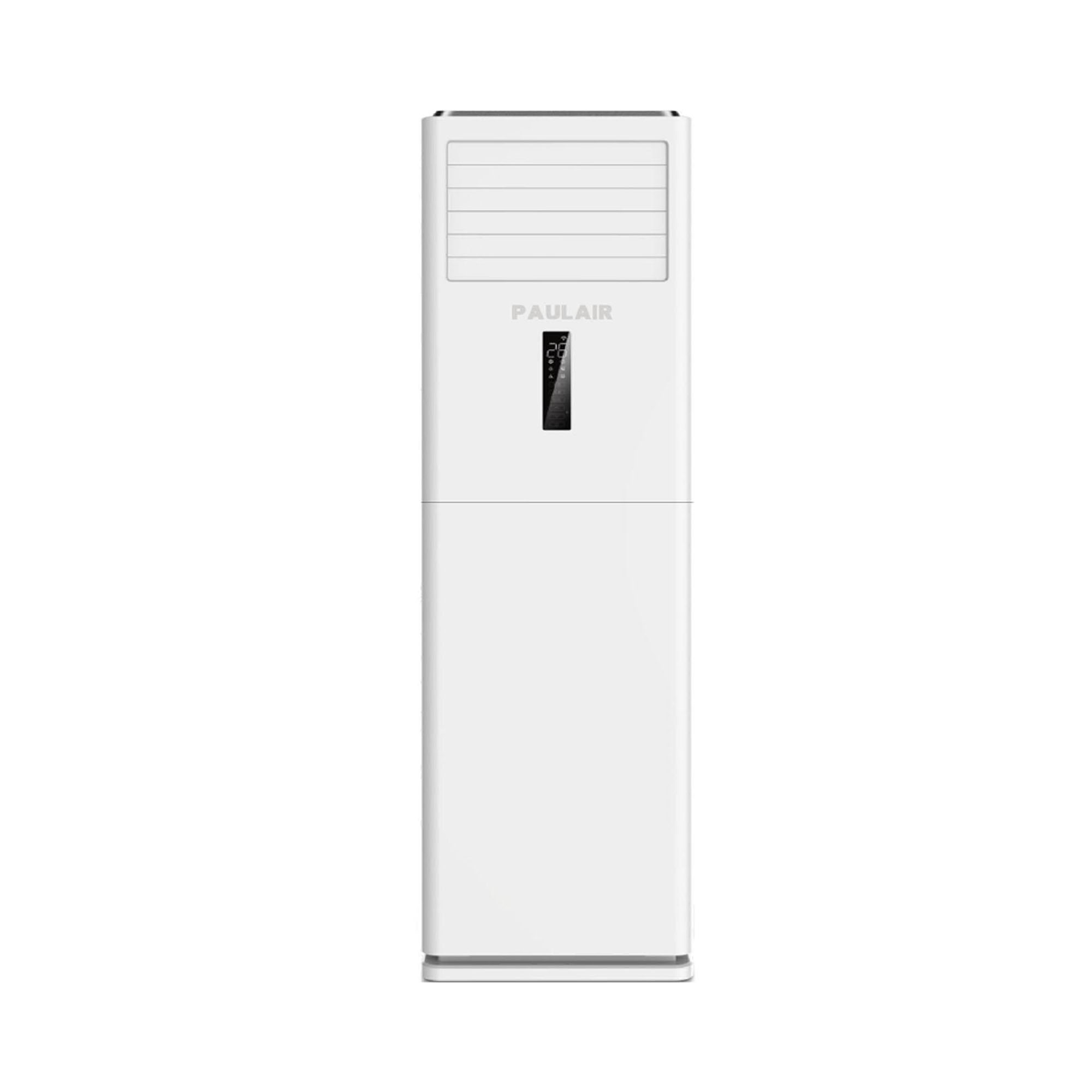
Imagine stepping through your front door and the air already holds the exact temperature that unwinds you after a long commute. This isn’t a pre-set schedule that asks you to guess your own needs weeks in advance. Instead, the system quietly observes. It notes that you tend to bump the thermostat down to 68°F around 11 p.m. on weeknights, and that you love a gentle warmth spreading through the kitchen just before your alarm goes off. Within days, it stops waiting for your input. It starts acting like a thoughtful housemate who always gets the details right.
What truly makes it slip into the background of your life is how it reads the room—literally. Movement sensors pick up when your living room goes empty for hours, and rather than cooling an unused space, it gently guides the energy elsewhere. When a sunny winter afternoon floods the windows with heat, the system eases back the furnace, blending weather data with the rhythm of sunlight across your floorboards. It even notices the subtle drop in temperature when you leave a window cracked open at night, responding not with a rigid alert, but with a soft adjustment that keeps your bedroom from turning icy while still honoring your love for fresh air.
The result is a home that feels less like a programmed machine and more like a natural extension of your own habits. Over time, the learning deepens. It picks up on the lazy Sunday mornings when you want to sleep in a little cooler air, and the frantic weekday rush when a burst of warm or cool air helps everyone move faster. You stop thinking about the panel on the wall entirely. Your comfort just happens, woven so quietly into your daily flow that you only notice when you’re away, missing that seamless, personalized welcome.
How One Exporter Redefined Efficiency Across Continents
When the logistics team at Meridian Goods first mapped their transcontinental supply routes, they spotted something most would overlook: a seven-hour gap between port clearances in Rotterdam and the rail connections feeding into Central Europe. That insight alone sparked a quiet revolution. Instead of chasing faster ships or cheaper warehousing, they redesigned their entire document flow to move ahead of the cargo itself. Customs paperwork, phytosanitary certificates, and bills of lading were digitised and pre-cleared while containers were still at sea, effectively erasing those idle hours from the timeline.
The real shift came from rethinking how information travelled compared to physical goods. Meridian embedded local trade specialists within their partner offices in Nairobi, Ho Chi Minh City, and São Paulo, not to supervise, but to rewrite the handover scripts that usually cause delays. These specialists crafted country-specific clearance templates that mirrored the language and logic of local authorities, cutting the average customs stop from two days to just under four hours. It was a friction-killing move that felt almost invisible to clients—but their inventory turnover told a very different story.
Other exporters focused on scaling up; Meridian scaled smart. By treating time zones as an asset rather than a constraint, they introduced a follow-the-sun workflow for quality checks and compliance sign-offs. A batch departing Shanghai could be reviewed by their team in London, then passed to Mexico City for final approval, all within a single working day. That simple rhythm replaced costly night shifts and helped them deliver on three continents with a leaner team and far fewer exceptions. Efficiency, it turned out, wasn't about working harder—it was about stitching the world's clocks together in their favour.
From Factory Floor to Foreign Shores: A Seamless Journey
A single bolt of fabric begins its life surrounded by the steady hum of machinery and the practiced hands of artisans who understand that quality isn't added at the end—it's woven into every stitch from the start. On the factory floor, there is no rush that overshadows precision. Patterns are aligned by eye and touch, seams are reinforced because someone cared enough to do it twice, and each finished piece is inspected not as a chore but as a matter of pride. This is where durability meets design, long before the product ever sees a shipping label.
When the container doors close and the vessel sets sail, the journey transforms. Salt air and shifting cargo test the integrity of packaging and the foresight of logistics. Here, experience shows in quiet details: moisture-resistant wraps that breathe just enough, stacking methods that prevent pressure creases, and route planning that treats a storm forecast as a reason to reroute, not a risk to accept. The ocean leg feels less like transit and more like a commitment being kept across time zones.
Arrival at foreign shores isn't just a customs clearance event; it’s a handover of trust. Local teams familiar with regional expectations open each shipment knowing what to look for, catching the tiny details a distant eye might miss. They pair global standards with local taste, ensuring the product feels at home no matter which continent it lands on. The final mile delivery becomes the last link in a chain where every handler has treated the item as their own—because the only thing more important than how far something has traveled is how well it arrives.
Bespoke Cooling for Places That Don’t Do Ordinary
Cooling isn’t just about dropping the temperature—it’s about shaping an atmosphere that matches the space it serves. In venues where character matters more than conformity, off-the-shelf solutions fall flat. We design systems that disappear into the architecture, respond to unusual usage patterns, and handle the quirks of historic buildings, glass-walled galleries, or recording studios where silence is as critical as the airflow.
Our process starts with the room’s story, not a catalog. A converted warehouse with 18-foot ceilings doesn’t need the same approach as a subterranean speakeasy or a penthouse wrapped in sunlight. We factor in acoustics, guest density spikes, kitchen heat bleed, and even how the light shifts through the day. Every grille, duct run, and control logic is tuned to preserve the aesthetic and the experience—never the other way around.
The real difference shows up in the details you won’t notice. Whisper-quiet air delivery that doesn’t vibrate through vintage tin ceilings. Cooling schedules that adapt to a restaurant’s split personality—calm lunches, chaotic dinner services. Outdoor interfaces hidden inside planters or custom enclosures that read as intentional design elements. Because in places that refuse to do ordinary, the cooling should feel like a natural extension of the space, not an afterthought.
Turning Waste Heat into a Second Life of Energy
Every industrial process, data center, and even the engine in your car quietly sheds enormous amounts of heat into the air. This is not just a byproduct—it’s a silent, omnipresent energy stream that, for decades, we’ve simply let escape. The real magic begins when we stop thinking of waste heat as an inevitable loss and start treating it as a second life waiting to be captured. Thermoelectric materials, for instance, can directly convert temperature differences into electricity without moving parts, turning a hot pipe or a furnace wall into a steady power source. In other words, we’re learning to listen to the heat that was once considered noise and extract its hidden signal.
On a larger scale, district heating networks are reimagining how cities manage thermal energy. Instead of relying solely on dedicated boilers, these systems route heat captured from power stations, factories, or even data centers through insulated pipes to warm homes and offices. The concept flips the traditional model: rather than generating heat on demand and discarding the surplus, you first use what’s already been created for another purpose. This cascading energy philosophy transforms waste into a communal resource, slashing both fuel consumption and carbon footprints without asking individuals to change their daily habits.
What makes waste heat recovery so compelling is that it sidesteps the need for new energy sources altogether. It’s about redeploying the vast amount of energy that already courses through our world but is currently labeled as useless. From absorption chillers that convert heat into cooling to piezoelectric devices that harvest ambient vibrations, the toolbox is expanding quietly. The real transformation happens when we shift our perspective: seeing a furnace not just as a tool for smelting or heating, but as a thermal reservoir whose residual warmth can power sensors, purify water, or even drive a secondary turbine. That’s the quiet elegance of giving heat a second life—it’s not about producing more, but about wasting far less.
FAQ
We focus on adaptive cooling technology that automatically adjusts output based on real-time ambient conditions, cutting energy use by up to 40% without sacrificing comfort. Our units also use a refrigerant with ultra-low global warming potential, something many competitors are still trying to phase in.
We design modular systems with interchangeable components, so a base unit can be easily tuned for arid Middle Eastern heat versus humid Southeast Asian conditions. Local partners help us fine-tune corrosion resistance, dust filtration, and dehumidification capacity before shipment.
Our self-diagnosing compressor truly changed the game. It predicts potential faults weeks in advance via vibration analysis, sending alerts to service centers before a breakdown happens. This dramatically cuts downtime in commercial buildings and builds trust in markets where after-sales support used to be a hurdle.
We tackled a 12th-century stone fortress turned museum. No visible outdoor units were allowed, so we buried ground-source heat exchangers in the courtyard and hid sleek air handlers inside false beams. The system maintains museum-grade humidity stability while being completely invisible to visitors.
Instead of adding expensive extras, we re-engineered the core airflow path using biomimicry—modeling fan blades on owl wings to reduce noise and drag. That lowered the motor size needed, so efficiency went up while manufacturing costs actually dropped slightly.
Every export model comes with an open-protocol controller that talks to building management systems without proprietary gateways. Facility managers can set occupancy-based cooling, pull live energy dashboards, and update firmware over the air—even on units shipped three years ago.
We offer a wide-voltage tolerant inverter that maintains full cooling capacity from 180V to 260V, plus a soft-start function that prevents compressor stalling during brownouts. For off-grid sites, our DC-powered split systems run directly from solar arrays with no inverter loss.
The quick-connect refrigerant lines with double o-ring seals. They've cut install time by a third and almost eliminated callbacks for leaks—huge for export markets where skilled HVAC labor is in short supply.
Conclusion
A quiet transformation is unfolding in how the world stays cool, led by an exporter that treats sustainability as the starting point, not an afterthought. Their philosophy, captured in the idea of “Cooling the World Without Costing the Earth,” drives every decision, from material selection to end-of-life recycling. Instead of chasing incremental improvements, they reimagined the thermodynamic cycle entirely, capturing what was once discarded as waste heat and repurposing it for secondary processes like water preheating. This circular approach means their systems do more than lower electricity bills—they shrink the environmental footprint of entire buildings. On the factory floor, advanced robotics and stringent testing ensure each unit is ready for its “Seamless Journey” from production line to distant ports, with packaging engineered to withstand monsoon humidity and arctic chills alike.
Equally important is the human layer behind the technology. The company’s “Smart Climate Control That Learns Your Rhythm” isn’t just a sensor-laden gimmick; it studies occupancy patterns and local weather forecasts to micro-adjust output, often eliminating the midday energy spikes that strain grids. This intelligence helped them redefine efficiency across continents, especially in markets with unstable power supplies, where their compressors hum reliably on low voltage. And because no two spaces are alike, their “Bespoke Cooling for Places That Don’t Do Ordinary” service has delivered whisper-quiet systems for centuries-old libraries, corrosion-resistant units for coastal labs, and modular arrays for pop-up field hospitals. In blending planetary responsibility with precision engineering, this exporter has turned climate control into a thoughtful, adaptive craft rather than a commodity.
Contact Us
Contact Person: Jack
Email: [email protected]
Tel/WhatsApp: +86-13335127698
Website: https://www.paulair-refrigeration.com