
Leading Hot-Dip Galvanized Round Pipe Suppliers: Top 10 Industry Picks
2026-11-16
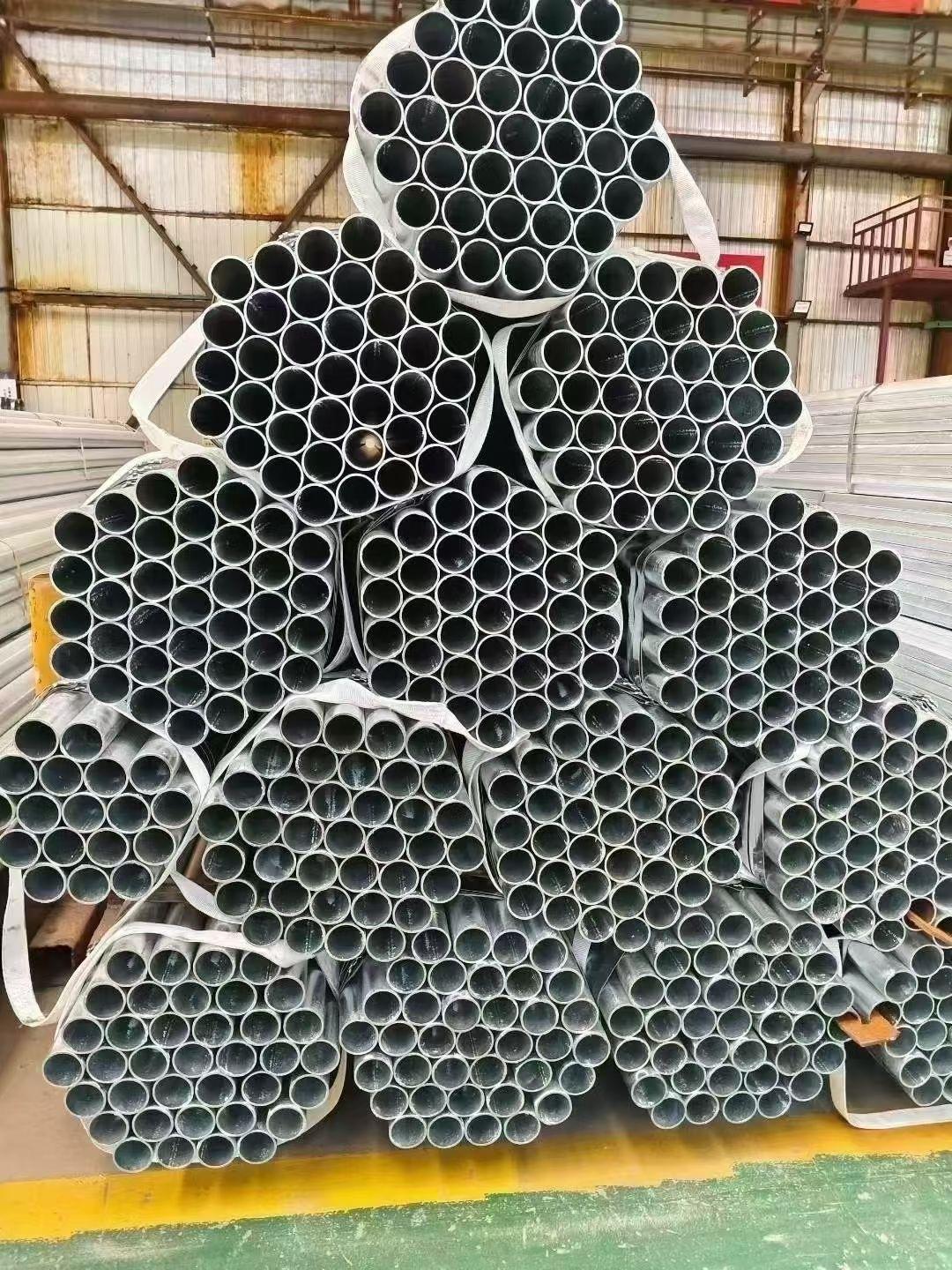
When it comes to sourcing hot-dip galvanized round pipes, the market is flooded with options—but not all suppliers deliver the same level of durability, corrosion resistance, and service. Whether you're tackling a large-scale construction project or need reliable tubular solutions for infrastructure, knowing where to turn can save you both time and budget. We’ve cut through the noise to bring you a curated list of the top 10 industry picks. Among them, Shunchen steel stands out for its consistent quality and customer-first approach, making it a name worth watching. Read on to discover which suppliers made the cut—and why they deserve your attention.
What Sets Premium Galvanized Round Pipes Apart in Demanding Projects
In infrastructure that can’t afford to fail, standard pipes simply don’t hold up. What makes premium galvanized round pipes different begins with the steel itself—a meticulously controlled chemistry that ensures uniform wall thickness and consistent structural integrity. The hot-dip galvanizing process goes beyond a quick surface coat; the zinc bonds metallurgically with the steel, forming layers that actively resist corrosion even at cut ends and vulnerable threads. This deep fusion creates a self-healing effect in the field, where minor scratches won’t become rust initiation points. Engineers rely on this behavior when pipelines run through coastal zones, underground conduits, or high-humidity industrial environments.
Another critical differentiator shows up under dynamic loads and extreme pressures. Premium pipes undergo multi-stage inline eddy current testing and hydraulic proof checks that cull inconsistencies invisible to the eye. The round profile isn’t just a shape choice—it distributes stress evenly, preventing the hot spots that cause square or rectangular sections to buckle under cyclical loading. When buried beneath highways or incorporated into high-rise water risers, these pipes hold dimensional stability over decades, resisting ovalization and maintaining flow capacity. Fabricators also value the enhanced ductility during bending and threading, which prevents micro-fractures that could shorten service life.
The final edge emerges during assembly and long-term service. Premium options feature precisely chamfered ends and clean, uniform threads that tighten without galling, cutting installation time and reducing leak paths. Complementary coatings—often a chromate conversion layer and a clear organic topcoat—shield the zinc from initial weathering while preserving the signature bright finish for months on the rack. Combined with full traceability from the mill, these features turn a commodity into a predictable, low-maintenance building block for water utilities, structural columns, and fire suppression systems that must perform without excuses.
Inside the Selection Process That Defines a Trusted Supplier
It starts quietly—months before a contract is even signed. A supplier’s tiny, almost invisible habits begin to tell the real story. We watch how they handle a last-minute order change, whether they ask sharp questions about our testing standards, and if they voluntarily share the results of an internal audit instead of waiting to be asked. Those early signals say more than any polished presentation ever could.
Then we move into what we call the stress-test phase. We send a batch with a deliberate, hidden variance in the spec and see who spots it. The ones that catch it without panic, communicate clearly, and propose a corrective plan before we even mention the issue—those are the ones that stay on the list. It’s not just about catching a mistake; it’s about proving they have their own uncompromising quality loop that runs independently of our oversight.
Final decisions are made in a room with no titles, just data. We map not only their delivery performance and material traceability but also the stability of their own subcontractor relationships. A trusted supplier isn’t the one that never fails—it’s the one whose failures are few, transparent, and already being solved before we ever feel the impact. That depth of assurance doesn’t come from a certificate on the wall. It comes from patterns we’ve verified repeatedly, sometimes over years, until predictability becomes the most valuable currency we trade in.
Spotlight on Ten Manufacturers Shaping the Global Market
In an era where supply chains stretch across continents and consumer expectations evolve overnight, a select handful of manufacturers have stepped beyond the role of mere producers. They are the architects of resilience, the early adopters of smart automation, and the quiet forces recalibrating entire industry standards. These ten companies don’t just respond to the global market—they anticipate its next turn, blending legacy expertise with a restless drive for improvement that keeps competitors watching and partners leaning in.
What sets this group apart isn’t simply scale or output, but a deliberate fusion of sustainability targets with precision engineering. From reimagining lightweight materials for electric vehicles to deploying closed-loop water systems in textile mills, each manufacturer turns constraints into creative fuel. Their footprints may be global, but the impact is deeply local—retooling regional workforces, raising the bar for ethical sourcing, and proving that profitable growth and environmental stewardship can run on the same assembly line.
Yet the true signature of these market shapers is invisible until you zoom out: they are rewriting the rules of collaboration. Instead of guarding innovations behind patents, many have opened R&D pipelines to startups, academia, and even direct competitors. It’s a bet on velocity over secrecy, and it’s paying off in shorter development cycles and breakthrough products that ripple across sectors. Watching them, it becomes clear that shaping a global market isn’t about dominating it—it’s about building the ecosystem where everyone else wants to play.
The Hidden Engineering Behind Long-Lasting Corrosion Resistance
Most people see a rusted railing and assume metal simply gives up over time. But engineers learned decades ago that corrosion isn’t just a material problem—it’s a design conversation between alloy chemistry, surface treatment, and the environment. The quiet genius behind structures that refuse to degrade often lies in deliberately engineered imperfections. A stainless steel handrail, for example, doesn’t fight rust by being purely stainless; it wins because a microscopically thin, self-healing chromium oxide layer forms the moment the surface gets scratched, starving the reaction of oxygen before it spreads. The alloy’s real trick isn’t strength—it’s the unstable equilibrium that repairs itself faster than the world can tear it down.
What’s less obvious is how geometry joins the fight. Sharp corners and stagnant crevices are invitations for moisture to linger, so long-lasting designs round edges, slope drainage paths, and eliminate bolted pockets where salty air can nest. In marine environments, you’ll notice sacrificial anodes—chunks of zinc or magnesium bolted to hulls and pipelines—corroding eagerly while the steel they protect stays pristine. It’s not a coating; it’s a calculated sacrifice, turning the entire structure into a controlled battery where the less noble metal dies so the skeleton can live. These decisions never appear in glossy brochures, yet they’re the reason bridges outlast politicians’ promises and submarines return from decades underwater with their pressure hulls still whispering integrity.
How Production Techniques Are Evolving Beyond Traditional Standards
For decades, factories operated on the principle that consistency meant repetition—the same cut, the same weld, the same assembly line motion repeated thousands of times. This rigid approach delivered predictable quality but left little room for improvement once a line was set. Now, production floors are breaking that mold. Adaptive machinery equipped with real-time feedback loops can tweak torque, temperature, or pressure mid-cycle, learning from each unit produced. Instead of blindly following a static blueprint, systems adjust to material variations and tool wear, boosting yield and extending equipment life without human intervention.
Another quiet revolution is happening in the way products are physically built. Subtractive methods—cutting, drilling, grinding—are giving ground to additive and hybrid processes that build components layer by layer or combine both approaches in a single station. This shift doesn’t just save raw materials; it enables geometries and internal structures that were previously impossible to manufacture. For instance, a single printed part can now replace an assembly of seventeen components, eliminating fasteners, reducing weight, and simplifying supply chains in one stroke.
Beyond hardware, production techniques are being reshaped by data threads that run from the first sketch to the final quality check. Digital twins simulate entire lines before a single bolt is turned, uncovering bottlenecks that traditional planners would miss. Meanwhile, operators on the floor are shifting from routine monitors to problem-solvers, using augmented tools that overlay performance data onto the machines they service. The result isn’t just incremental efficiency—it’s a fundamental blurring of the line between design, production, and continuous improvement.
Forging Reliable Supply Chains: Strategies That Work
Building a supply chain that doesn't buckle under pressure starts with seeing it as a web of relationships, not just a series of transactions. The most resilient operations treat their key suppliers like true partners, sharing demand forecasts early, collaborating on risk assessments, and sometimes even co-investing in capacity or technology. When trust replaces rigid scorecards, both sides can flag potential disruptions before they spiral—a factory facing raw material delays, for instance, can alert the buyer to find alternative sourcing together rather than hiding the problem until it's too late.
Visibility remains the quiet superpower of any dependable chain. But real visibility goes beyond tracking shipments on a dashboard. It means understanding the n-tier network—knowing who supplies your suppliers and where their vulnerabilities lie. Smart companies map these dependencies and layer in scenario planning to stress-test each node. Instead of relying on a single region for critical components, they build a flexible base of qualified sources that can ramp up quickly, keeping continuity intact even when geopolitics or climate events blindside the industry.
What often separates supply chains that endure from those that fracture is how they handle inventory. A purely just-in-time model leaves no room for error, while excessive stock ties up cash and masks inefficiencies. The middle ground involves strategic buffers placed at carefully selected points—often where demand uncertainty spikes or where transportation lead times are inherently unstable. Paired with real-time demand sensing and agile logistics routing, this approach turns inventory from a blunt instrument into a precise tool that absorbs shocks without dragging down performance.
FAQ
A handful of names consistently surface in global trade circles: manufacturers like North Steel, EuroGalv, and DongPeng Tubular have built reputations for large-scale production capacity and on-time deliveries. Many smaller regional mills in Southeast Asia and Eastern Europe are also gaining traction thanks to competitive pricing and flexible minimum order quantities. The real 'top' depends heavily on your location and project specs—what works for a construction firm in Germany might not suit a water infrastructure project in Kenya.
Beyond price, smart buyers dig into coating consistency records and logistic flexibility. A supplier's ability to provide mill test reports showing zinc adherence across multiple batches matters more than a glossy catalog. Also watch for stock depth: does the warehouse frequently carry common diameters like 1" to 4" schedule 40, or is every order a special production run? Finally, responsiveness to custom lengths and end-finishing requests—threading, grooving, or plain end—often separates legitimate industrial suppliers from general traders.
The immersion step bonds zinc to steel metallurgically, forming an iron-zinc alloy layer that's far tougher than paint or powder coating. This sacrificial protection means scratches expose underlying zinc rather than bare steel, containing rust spread for decades. Thicker pipe walls particularly benefit because the bath time and temperature control allow deeper alloy penetration, delivering a lifespan of 50+ years in most non-coastal environments without maintenance.
Structural framing in agriculture—think greenhouse columns and cattle fencing—absorbs a huge volume, because the coating withstands fertilizer and animal waste exposure. Municipal water and sewage systems rely on them for exposed risers and pump station piping, where painting simply isn't practical. Scaffolding, roadside guardrail posts, and solar panel mounting structures are other major consumers where the round shape eases clamping and aesthetics don't demand hidden fasteners.
ISO 1461 is the global benchmark for coating thickness and adhesion; a supplier certified to this standard proves their bath zinc composition and withdrawal speeds are tightly controlled. For material traceability, EN 10219 or ASTM A53 compliance confirms the steel substrate itself isn't subpar. In fire sprinkler applications, FM or UL listings become non-negotiable, and for drinking water, ANSI/NSF 61 certification signals that zinc leaching thresholds are met.
They invest in in-line stripping and pre-flux stations that remove mill scale and oxides before the pipe enters the kettle, eliminating cold spots. Real-time magnetic thickness gauges positioned right after the quench tank allow operators to adjust withdrawal angles and air knife pressure instantly. Top-tier mills also cross-check readings with destructive testing—stripping zinc from sample rings and weighing the difference—to calibrate their electronic gear monthly, not just annually.
You might encounter names like Baosteel's galvanizing division or Al Jazirah Pipe in the Middle East, both handling high-volume export orders with in-house shipping logistics. Smaller but specialized names such as Metalfab Industries in India have carved a niche in custom cut-to-length programs for European scaffolding hire companies. Don't overlook regional champions: Polish mills often supply German construction projects, while Vietnamese galvanizers are boosting market share in Australian water infrastructure due to preferential trade terms.
Reliability shows in disaster recovery responsiveness rather than just quarterly pricing. After a hurricane or earthquake, can the supplier divert stock to the damaged region within 72 hours? Reliable suppliers maintain buffer inventories at multiple ports and pre-arrange priority shipping slots. Another telltale sign: they proactively communicate mill lead-time changes and offer downgauging alternatives when specified wall thicknesses face steel shortages, instead of going silent and missing delivery dates.
Conclusion
In demanding applications where failure is not an option, the gap between an ordinary round pipe and a truly premium hot-dip galvanized product lies in hidden engineering that goes far beyond standard coating thickness. The most reliable suppliers invest in precisely regulated immersion processes and tailored alloy baths, then reinforce the protective layer with advanced passivation treatments that lock out moisture and chemical attack for decades. This relentless focus on uniformity—of zinc bonding, wall concentricity, and structural grain—is what guards against the micro-cracks and weak spots that shorten service life. During supplier evaluation, project owners cut through broad marketing claims by tracing a mill’s entire quality thread: the raw steel chemistry, real-time bath analytics, and independent full-section tensile tests that prove consistency across thousands of meters. When a manufacturer routinely exceeds ASTM, EN, or JIS standards instead of merely meeting them, it signals an ingrained production discipline that cannot be faked.
Our selection of ten standout manufacturers brings these behind-the-scenes capabilities into clear view. Each has rewritten the rulebook on scale and precision by deploying automated inline gauging and closed-loop zinc control systems that respond to fluctuations before a single pipe falls out of tolerance. Yet technical mastery alone does not earn a spot at the top; these firms have transformed their supply footprints into genuine competitive moats. They keep buffer stocks of high-demand diameters at regional hubs, operate multimodal logistics to circumvent port delays, and hold certification portfolios that open doors on every continent. Many are also pioneering low-emission pickling lines and heat-recovery loops, proving that next-generation corrosion resistance can align with leaner energy consumption. Collectively, they show that a truly leading supplier is not just a source of round pipes, but an engineering partner that keeps critical infrastructure moving—from water treatment plants to offshore wind foundations.
Contact Us
Contact Person: Max Zhou
Email: [email protected]
Tel/WhatsApp: +86 15712216177
Website: https://www.shunchensteelmaterial.com/