
Mixer Agitator Company Selection Guide for Reliable Industrial Mixing
2026-08-27
Finding a mixer agitator company that won’t let you down mid-batch is harder than most procurement teams expect. Between inflated spec sheets and vague performance promises, the gap between catalog claims and real-world mixing reliability keeps widening. This guide cuts through that noise—covering what actually matters when evaluating industrial mixing partners, from torque curves to after-sales support. Whether you’re scaling up a new line or replacing underperforming equipment, Sinou brings field-proven engineering into focus so your next selection decision rests on evidence, not guesswork.
Viscosity and Shear: The First Fork in the Road
Viscosity rarely announces itself until a fluid is forced to move. At rest, honey, paint, and polymer melts share a deceptive stillness. The moment a shear stress is applied, though, each one answers differently. Some thin out and flow more freely as stirring intensifies; others thicken and resist, almost as if the motion itself were building structure. This divergence is the first real fork in the road for anyone trying to pump, mix, or coat with a complex liquid.
The classical view treats viscosity as a single number, a fixed ratio between shear stress and shear rate. That works for water, simple oils, and most gases. But for a large share of real-world fluids, the ratio drifts as shear rate climbs. A suspension of cornstarch in water can pour gently yet stiffen into a near-solid under a sudden impact. A latex paint thins under the brush and then recovers just enough to avoid dripping. Both behaviors come from the same underlying tension: how internal structures—particle networks, polymer entanglements, droplets—respond to deformation.
Recognizing this fork early saves more than just troubleshooting time. It changes how a process is designed, whether the goal is keeping a coating uniform, preventing sedimentation in a tank, or selecting an inline mixer. Measuring viscosity at a single speed can mislead. A flow curve over a range of shear rates reveals the fluid's actual character and points toward the right equipment and operating window.
Matching Impeller Geometry to Tank Dimensions
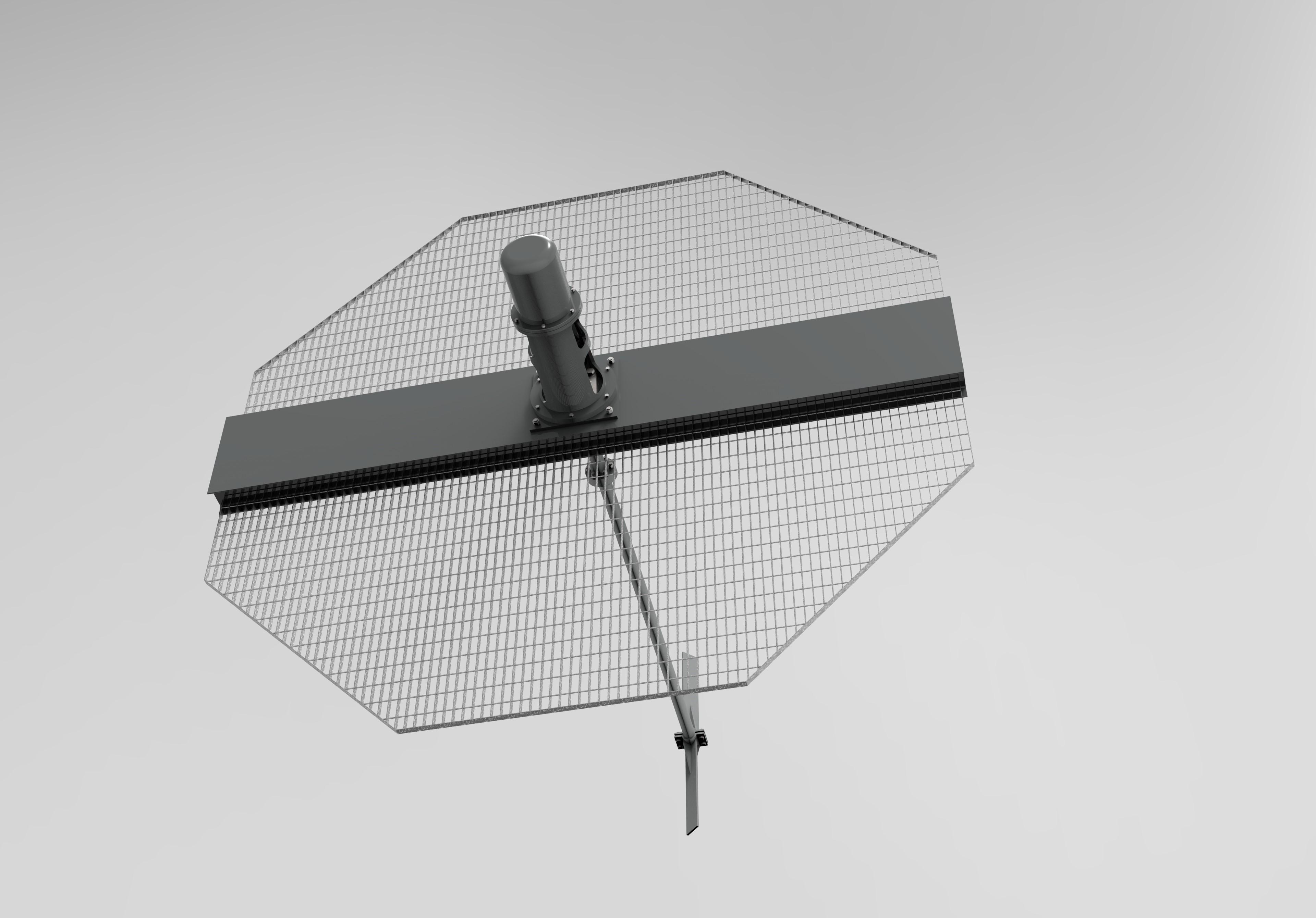
The connection between impeller shape and vessel proportions rarely gets the attention it deserves. A tall, narrow tank calls for a different strategy than a wide, shallow one, and simply scaling up a lab mixer often leads to dead zones or excessive shear. The impeller diameter typically lands between one-third and one-half of the tank diameter, but that range shifts once you account for liquid level, baffle placement, and the type of flow you need to generate. Axial-flow impellers tend to work well in deeper tanks where top-to-bottom turnover matters, while radial-flow designs suit lower liquid heights where horizontal movement or gas dispersion is the priority.
Clearance above the bottom is just as important. If the impeller sits too low, you risk scouring settled solids or starving the blades of clean flow; too high and the upper volume stagnates. In practice, a bottom clearance of one impeller diameter often strikes a workable balance, but that rule bends when the tank has a dished head or a cone bottom. Sloped bottoms alter the flow path near the floor, and the impeller may need to be raised or tilted slightly to avoid dead pockets.
Another overlooked variable is the number of impellers. Tanks with a liquid height-to-diameter ratio above roughly 1.2 usually benefit from a second impeller, spaced about one impeller diameter apart vertically. This prevents the upper layer from becoming a quiet zone while keeping power draw within reason. Matching geometry is not about hitting a single ideal number, but about reading how the tank profile interacts with the impeller's discharge pattern and adjusting until the entire volume moves with purpose.
When to Choose Top-Entry vs. Side-Entry Agitators
In most process vessels, top-entry agitators remain the default because the drive and seal stay accessible above the liquid level, and maintenance doesn't force a shutdown. They handle tall liquid columns well, especially when two or three impellers are stacked on one shaft to keep different zones moving. The downside shows up with longer shafts: without a steady bearing near the bottom, vibration and deflection become real problems, and adding that bearing creates a wear point inside the product zone.
Side-entry designs rarely make sense in small tanks, but they become attractive once diameter exceeds roughly 10 meters or the liquid is too shallow for a long vertical shaft. Mounted through the shell at an angle, they push fluid horizontally and create a slow, basin-wide roll that keeps solids from settling. The main headache is seal replacement—because the seal sits below the liquid surface, you either drain the tank or use a special retractable housing, which adds cost and complexity.
A better selection criterion is to match the impeller orientation to the mixing job. Top-entry works when you need high local shear, gas dispersion, or staged mixing in a deep vessel. Side-entry works when the goal is gentle homogenization or suspension in a large, flat-bottomed tank with minimal baffling. Also weigh the layout: a top-entry unit needs overhead clearance for motor and shaft removal, while a side-entry unit needs enough room around the shell for drive access and potential retraction.
Scaling Up Without Losing Mix Quality
Growing a mixing workload usually means more sessions, tighter deadlines, and the risk of letting small details slip. The first step to preserving quality is to stop treating each mix as a blank canvas. Build a personal template with your go-to routing, bus processing, and metering already in place. That way you spend your ears on balance and tone instead of re-creating the same setup every morning. Keep a short checklist for each pass — phase check, low-end balance, vocal intelligibility, automation rides — and review it before printing. It feels slower at first, but after a week it becomes second nature and catches errors that fatigue would otherwise hide.
Another underrated part of scaling is learning to work in focused blocks rather than marathon sessions. Ear fatigue is real, and long hours often lead to overcooked low end or harsh highs that sound fine only because your ears have adapted. Set a timer for 45 to 60 minutes, take a real break away from the speakers, then come back to the same mix. You'll hear problems faster and make fewer revision cycles. Also, keep two or three reference tracks loaded in every session, but switch between them at low volume. This keeps your judgement anchored to the outside world while you move through a larger queue of projects. Quality doesn't come from extra hours; it comes from repeated, clear decisions made in a controlled environment.
Materials and Seals for Corrosive or Sanitary Duties
Selecting materials for corrosive or sanitary service goes beyond picking a stainless grade off a chart. A wetted surface that survives a strong acid may still harbor micro-crevices where product residue collects, or it may fail an electropolish pass after welding. Austenitic 316L works for many mild chemicals and clean-in-place cycles, but chloride-bearing streams at elevated temperatures often demand duplex alloys, high-nickel grades like Alloy 22, or even titanium when oxidizers are present. The finish matters as much as the alloy: sanitary duties typically call for Ra 0.8 µm or better, and mechanical polishing alone rarely achieves the low defect counts that electropolishing delivers.
Seal selection trips up more installations than the metal parts do. EPDM offers broad resistance to polar solvents and steam, yet it swells badly in mineral oils. FKM handles higher temperatures and many hydrocarbons but degrades in hot water or amines. PTFE and its modified versions provide near-universal chemical compatibility, but cold flow under load means they need careful gland design to avoid leaks after thermal cycling. For hygienic lines, any elastomer that contacts the product must carry FDA or USP Class VI certification, and even certified compounds can leach trace oligomers if the cure system is not matched to the process.
Beyond base material and seal choice, the geometry of the wetted path decides how well the system stays clean or resists attack. Threaded fittings create dead legs where bacteria or aggressive media linger, so sanitary circuits lean on tri-clamp or aseptic flange unions with flush interior profiles. Drainability matters; any horizontal run that cannot fully empty will concentrate corrosive species at the low point during shutdowns. Documented heat numbers and surface roughness logs are not just paper-pushing—they let you trace a failed part back to a specific melt or finishing lot, which is often the only way to prevent a repeat failure in critical dosing or fermentation lines.
Balancing Power Draw Against Blending Time
Most people assume a blender’s wattage tells the whole story, but that number only matters if you look at how quickly it pushes ingredients into a vortex. A 1,500-watt motor that needs ninety seconds to break down frozen fruit ends up consuming more total energy than a 900-watt unit that finishes the same job in half the time. The real metric isn’t peak draw—it’s watt-hours per batch.
There’s a sweet spot where blade geometry, jar shape, and motor torque line up. Too little power and the blade stalls under load, forcing you to pulse repeatedly and overheating the motor. Too much power without enough circulation creates a cavitation bubble that spins freely while ingredients sit untouched. In either case, you’re wasting electricity and waiting longer than necessary.
A better approach is to match the motor’s continuous output to the density of what you actually blend. For daily smoothies, a well-tuned 800–1,000 watts often outperforms a brute-force 1,200-watt machine because it keeps food moving without needing to recover. Reserve high peak power for short bursts—nut butters, thick frozen desserts—where the extra draw buys you a shorter blend time and a smoother result.
FAQ
Look at how they handle materials testing, not just their catalog. A supplier who runs trial mixes with your actual slurry or paste can flag viscosity shifts before you commit to a motor size.
Focus on shear thinning behavior. Have the company calculate apparent viscosity at the impeller, not just the low-shear number on a datasheet, and ask about blade diameter adjustments.
Most failures trace back to tip speed and power per volume. A reliable vendor will walk you through how they hold those two values constant, then adjust shaft diameter to avoid resonance.
Request a named service engineer and typical response windows for drive rebuilds. Ask if they stock seals and bearings for your model locally or if everything ships from a single plant.
Check surface finish details and drainability of the seal housing. They should discuss CIP spray coverage and crevice-free couplings, not just say the word hygienic.
Not necessarily. Off-the-shelf designs with long production runs often have better debugging. Custom builds only help when your tank geometry or solids loading is genuinely outside standard ranges.
Vague impeller selection charts, no mention of shaft critical speed, and quotes that skip your fluid's density and viscosity. If they won't discuss mixing intensity targets, walk away.
Ask for video of a similar batch test with tracer injection, or a written CFD validation. A reliable firm can usually provide pilot-scale results with your material and later run a full-scale performance guarantee.
Conclusion
Reliable industrial mixing starts with understanding how the fluid behaves under shear. Low-viscosity products often tolerate fast, high-shear impellers, while high-viscosity or non-Newtonian materials demand close-clearance designs and careful impeller positioning. The impeller diameter and blade angle need to match the tank proportions; an oversized impeller can waste energy, and an undersized one leaves stagnant zones near the walls. Top-entry agitators cover most closed-tank applications, but side-entry units often make more sense for very large storage tanks where blending at low power is the priority. When scaling from pilot to production, holding constant tip speed or power per unit volume helps retain the same blend time and homogeneity, though baffling and Reynolds number shifts still require pilot confirmation.
Material selection becomes critical in corrosive, abrasive, or sanitary service. Coatings, alloy impellers, and FDA-compliant elastomers are common, but the seal arrangement is often what determines long-term reliability: double mechanical seals with barrier fluid handle aggressive chemicals, while magnetic drives eliminate seal leakage altogether for high-purity duties. Power draw should not be viewed as a fixed number. It rises with viscosity and speed, so balancing horsepower against the required blend time avoids both under-mixing and excessive shear damage. A dependable mixer build comes from testing viscosity across the full operating range and confirming that the impeller, shaft, and seal package survive real process conditions, not just a clean-water baseline.
Contact Us
Contact Person: HaiYan
Email: [email protected]
Tel/WhatsApp: +86 18957325588
Website: https://www.senyoubeton.com/