
Private Label Polycarboxylate Superplasticizer for Superior Concrete Workability
2026-08-24
The gap between a pour that flows and one that fights you usually comes down to one admixture decision. Workability isn't a convenience—it's the margin between finishing on schedule and tearing out a bad placement. A private label polycarboxylate superplasticizer built for superior concrete workability gives ready-mix producers that control back. At HAISEN, we engineer high-range water reducers around real batching conditions, not just lab specs. If you're tired of chasing slump loss with generic additives, this guide walks through what separates a true private label solution from another repackaged product—and how it can sharpen your competitive edge.
How Polycarboxylate Ethers Change Water-Cement Interactions
Polycarboxylate ethers, often referred to as PCEs, act as highly effective water-reducing agents by altering the electrostatic and steric environment around cement particles. Unlike traditional plasticizers that rely mainly on electrostatic repulsion, PCE molecules grafted with long polyethylene oxide side chains create a dense comb-like structure. When added to a cement paste, these side chains extend into the pore solution, generating a strong steric hindrance that prevents cement grains from clumping together. This physical barrier allows water trapped inside flocculated structures to be released, dramatically lowering the viscosity of the mix even at very low dosages.
The interaction begins at the solid-liquid interface where the negatively charged carboxylate groups anchor onto positively charged surfaces of hydrating cement phases, such as ettringite or calcium silicate hydrate. This adsorption is not static; it evolves as hydration progresses and new surfaces are exposed. The density and length of the side chains determine how effectively the PCE can delay the initial setting and control the rate of early hydration. Some formulations even incorporate functional groups that selectively bind to specific mineral phases, enabling a more predictable retardation effect without compromising long-term strength development.
In practice, the way PCEs modify water-cement interactions leads to significant changes in rheology, slump retention, and the overall robustness of concrete mixtures. Because the steric stabilization is less sensitive to sulfate concentration than purely electrostatic dispersants, PCEs perform consistently across a wider range of cement chemistries. This reliability allows producers to reduce the water-to-cement ratio while maintaining workability, ultimately yielding denser microstructures and higher compressive strengths. However, achieving this balance requires careful molecular design, since an overly strong adsorption or excessive side-chain length can cause undesirable air entrainment or delayed setting under certain temperature conditions.
Designing Slump Life Around Real Pour Schedules
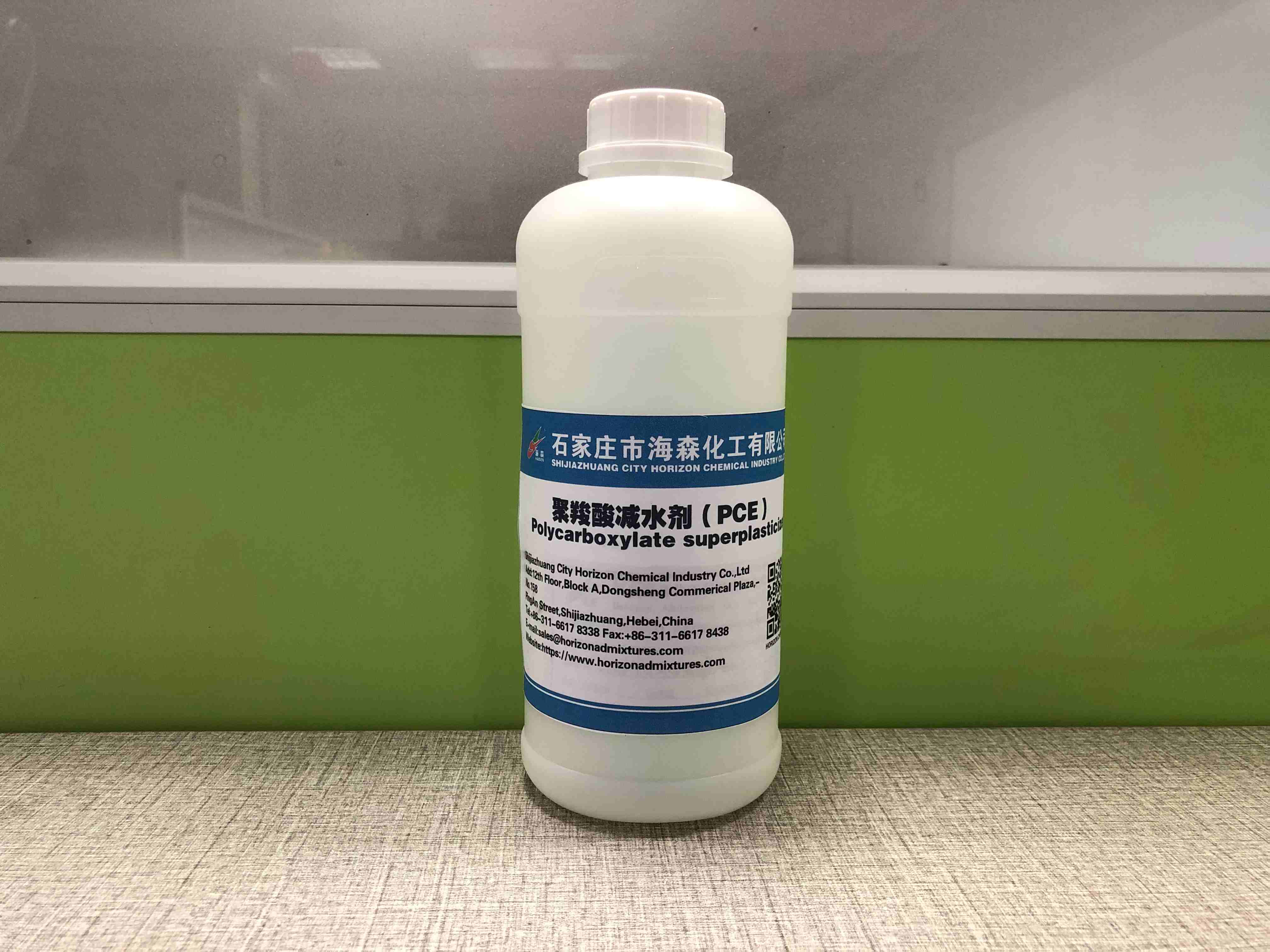
Concrete slump life rarely follows the tidy 90-minute window printed in spec sheets. On real pours, a truck might sit at the plant for twenty minutes, crawl through traffic for forty, and then wait another half hour while the pump gets repositioned. Designing slump life around actual pour schedules means mapping each delivery against the specific sequence of placement, not just assuming fresh concrete will stay workable until the crew is ready. A slab that starts at 8 a.m. may need to hold a 5-inch slump until noon if the finishers are still tying rebar in the last quadrant.
The most reliable approach is to work backward from the pour timeline and adjust the mix or admixture dosage accordingly. If a pour is expected to stretch past two hours from batching to discharge, a mid-range water reducer with extended slump retention often buys enough time without retempering on site. For longer gaps or hot-weather placements, a hydration stabilizer can keep the mix fluid until the crew actually calls for it, then allow normal setting once placed. Some contractors also split the difference: spec a slightly higher initial slump at the plant, knowing it will drop to the target range by the time the last truck unloads. But that relies on accurate timing from the field, so juggling slump life and pour schedules means constant communication between the batch plant and the pump operator.
High-Range Water Reduction That Doesn't Compromise Setting Time
Achieving high-range water reduction typically forces a trade-off with setting time, but this formulation breaks that pattern. It delivers the fluidity of a superplasticizer while keeping hydration kinetics on schedule, so crews don't wait on delayed set or rush through early stiffening.
The key lies in a tailored polymer architecture that disperses cement particles without over-retarding silicate phases. Unlike conventional PCEs that can slow early strength gain, this system maintains C3S reaction rates, giving predictable slump retention and normal initial set even at low water-cement ratios.
Contractors benefit from a single admixture that handles both high-range water reduction and reliable finishing windows. Whether in precast, ready-mix, or high-performance concrete, the result is denser, stronger concrete without the logistical headaches of extended setting times.
Private Label Formulations Without the Usual Supply Chain Headaches
We've rebuilt private label formulation from the ground up to remove the friction that usually slows things down. Instead of playing phone tag with overseas brokers or waiting weeks for samples, you work directly with our in-house chemists who own your project from first brief to final batch. That means fewer handoffs, clearer communication, and a formula that actually matches what you approved—not a watered-down version that shows up three months late.
Our production model is designed around small and mid-sized brands that don't need ten thousand units to get started. We keep minimum order quantities low, offer shared production runs when it makes sense, and maintain a standing inventory of common raw materials so your lead time stays measured in days, not quarters. If a supplier misses a shipment or a component gets discontinued, we have backup sources already vetted and can reformulate without sending you back to square one.
Robust Performance in Low-Grade and Recycled Aggregates
Working with low-grade and recycled aggregates often means accepting higher variability in particle shape, water absorption, and fines content. Instead of fighting these inconsistencies, the mix design adapts by using a slightly higher cement paste volume and a well-graded blend that locks particles together. This approach reduces the sensitivity to batch-to-batch changes, so the final strength and workability stay within a predictable range even when the raw material quality dips.
One practical method is to pre-saturate the recycled aggregate before batching. Because recycled material has a higher water absorption rate, adding it dry leads to rapid slump loss and uneven hydration. By bringing the aggregate to a saturated surface-dry condition, the effective water-cement ratio stays stable during mixing and placing. In field trials, this simple step has cut strength variation by nearly half compared to using dry recycled aggregate with a fixed water addition.
Durability also benefits from this robust design philosophy. Low-grade aggregates often carry micro-cracks or attached mortar that can act as weak points under freeze-thaw or chemical attack. A slightly lower water-cement ratio, combined with a small amount of supplementary cementitious material like fly ash or slag, densifies the interfacial transition zone around each particle. Over time, this reduces permeability and slows the ingress of chlorides, giving recycled aggregate concrete a service life that compares well with conventional mixes made from virgin crushed stone.
Field-Tested Workability for Pumping and Self-Consolidating Mixes
Getting a self-consolidating mix to leave the lab report and survive a real pour takes more than a target slump flow. On site, I watch how the concrete moves through the hopper, whether the pump strokes stay steady, and if the discharge runs clean without spitting or dragging aggregate. A mix that tests beautifully on a board can still choke a 40-meter boom when the line heats up, so we run a quick J-ring and visual stability check right at the pump, not just at the truck chute.
Temperature, haul time, and aggregate moisture shift the workability within minutes. On long placements, we often see the first truck flow loose and the last one fight the pump if the admixture was dosed for the morning's cooler batch. The fix is not always adding water; we adjust the high-range water reducer in small increments at the plant, and keep a portable V-funnel near the pump to catch any gain in viscosity before it becomes a line blockage.
With self-consolidating mixes, the real test is what the concrete does once it leaves the hose. It should fill tight reinforcement and form corners without vibrating, but also stay cohesive enough that the paste does not race ahead of the stone. I prefer to see a slight sheen on the surface and a soft, even spread at the discharge, not a watery halo. That balance of flow and body is what separates a mix that pumps all day from one that gets shut down by a clog or a blowout.
FAQ
Polycarboxylate molecules use a comb-like structure that disperses cement particles through steric hindrance rather than just electrostatic repulsion, so you get longer slump retention and lower viscosity at the same water reduction.
Yes, the formulation can be adjusted for sulfate sensitivity, setting time, or clay contamination. Private label suppliers often work with your mix design data to tweak the polymer side-chain length and charge density.
Typically 20-40% compared to a plain mix, depending on dosage and base materials. High-range versions push toward the upper end while keeping the mix pumpable.
Not dramatically. You may need to recalibrate the dosage pump timing because these products work at lower addition rates, and pre-hydration of the admixture in the mix water often improves dispersion.
Usually 0.2% to 1.0% by weight of cementitious material. The exact figure depends on target slump, temperature, and whether you're blending with supplementary cementitious materials.
Most are stable for 12 months if stored between 5°C and 35°C and protected from direct sunlight. Avoid freezing, as it can break the polymer structure and reduce effectiveness.
The product is shipped with your branding, safety data sheets, and packaging specifications. The formulator remains behind the scenes, so your customers see only your brand identity.
Yes, but the dosage may need adjustment. Polycarboxylates often perform well with silica fume because they reduce the water demand spike, while fly ash mixes may need a modified side-chain density to avoid over-retardation.
Conclusion
Polycarboxylate ethers reshape how water and cement interact at the particle surface, driving dispersion through steric hindrance rather than relying on electrostatic repulsion alone. This shift allows a high-range water reduction that doesn't come with the usual penalty of delayed setting. Formulators can tune the molecular architecture to match actual pour schedules, designing slump life that holds steady through long hauls or hot weather without sudden loss. Instead of forcing contractors to adapt to a generic admixture, private label versions let producers dial in workability retention precisely for the job at hand, whether that means a 90-minute urban delivery or a four-hour remote batch plant cycle. The result is concrete that flows easily at the point of placement yet still stiffens on schedule for finishing crews.
Beyond the chemistry, private label supply arrangements remove the headaches of sourcing specialized admixtures through convoluted distribution channels. Producers gain direct access to formulations backed by real field data from pumping and self-consolidating mixes, where workability is non-negotiable. These same products also perform reliably in low-grade and recycled aggregates, where high clay content or angular fines would normally eat up water reducer demand. By absorbing that variability, the superplasticizer keeps mix designs stable and predictable without constant re-dosing. In practice, this means fewer rejected loads, less water added at the site, and a finished surface that meets spec without last-minute adjustments.
Contact Us
Contact Person: Sam Lee
Email: [email protected]
Tel/WhatsApp: 86-311-6617 8338
Website: https://www.horizonadmixtures.com/