
Sand and Gravel Separator Chute Services for Efficient Aggregate Processing
2026-08-22
Sand and gravel rarely arrive ready to process. Feed variability, moisture, and sharp edges punish conventional chutes until separation suffers and maintenance costs climb. Sinou takes a different route: separator chute services designed around your material’s actual behavior, not generic specs. From custom liners to flow-optimized geometries, we help aggregate producers turn the chute from a wear item into a productivity asset. Here’s what to expect when you stop treating separation as an afterthought.
Rethinking Chute Angles to Cut Carryover
Most carryover problems are blamed on sticky material or high moisture, but chute geometry quietly does much of the damage. A steep angle can accelerate fines into a dead zone just past the discharge lip, while a shallow angle lets material stall on the wearing surface. Rethinking the angle means watching where product actually hits, not where the drawing says it should hit.
A practical shift is to focus on the final third of the chute. Lowering that section by a few degrees often cuts turbulence that throws particles backward. Wear marks near the side walls tell you exactly where flow detaches, so you can treat only the problem area instead of redesigning the whole chute.
Testing a new angle under normal feed rates usually shows quick, measurable change. Even two or three degrees can shrink carryover enough to skip a liner replacement cycle. Recording buildup depth before and after the adjustment gives the maintenance crew hard evidence that the geometry, not the ore, was the real bottleneck.
Liner Materials That Handle Wet Sand Without Sticking
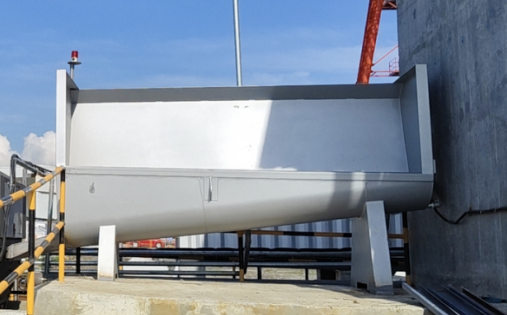
Wet sand has a nasty habit of clinging to most liner surfaces, turning a smooth transfer into a choked mess. Ultra-high-molecular-weight polyethylene, often called UHMWPE, stands out because its low surface energy makes water and fine particles bead up instead of forming a sticky slurry. It works especially well in chutes and hoppers where the material slides at moderate speeds, though you may need to sacrifice some abrasion resistance compared to hardened steel.
Polyurethane liners offer another practical route, particularly when the sand carries sharp edges or comes in hot. The slight elasticity lets wet sand bounce off rather than pack into the surface, and you can specify a smoother finish to further discourage buildup. Keep in mind that polyurethane can be more expensive upfront, but fewer stoppages for cleaning often justify the cost in high-moisture operations.
Ceramic tiles embedded in a rubber backing give you the best of both worlds when abrasive wet sand is moving fast. The hard ceramic face resists grooving that would trap moisture, while the rubber absorbs impact so the tiles don’t crack. This combination handles wet, aggressive sand without the sticky film you get from bare metal, making it a favorite for transfer points and screen undersize chutes.
Why Standard Chute Kits Fail in High-Volume Gravel
Most standard chute kits are built around assumptions that fall apart once the material shifts from occasional stone to continuous, abrasive gravel. The liners are often too thin, the angles too shallow, and the fasteners exposed. Under heavy volume, gravel doesn't slide; it chews. Within weeks, you see holes worn through corners, bolts shaved flat, and deflectors bent out of shape. That kind of damage isn't just cosmetic—it changes the flow path and makes every downstream component work harder to compensate.
Another overlooked issue is how standard kits handle moisture and fines. Gravel with a high percentage of crushed fines acts like wet sandpaper. It packs into dead spots, promotes rust between liner plates, and freezes into clumps in colder weather. Because the kits weren't designed with clean-out access or modular wear zones, operators end up shutting down the line for hours just to chip out packed material or replace a single failed section. The result is the same: production drops and maintenance costs climb far beyond what a purpose-built gravel chute should cost.
Perhaps the most telling failure point is the transfer angle. Standard kits often reuse generic geometries meant for lighter aggregates. High-volume gravel needs a steeper drop, a narrower throat, and a controlled impact zone. Without those adjustments, rock bounces, hangs up, and hammers the same spot repeatedly. Over time, that repeated impact causes fatigue cracks that spread quickly under heavy load. It is not a matter of if the chute will fail, but how soon and how unexpectedly.
A Field Guide to Spotting Chute Wear Before It Fails
Most chute failures announce themselves long before they happen—if you know what to look for. Start by walking the line with a flashlight and a rag. Wipe down high-wear zones—impact points, directional changes, and discharge lips. What you're hunting for are early signs: a dull, sandblasted texture on the steel, hairline cracks radiating from bolt holes, or shallow grooves that catch your fingernail. These are the first whispers of abrasive wear. If you see a polished sheen where material slides, that's fine; if the surface feels rough or shows a patchy, mottled color (often a sign of heat or corrosion), mark it for thickness testing.
Carry an ultrasonic thickness gauge. Spot checks every six inches along the chute's wear path will reveal thinning long before a hole appears. Don't just measure the obvious flat sections—edges and transitions often wear faster. Alongside measurements, watch how material moves. A sudden change in trajectory, a new dust plume, or product building up in corners points to a developing hang-up or perforation. If the chute starts making a hollow, ringing sound when struck, that's usually a sign the liner has separated from the shell.
For lined chutes, pay attention to fastener heads. If bolt heads are worn smooth or missing, the liner may be loose, allowing material to work between liner and shell—accelerating corrosion and wear. Tap the liner with a hammer; a dull thud instead of a sharp ring suggests voids. Keep a simple log with photos and thickness readings. Wear that grows slow and steady is manageable; a sudden spike often means a change in feed rate, particle size, or moisture content. Addressing those small clues early beats an unplanned shutdown.
Reducing Downtime With Modular Chute Upgrades
Traditional chute replacements often force entire processing lines to shut down for days. Modular upgrades flip that model by allowing individual wear segments to be swapped during scheduled pauses rather than full stoppages. One mining operation cut its annual maintenance window by six hours simply by replacing a single corroded liner section while the rest of the system kept running.
The key lies in pre-engineered connection points and factory-fitted bolt patterns. Instead of grinding and welding on site, crews can unbolt a worn module, lift it out, and drop in a new one using the same rigging points. This reduces reliance on certified welders and speeds up turnover, which directly translates to more production hours per quarter. It also lowers the risk of hot work permits slowing down the job.
Beyond immediate time savings, modular chutes make future upgrades less disruptive. As throughput demands change, operators can replace only the sections that need higher wear resistance or adjusted angles, leaving the rest untouched. That kind of flexibility keeps downtime measured in hours instead of days, which is what plant managers care about most.
Matching Chute Geometry to Your Screen Deck's Throw Pattern
The throw pattern on a screen deck dictates the exact speed and trajectory of material as it leaves the edge. A linear throw tends to push particles forward in a flat, predictable arc, while an elliptical throw adds a vertical kick that can loft material higher. If the chute inlet is placed too low or angled against that natural path, you'll see chute wall impact, material bouncing back onto the deck, and uneven distribution across the next stage.
A better approach is to cut the chute throat wide enough to catch the entire throw envelope, then slope the receiving surface at roughly the same angle as the material's descent. Adding a curved transition section—rather than a sharp corner—lets the stream reattach smoothly to the chute wall. High-wear zones almost always show up where the throw pattern has the most energy, so reinforce those areas with thicker liners or a removable wear plate before fine-tuning the rest.
Field verification matters more than any drawing. Run the screen with typical feed, then watch the impact zone closely or record it in slow motion. If you see material slamming into the back of the chute or rolling backward, lower the lip or steepen the chute slightly. Conversely, if the stream overshoots and scatters, raise the inlet or add a short deflector lip. Small shifts of 10–15 mm often make the difference between a quiet transfer and constant cleanup.
FAQ
You get a full assessment of material flow from the screen deck to the discharge point, followed by custom fabrication of chutes with the right slope and impact zones. The work also covers liner installation, bolt-on wear plates, and follow-up adjustments once the system has run under real load.
Well-designed chutes reduce material hang-ups and spillage, so more material moves in a straight line from the separator to the next conveyor or stockpile. That means fewer stoppages to clear blockages and less time lost to uneven feed rates.
Most jobs use AR400 or AR500 steel for the main body, with replaceable urethane or ceramic liners in high-wear spots. The choice depends on whether you are handling sharp crushed rock or rounded river gravel, because each wears differently.
Yes, the service typically starts with field measurements, so the chute matches your existing bolt pattern and discharge height. It is not a one-size-fits-all part; even older or modified separators can get a chute that lines up correctly.
Look for material building up in the same spot, increased dust around the discharge area, or visible grooves in the liner. If your crew is spending more time knocking stuck material loose, the chute angle or liner is probably no longer doing its job.
The main task is checking liner wear at regular intervals, usually monthly for high-volume plants. Replacing a liner section before it wears through protects the steel body and keeps the flow surface smooth, which is far cheaper than rebuilding a chute from scratch.
Much of the fabrication happens off-site, and the final install is scheduled around planned maintenance windows. The service usually pre-fits the chute sections and marks anchor points ahead of time, so the on-site crew can swap the old chute in a single shift.
It often comes down to removing small bottlenecks: a chute with the correct drop angle prevents material from slowing down or bouncing back, so the separator can discharge at its designed rate instead of waiting on a clogged transition.
Conclusion
Getting a sand and gravel separator to run clean starts with the chute itself. Many operations accept carryover and lost material as normal, but rethinking the chute angle—often dropping it a few degrees from what standard tables suggest—cuts bounce and sends fines where they belong. Pair that with liner materials chosen for wet sand: polyurethane and ceramic blends shed moisture instead of gumming up, which keeps flow steady. Standard chute kits rarely survive high-volume gravel because they are built around generic dimensions and light-duty wear plates. Matching the chute geometry to the screen deck's actual throw pattern matters more than most realize; a chute that works with a circular throw will misbehave on a linear motion deck, spilling material over the sides.
Catching wear before it becomes a failure is a field skill. Look for polished streaks that indicate fines are cutting a channel, and listen for changes in impact sound at the feed point. These signs show up long before a hole does. When it is time to fix the problem, modular upgrades pay off. Replacing only the worn impact zone or swapping a bolted liner section keeps the chute in service while the rest of the structure stays put. That reduces downtime dramatically compared to tearing out a welded chute. For aggregate plants pushing wet sand and heavy gravel, these chute services turn a constant headache into a controlled, low-maintenance part of the process.
Contact Us
Contact Person: HaiYan
Email: [email protected]
Tel/WhatsApp: +86 18957325588
Website: https://www.senyoubeton.com/