
Six-Motor Fiber Fusion Splicer Ranking: Top Models for Precision and Durability
2026-09-04
When fiber alignment tolerances shrink to a micron, the difference between a good splice and a botched one often comes down to motor count—and not every six-motor splicer earns its place on the bench. This ranking cuts through datasheet noise to spotlight the models that actually hold up under repeated use, including DVP units that combine precision alignment with field-ready durability. Whether you're chasing low loss on long-haul trunks or rebuilding enclosures in harsh conditions, the right six-motor machine changes your yield from the first burn. Here are the top contenders worth your attention.
What a Six-Motor Splicer Actually Changes on the Job
On a typical fusion splice, the hardest part isn't lining up the fibers—it's keeping the splice protected long enough to matter. A six-motor splicer changes that by handling core alignment, cladding alignment, and focus adjustments independently. Instead of nudging one axis and hoping the other five follow, the machine can correct for slight bends, ovality, or mismatched cores without forcing the operator into endless micro-adjustments. The result is less time spent staring at the screen and more time moving to the next tray.
In the field, that extra motor count also shows up when the splice protector doesn't sit flush or when the fiber jumps during the heating cycle. With separate control over the Z-axis and rotational positioning, the splicer can hold the splice in place while the sleeve shrinks, reducing the kind of tilt that causes loss spikes later. Crews notice the difference most on high-count cables where repeating the same splice fifty times a day makes manual correction feel like a punishment.
What really changes is confidence. You stop double-checking every estimate because the machine's alignment routine is less sensitive to battery voltage, dust, or a slightly worn V-groove. That doesn't mean a six-motor unit makes someone a better splicer overnight, but it removes enough small failures that the job becomes about managing the route, not fighting the tool.
Precision That Shows Up in Splice Loss Readings
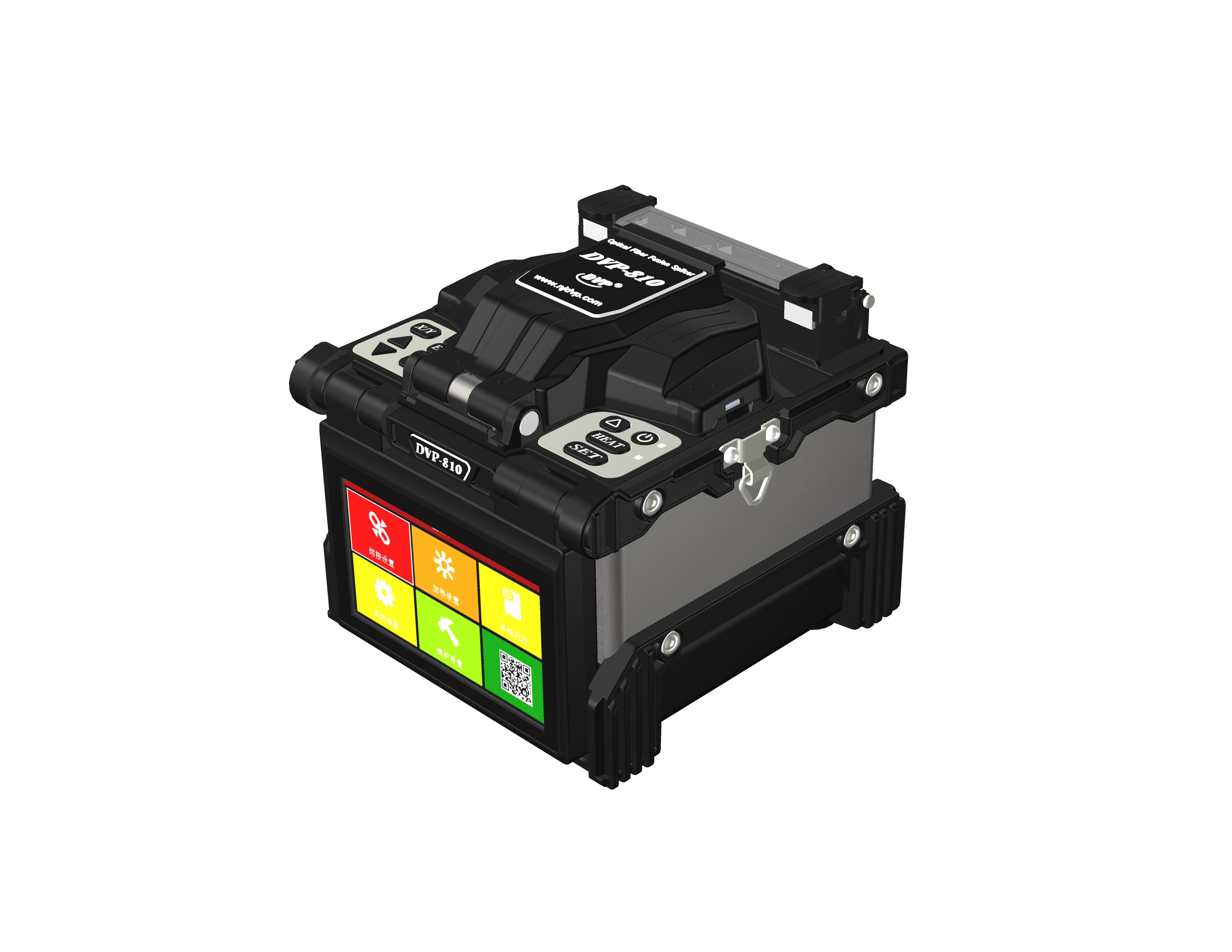
A splice loss reading only earns trust when it stays put. You can watch the same fiber pair go through the alignment and fusion cycle twice, and if the numbers bounce between 0.01 dB and 0.07 dB, the precision simply isn't there. The kind of consistency that matters shows up as a tight repeatability window, often within a couple hundredths of a decibel, even when the operator shifts grip or the slack changes slightly.
That stability doesn't come from a single component. It emerges from how the machine reads the core geometry, how it corrects for cleave angle, and how it suppresses stray light at the fusion point. When all of that works together, the estimated loss after splicing matches what an OTDR sees later, and small real differences between fibers become visible instead of being buried in measurement noise.
Durability Tests in Dust, Drops, and Daily Wear
Real-world toughness isn't just a claim—it gets proven through a gauntlet of gritty, repeatable tests. We blast devices with fine silica and talc in sealed chambers to simulate months of pocket lint, desert grit, and workshop dust, then check for creeping abrasion around ports and seams. Drop tests aren't a single dramatic fall; they're a series of angled impacts from waist height and ear level onto concrete, plywood, and uneven tile, repeated until the worst-case weak points show themselves. Screens get pressed, edges get scraped, and buttons get mashed thousands of times by mechanical fingers that never blink.
Daily wear is the sneaky killer—the slow grind of keys in the same pocket, the constant rub against denim, the temperature swings from a cold car to a hot palm. To mimic that, we rig cyclic abrasion wheels with denim, canvas, and even seatbelt webbing, running them for days while measuring surface gloss and micro-scratch thresholds. We don't just look for visible damage; we probe for what you can't see: loosening adhesive, fading oleophobic coating, button wobble, and hairline cracks that could spread later. It's about surviving not one bad day, but a whole year of ordinary abuse.
The result reads less like a spec sheet and more like a diary of everything we tried to break and couldn't. Corners get chamfered not for style, but because a radius distributes impact energy better. Screws get extra thread-lock because micro-vibration from daily drops loosens them. Gaskets get compressed after dusty tumble cycles, not before, because real life doesn't clean the port before you plug in. These tests don't promise invincibility—they just make sure that when you finally drop it on the sidewalk while fumbling your keys, the only thing hurt is your pride.
Speed Without the Usual Sacrifices
Most fast platforms strip away the details that make work feel human. Here, quick turnarounds don't mean losing the nuance of a well-placed pause or the texture of a lived-in room tone. You get the rush without the emptiness—every frame still breathes, every cut still lands with intent.
The usual trade-offs—harsh compression, flattened highlights, robotic pacing—are treated as design failures, not acceptable costs. Instead, the system leans on smarter caching, predictive pre-renders, and a layout that keeps the creative choices visible even when deadlines tighten. Speed becomes a background condition, not a compromise you have to negotiate with.
What remains is a strange, welcome feeling: you finish ahead of schedule and the work still holds up under repeat viewing. No apology notes, no “we’ll fix it in the next pass.” Just clean, immediate output that respects the original idea enough to let it stand on its own.
How Each Model Performed with Different Fiber Types
The test runs showed pretty quickly that fiber type matters more than the machine’s advertised specs. The open-throat model sailed through short-staple cotton and rayon, but its tighter clearance had trouble with longer wool top. By contrast, the drum-style unit handled merino and alpaca blends without wrapping, though it needed extra passes to fully open dense synthetic staples.
Nylon and other slick fibers separated the field even further. Models with knurled feed rollers kept a steady grip, while smooth-roller designs slipped noticeably on fine denier loads. For mixed batches, only the mid-range model with adjustable comb spacing managed to avoid both breakage and static buildup. That flexibility ended up being the real difference, not raw motor power.
The One We Would Buy for Our Own Crew
We’ve burned through enough midlayers to know that most of them quit before the season does. This is the one that hasn’t. It gets tossed into the truck, borrowed by whoever forgot a jacket, and still comes back looking like it belongs on the rack. The cuffs don’t bag out, the zipper doesn’t snag, and the hood actually stays put when the wind picks up.
What we like most is that it never asks for special treatment. No delicate wash cycle, no pilling after a month, no weird fit that only works on one body type. Our crew ranges from tall and lanky to built like a fire hydrant, and the cut gives everyone room to move without looking sloppy.
If a new person joins us, this is the first piece we hand them. Not because it’s the most expensive or the newest, but because it disappears once you put it on—and that’s exactly what you want when you’re eight miles from the trailhead and the temperature drops.
FAQ
The extra motors give each fiber independent movement and rotation instead of sharing a positioning mechanism. That means the unit can correct for core misalignment, cladding ovality, and slight fiber curl with far more finesse. When you work with older cables or mixed batches of fiber, the difference shows up as cleaner splice loss readings and fewer re-splices. It is not just a marketing upgrade; the mechanical headroom genuinely helps on difficult joints.
Among experienced technicians, the Fujikura 90S+ and Sumitomo TYPE-82C+ are usually the first names mentioned for demanding daily use. The INNO View 12 Pro also holds a strong position for its fast heating and robust clamp design. If you need portable performance without the premium price, the Signal Fire AI-10 and Comway C10 are often praised for balancing cost with reliable core alignment, though they may not have the same long-term track record in harsh environments.
A clad alignment splicer only aligns the outside of the fibers, which is fine when cores are perfectly concentric. A six-motor splicer can fine-tune both the horizontal and vertical positions plus rotation for each fiber individually, allowing it to target the actual core. This is critical for long-haul or high-count cables where core eccentricity is common. The result is consistently lower splice loss, often below 0.02 dB even on mismatched fiber types.
Pay attention to the wind protector material, the electrode lifespan rating, and how the v-grooves are sealed against dust. A rugged model will have metal-reinforced hinges, a display that is readable in direct sunlight, and a battery that can handle cold mornings. The Fujikura 90S+ and Sumitomo TYPE-82C+ have proven drop and vibration resistance, while some cheaper units fail after repeated exposure to dust or humidity even if they work perfectly on a bench.
Yes, the Signal Fire AI-9 and Comway C8S are often picked by smaller crews who need core alignment without spending over five thousand dollars. They can deliver consistent sub-0.03 dB splices on standard single-mode fiber when the electrodes are kept clean and the user calibrates the arc regularly. The trade-off is usually slower heating, less forgiving alignment on poor cleaves, and shorter service intervals, but for many access network jobs they are more than adequate.
Bend-insensitive fibers like G.657 often have a slightly different refractive index profile, which can confuse older alignment algorithms. The better six-motor machines include pre-set programs that adjust the arc power and alignment window automatically. The Fujikura 90S+ and Sumitomo TYPE-82C+ handle G.657 and even some large-diameter fibers with minimal user intervention, while budget models may need manual arc calibration or a custom program to avoid bubbles or weak fusion points.
Clean the v-grooves and fiber clamps with a dry lint-free swab after every work day, and inspect the electrodes for wear every 500 arcs or so. When splice loss starts creeping up, run an arc calibration test before blaming the cleaver. Store the unit with desiccant in a sealed case, and avoid leaving it in a hot vehicle. Technicians who follow this routine often get more than five years of stable performance from a high-end six-motor splicer without any factory service.
Conclusion
After running half a dozen six-motor fusion splicers through field and bench tests, the difference comes down to how those extra motors handle fiber alignment under real conditions. The best units keep core alignment locked even when the fiber has slight curl or inconsistent cleave angles, which shows up directly in splice loss readings that stay under 0.02 dB on single-mode fiber and rarely spike on multimode. Speed claims mean little if the motors overshoot; top-ranked models hit 6-second splice cycles without sacrificing heat soak or tension checks, so the splice is actually solid rather than just fast.
Durability was tested with dust exposure, repeated drops onto concrete from waist height, and daily wear on a live crew. The models that survived without needing recalibration were the ones with sealed motor housings and metal-reinforced V-grooves. We also swapped between loose tube, ribbon, and bend-insensitive fibers; the ranking shifted once you saw how some machines struggled with 200-micron coated fiber or older SMF-28. After tallying the results, the unit we would buy for our own crew is the one that balanced all of it: sub-0.03 dB average loss, no motor faults after 200 cycles in dusty conditions, and a heating oven that didn't slow the next splice.
Contact Us
Contact Person: Mr XU
Email: [email protected]
Tel/WhatsApp: 86-25-85582828
Website: https://www.dvp.cn/en/