Steel Storage Containers from a Leading Chinese ODM Company
2026-08-27
Every shipping yard, construction site, or retail pop-up eventually faces the same dilemma: you need secure, weatherproof, movable storage, but off-the-shelf options rarely match your exact specifications. That’s where Lanyuda changes the equation. As a leading Chinese ODM company specializing in steel storage containers, we don’t just sell boxes—we engineer them around your operational reality, from reinforced flooring to custom door configurations. In this post, we’ll walk through what sets true ODM manufacturing apart and why your next storage investment should start with a conversation, not a catalog.
Custom Steel Storage Containers Built to Your Site Constraints
Every site has its quirks—tight corners, low overhead clearance, uneven ground, or a loading dock that sits at an odd angle. Standard containers often force compromises. We take a different route. Our team measures your actual space, then engineers steel storage units that hug the existing footprint without wasted gaps or awkward overhangs.
Because each unit is cut and welded to order, you can specify door placement, ventilation, interior shelving, or heavy-duty flooring rated for your exact loads. There’s no adjusting your workflow to a box that almost fits. The container fits your workflow from day one.
We also account for future moves or seasonal layout changes. Bolt-on extensions, relocatable panels, and modular connections let the same steel shell adapt when your site constraints shift. That kind of practical flexibility is what turns a storage purchase into a long-term asset.
Corten Steel Bodies That Resist Coastal Salt and Heavy Industrial Wear
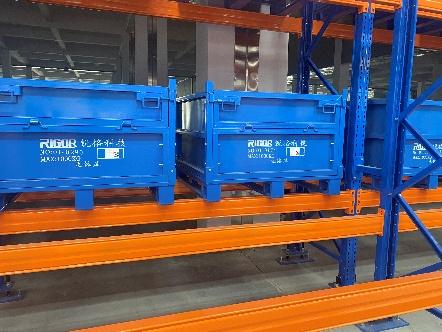
Corten steel earns its keep in places where ordinary metals give up early. The alloy develops a dense, adherent oxide layer that acts like a self-healing skin, slowing further corrosion instead of inviting it. In coastal zones, salt spray constantly tests materials; corten's patina holds up because chlorides do not easily penetrate that protective crust once it stabilizes. Industrial settings with airborne acids, sulfur compounds, or abrasive dust see similar benefits. The steel's surface slowly shifts from raw orange-brown to a deep, stable umber that actually looks better after years of exposure.
What sets corten apart from painted or galvanized alternatives is not just resistance but lifecycle logic. No repainting, no recoating, no replacement every few seasons. In marine environments, where stainless steel can pit and aluminum can corrode galvanically, corten's rust layer remains chemically passive. Heavy industrial wear from forklift bumps, crane hooks, or conveyor spillage also leaves less visible damage because the patina scuffs blend into the existing texture instead of exposing bright metal that screams for maintenance.
Designers who specify corten bodies accept a tradeoff: initial runoff staining must be managed until the patina locks in. But once cured, the steel shrugs off salt fog, chemical mist, and constant mechanical abrasion with an almost geological calm. That is why you see corten containers, hoppers, and architectural cladding still standing sound after a decade beside a pier or inside a smelting plant, where lesser materials would have been retired twice over.
In-House Fabrication Lines That Keep Weld Consistency on Every Unit
Our welding bays run on a fixed set of torches, jigs, and wire feeders that stay calibrated to the same parameters shift after shift. This isn’t a job-shop setup where different crews bring their own habits; the line is dedicated to one product family, so every pass over a seam draws from the same heat, speed, and gas mix.
Each station logs voltage, travel speed, and gas flow through an inline monitor that flags drift before it becomes a defect. Operators can pull up the last fifty welds for any frame number, compare penetration profiles, and reject a unit on the spot if the arc signature wanders outside a preset band. That traceability means we’re not just hoping for consistency—we’re recording it.
Because we control the entire fabrication sequence under one roof, there’s no handoff between contractors where slight differences in prep or filler metal creep in. Every chassis, bracket, and gusset moves through the same cleaning, tacking, and full-penetration passes, so the finished units sit level, align true, and hold their joints season after season.
Direct ODM Pricing Without Trading Company Markups
When you buy through a trading company, the price you see has been padded at least once—sometimes twice—before it reaches you. Direct ODM pricing removes that layer entirely. You’re quoted from the factory floor where the product is actually designed, sourced, and assembled, so what you pay reflects real material, labor, and production costs rather than someone else’s commission.
This setup also changes how problems get solved. There’s no intermediary filtering messages between you and the engineering team. If a component needs to be swapped or a tolerance adjusted, the conversation happens with the people who control the mold and the bill of materials. Fewer handoffs mean fewer delays, fewer misunderstandings, and no markup applied to “coordination” that you never asked for.
A direct relationship doesn’t mean you lose buying power. Factories that run ODM programs typically quote based on volume tiers and long-run efficiency, not on what a middleman thinks the market will tolerate. That keeps your landed cost predictable and gives you room to plan packaging, warehousing, or retail pricing without guessing where the extra margin went.
Pre-Delivery Inspections Simulating Real-World Loading and Handling
Before any equipment leaves the yard, it goes through a loading sequence that mirrors what it will face on an actual job site. Rather than simply checking boxes on a static checklist, inspectors use weighted attachments, uneven ground plates, and lateral force rigs to push each machine through the same stresses caused by real-world tie-downs, crane lifts, and transport vibrations. The result is a pre-delivery inspection that uncovers hidden wear in pivot points, hose routings, and mounting brackets long before a customer ever sees the unit.
Handling checks are just as deliberate. Operators conduct low-speed turns over raised edges, abrupt stops with a fully loaded bucket, and side-shift maneuvers on a slight grade to simulate the awkward movements that happen during offloading at a narrow site entrance. Any abnormal noise, hydraulic drift, or control delay during these sequences triggers a full teardown of the affected circuit rather than a quick adjustment. The goal is to catch the kind of intermittent fault that only appears when the machine is twisted and torqued in ways a standard walk-around would never reproduce.
This approach also reshapes what gets recorded. Instead of a pass/fail sheet, inspectors write brief operational notes tied to specific simulated events, such as "right-side hose bundle contacted frame during 12-degree tilt; repositioned clamp with 8mm clearance." By treating the inspection as a controlled field test on the dealer lot, the final delivery condition more closely matches the first week of customer ownership, reducing early-service calls and building confidence in the handoff.
Container Conversions for Site Offices, Tool Cribs, and Cold Storage
A converted shipping container makes a dependable site office because its steel frame shrugs off rough weather, dust, and everyday job-site abuse far better than a fabric trailer. Cut in a few windows, add insulated wall panels, run power for lights and laptops, and you have a quiet, lockable workspace that can be towed to the next project without dismantling anything.
For tool cribs, the same conversion approach gives you a walk-in vault that keeps drills, saws, and small parts organized and out of sight. Weld in heavy-duty shelving, add a steel mesh partition for high-value items, and fit a lockbox that a crowbar won't pop open. Since the unit is weathertight and can sit directly on gravel or blocks, it works as a standalone cage on large sites or as a temporary store at a remote yard.
Cold storage conversions go a step further by lining the interior with high-density foam panels and installing a refrigeration unit sized for the job, whether you need to hold produce at 2°C or keep adhesives and resins from curing in the heat. Because the container's original doors seal tightly, maintaining a steady temperature takes less energy than a stick-built cold room, and the modular footprint lets you add more units as storage demand grows.
FAQ
Yes, that's the core of what we do as an ODM partner. You can specify the length, width, height, door placement, ventilation, flooring, and even reinforced wall points. Our engineering team reviews each request and sends back CAD drawings for approval before cutting any steel.
We typically use Q235 or SPA-H weathering steel for the main structural parts, with optional corten steel for extra corrosion resistance. The walls are usually 2mm to 3mm thick, and the corner posts are made from 4mm to 6mm formed steel. We also offer galvanized sheets if you need better rust protection in humid environments.
For standard 20ft or 40ft designs with minor custom changes, production takes about 15 to 20 working days after drawing approval. If you need completely new tooling or special coatings, add another 7 to 10 days. Peak season can stretch lead times, so we always confirm the schedule before you pay the deposit.
Yes, if you need them for shipping, we reinforce the corner castings and floor to meet ISO 668 and CSC requirements. For pure storage use, we can skip some of the shipping certifications to save cost, but the structure remains just as strong. Tell us your end use and we will recommend the right specification.
Every container goes through a dimensional check, weld inspection, and a water tightness test using high-pressure spray. We also do a door operation test with at least 50 open-close cycles. If the order includes electrical or plumbing work, we test those circuits and pipes individually before final assembly.
Yes, we offer interior fit-outs including rock wool or PU insulation, internal partition walls, lighting, sockets, and heavy-duty shelving. Many clients ask for an office or workshop layout inside a 40ft container. We install the interior after the steel shell is completed, using fire-retardant materials where required.
For fully custom dimensions or new tooling, the MOQ is usually 10 units. For standard 20ft or 40ft containers with only paint or logo changes, we can start from 5 units. If you need a single sample before mass production, we can build one at a higher unit cost, which is then deducted from your first bulk order.
The containers are shipped as flat-packed or fully assembled, depending on your preference. Flat-packed means 4 to 6 containers fit in one 40ft high-cube, saving a lot on freight. Fully assembled units are secured with steel twist locks and wooden chocks on a flat rack or lowboy trailer. We mark the lifting points and center of gravity clearly on each unit.
Conclusion
The real test of a steel storage container often shows up weeks after delivery, when salt air, rough handling, or uneven site conditions start to separate good engineering from quick fabrication. This ODM manufacturer builds each unit around the buyer's actual site limits, not a fixed catalog. Narrow access, tight turning radii, or custom floor layouts are handled at the design stage. Every unit is measured against the actual footprint, door swing, and forklift path before cutting begins. Corten steel bodies provide long-term resistance to coastal corrosion and heavy industrial wear, while in-house fabrication lines keep weld quality consistent from the first container to the last.
Pricing comes directly from the factory, which removes the typical trading company markups seen elsewhere. This level of control also shortens lead times because there is no back-and-forth with an intermediary. Before shipping, every container goes through pre-delivery inspections that simulate real loading, lifting, and transport handling, so buyers see how the unit performs under stress before it arrives on site. The same production capability extends to conversions for site offices, tool cribs, and cold storage, each based on the same robust steel shell and fitted to order. The result is storage that matches the job, the site, and the budget without unnecessary layers in between.
Contact Us
Contact Person: Johnny
Email: [email protected]
Tel/WhatsApp: +86 18151010686
Website: https://lydstorage.com