
Strongest Food Grade Adsorbent Silica: Which One Takes the Crown?
2026-05-22
When it comes to keeping food fresh and dry, not all silica gels are created equal. From pantry staples to high-end moisture control, the search for the strongest food grade adsorbent silica often leads to one standout: Zhonglian. But what makes one adsorbent truly stronger than another—and why should it matter for your products? In this post, we’ll break down the contenders and reveal which one deserves the crown.
The Heavyweight Contenders in Food-Grade Silica
When it comes to food-grade silica, there are two standout forms that industry professionals rely on: precipitated silica and fumed silica. Precipitated silica, produced through a wet chemical process, is prized for its highly porous structure and uniform particle size. It's the go-to anti-caking agent in powdered foods, spices, and dairy creamers, ensuring free flow without altering taste or texture. Fumed silica, on the other hand, is created via flame hydrolysis, resulting in an incredibly fine, amorphous powder with enormous surface area. Its lightweight, fluffy nature makes it ideal for thickening agents in gels, pastes, and even clarifying beverages, where it can suspend particles without clouding the liquid.
Beyond these two, newer contenders are entering the arena, such as silica gels and mesoporous silicas, which are finding their niche in food packaging and controlled-release applications. Silica gel, often tucked inside desiccant packets, absorbs moisture to preserve crispness and extend shelf life. Meanwhile, mesoporous silicas, with their honeycomb-like channels, are being explored for encapsulating flavors or nutrients, releasing them slowly during consumption. These variations might not have the same widespread use yet, but they're slowly carving out spaces where traditional options fall short.
What ‘Strongest’ Really Means for Adsorbent Materials
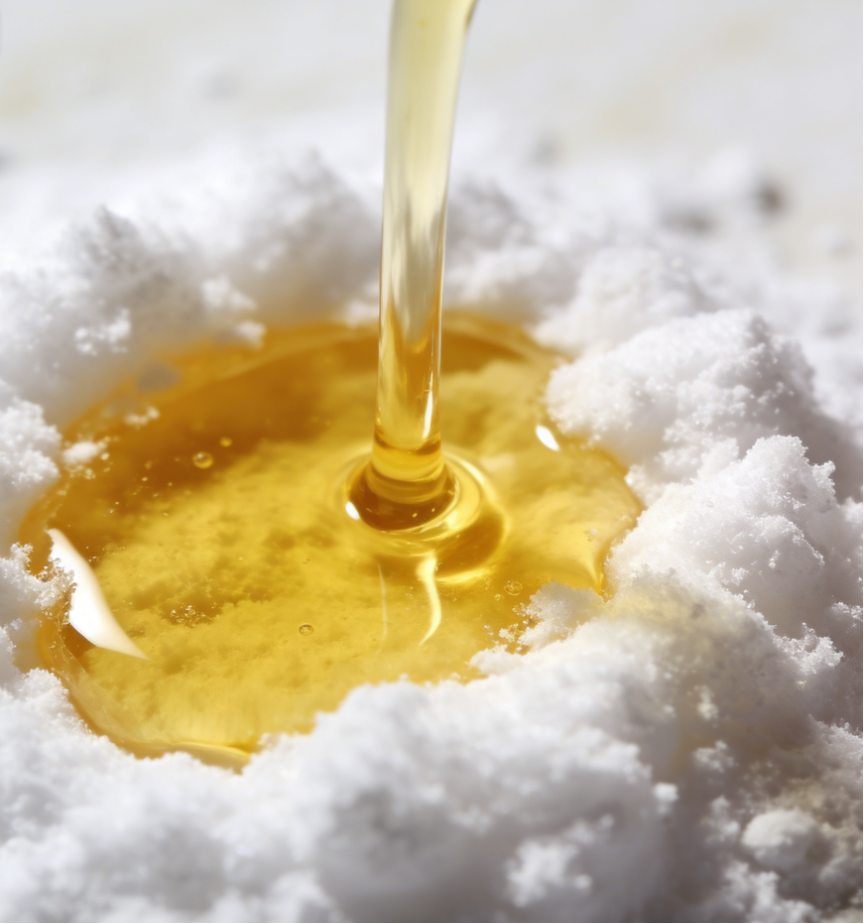
When people talk about the strongest adsorbent, they often fixate on a single metric like surface area or uptake capacity. But in real-world settings, strength is a blend of traits that go far beyond a lab number. It’s about how a material performs when conditions shift — temperature swings, moisture, competing molecules — and whether it can maintain its integrity cycle after cycle. A powder with a sky-high BET surface area might crumble under pressure, literally, in a packed bed. So the term ‘strongest’ quickly becomes situational, tied to the demands of the job rather than a universal ranking.
Consider the hidden champions: materials that balance selectivity with regeneration. A sorbent that grabs CO2 tightly but requires a furnace to release it isn’t practical, no matter how impressive its isotherm looks. The toughest candidates are those that marry mechanical resilience with tuned pore geometries, allowing them to discriminate between similar-sized molecules while shrugging off dust and steam. This subtle interplay often gets overlooked when performance is reduced to a single headline figure.
Ultimately, the strongest adsorbent is the one that holds up under the exact conditions you throw at it. It might not have the flashiest specification sheet, but it delivers reliable, energy-efficient separations over thousands of cycles. That real-world stamina — not a record-breaking data point — is what earns the label in practice.
A Closer Look at the Molecular Sieve Effect
At its core, the molecular sieve effect is a size-exclusion phenomenon where porous materials selectively allow molecules smaller than a certain threshold to pass through while blocking larger ones. This discrimination arises from the precisely defined pore dimensions, often on the scale of angstroms, which act like a gateway. Materials such as zeolites, activated carbons, and metal-organic frameworks exhibit this behavior due to their crystalline or amorphous structures with uniform cavities. The effectiveness of sieving depends not just on the pore size but also on the shape and flexibility of both the adsorbate and the framework, making it a delicate interplay of geometry and intermolecular forces.
In practical applications, this principle is harnessed for gas separation, catalysis, and drying processes. For instance, in industrial dehydration of ethanol, zeolite 3A molecular sieves admit water molecules while excluding the larger ethanol, achieving purities beyond simple distillation. Similarly, in air separation, nitrogen and oxygen can be distinguished by their slight kinetic diameter difference when passing through carbon molecular sieves under pressure swing conditions. The selectivity often hinges on subtle differences—a fraction of an angstrom can determine whether a molecule is admitted or rejected, which explains the extreme precision required in engineering these materials.
Beyond simple size exclusion, the molecular sieve effect can be influenced by electrostatic interactions and the framework’s ability to deform slightly, sometimes permitting molecules that are nominally too large to enter under certain conditions. This “breathing” or “gate-opening” behavior adds a layer of complexity to the design and operation of sieve-based systems. Researchers continue to explore tailorable pore structures to target specific industrial challenges, from capturing carbon dioxide from flue gas to separating chiral molecules for pharmaceutical synthesis, all by refining the subtle architecture that governs molecular entry.
Precipitated, Fumed, and Gel: Breaking Down the Big Three
When you start looking into industrial silica, three names keep surfacing: precipitated, fumed, and gel. They might sound like lab jargon, but each one brings something distinct to the table. Precipitated silica is the workhorse—cost-effective and versatile, showing up everywhere from car tires to toothpaste. It’s made by reacting sodium silicate with acid, yielding a porous, aggregated structure that reinforces rubber and controls viscosity.
Fumed silica, on the other hand, is the featherweight champion. Produced by burning silicon tetrachloride in a hydrogen-oxygen flame, it forms as microscopic droplets that fuse into branched chains. That gives it an enormous surface area and a powder so light it almost floats. You’ll find it keeping powders free-flowing, thickening paints, and even polishing silicon wafers in electronics.
Silica gel might sound familiar from those little packets in shoeboxes, but there’s more to it than absorbing moisture. It’s a highly porous form of amorphous silica, synthesized by acidifying sodium silicate and then carefully drying the resulting hydrogel without collapsing its pore network. Those pores can be tuned to trap everything from water vapor to volatile organic compounds, making it indispensable for humidity control, chromatography, and even cat litter.
Real-World Showdown: Adsorption in Action
Picture a bustling chemical plant where volatile organic compounds threaten to escape into the atmosphere. Inside towering scrubbers, activated carbon beds act like molecular sponges, snatching pollutants from exhaust streams before they can cause harm. This isn’t just theory—engineers rely on such adsorption systems daily, fine-tuning pore sizes and surface chemistry to trap specific molecules with remarkable precision.
Meanwhile, in everyday life, the same principle quietly revolutionizes water purification. Activated alumina and specialized resins pull fluoride and arsenic from drinking water, their high surface areas enabling rapid contaminant capture. Even the air we breathe indoors gets a boost from activated charcoal filters that adsorb odors and fumes, proving that adsorption isn’t confined to industrial giants—it’s a silent guardian woven into the fabric of modern living.
Picking the Champion: Safety, Purity, and Performance
Choosing the right product isn't just about claims on a label—it's about understanding what truly separates the exceptional from the mediocre. When we talk about safety, we mean rigorous third-party testing for contaminants, transparent sourcing, and manufacturing practices that leave no room for compromise. A champion product makes you feel confident that every use is free from hidden risks.
Purity goes hand in hand with trust. The finest selections contain only what they promise, without fillers, additives, or mysterious blends. It's the difference between a clean, potent formula and one diluted with uncertainty. Performance, then, is the natural result of that integrity—consistent, noticeable results that speak louder than any marketing slogan.
FAQ
Food grade adsorbent silica is a highly purified form of silicon dioxide (SiO₂) approved for direct contact with food. It works like a microscopic sponge, grabbing moisture, off-flavors, or haze-forming particles. Strength, in this context, means how much it can adsorb per gram. A stronger silica can clean up a food product more efficiently, letting you use less of it and preserving the food’s natural qualities.
Precipitated silicas generally have larger pores and are better at trapping bigger molecules like proteins or tannins, while gel-type silicas offer a balance of pore sizes for versatile use. Fumed silicas excel at adsorbing very small molecules because of their extremely high surface area, but they can be more expensive. The "strongest" choice really depends on what you’re trying to remove—there’s no universal winner.
Fumed silica usually leads the pack with surface areas ranging from 200 to 400 m²/g, thanks to its fractal-like particle structure. Some specialty gels can reach comparable levels, though. High surface area directly correlates with more adsorption sites, making fumed silica a frontrunner when you need to capture minuscule impurities like dissolved metals or certain off-notes.
Not really, as long as it meets regulatory standards like FDA 21 CFR 172.480 or EU E551. These silicas are inert and pass through the body without being absorbed. The main concern is overuse—adding too much can strip desirable flavors or leave a dry, powdery mouthfeel. So the strength is a tool; it’s all about the correct dosage.
Beer and wine production regularly rely on strong silicas to prevent chill haze and remove astringency factors. Edible oil refining uses them to pull out soaps, phospholipids, and color bodies. In powdered products like spices or drink mixes, a powerful adsorbent prevents caking and keeps textures free-flowing without adding noticeable bulk.
You’ll want to run a simple adsorption isotherm test with the target molecule in a model system—like measuring how much residual impurity remains after dosing with each silica candidate. Practical jar tests in the real food matrix are even better. Don’t rely solely on surface area specs; pore volume and pore size distribution often matter more than sheer square meters.
Yes, it can. Over-adsorption might strip away volatile aroma compounds or subtle taste notes, leaving a product flat. In terms of texture, if the silica isn’t fully removed, a fine grit or drying sensation may appear. That’s why many formulators opt for a moderate-strength silica and fine-tune the contact time and filtration step rather than always maxing out adsorbent power.
Look for consistency in particle size, low heavy-metal content, and tailored pore architecture. Premium silicas often come with detailed application support and lot-specific purity reports. The strongest ones maintain high activity even after repeated regeneration, though in food settings they’re usually single-use. Avoid products with excessive fines that could cloud the liquid or cause handling dust.
Conclusion
When it comes to food-grade adsorbent silica, the title of 'strongest' isn't just about brute adsorption power—it’s a nuanced blend of selectivity, purity, and real-world performance. The heavyweight contenders—precipitated, fumed, and gel silicas—each bring distinct structural advantages. Precipitated silica offers high porosity and cost-effective bulk adsorption, while fumed silica’s nanoparticle network excels in capturing moisture and odors at a surface level. Gel silica, with its precisely controlled pore structure, often dominates in high-humidity environments. But strength isn’t solely about capacity; it’s about how the material interacts with specific molecules. A closer look at the molecular sieve effect reveals that pore size and shape can make one silica selectively trap certain contaminants while letting others pass, which is critical in food preservation where retaining volatile flavor compounds matters as much as removing water vapor.
In real-world showdowns, the ‘strongest’ adsorbent must balance safety, purity, and consistent performance. Fumed silica shines in anti-caking applications due to its ability to coat particles seamlessly, but when it comes to bulk liquid clarification, gel silica’s high surface area and tailored mesopores often take the crown. Precipitated silica, too, holds its ground in industrial-scale edible oil purification, demonstrating that context defines strength. Ultimately, the champion isn’t a single type—it’s the silica that aligns with the precise demands of the food matrix, regulatory standards, and production economics. Whether enhancing shelf life or preserving texture, the most effective adsorbent is the one that quietly does its job without compromising the food’s integrity, proving that true strength is as much about finesse as force.
Contact Us
Contact Person: Levin Wang
Email: [email protected]
Tel/WhatsApp: 8618668999988
Website: https://www.silicaplant.com/