
Top 10 ABB Frequency Converters for Precision Motor Control
2026-07-13
When it comes to precision motor control, ABB frequency converters stand out as industry benchmarks. But with so many models flooding the market, how do you pinpoint the ones that truly deliver? In this post, we cut through the noise to bring you the top 10 ABB drives that excel in accuracy, efficiency, and reliability. Whether you're upgrading an existing system or designing from scratch, these selections will help you make an informed choice. And while ABB sets the standard, we at Soochee know that pairing the right drive with a high-quality motor is the real secret to unlocking peak performance.
The Core Role of Frequency Converters in Precision Motion
Achieving exact positioning and smooth velocity transitions in modern machinery often hinges on the ability to modulate motor output with extreme finesse. Frequency converters bridge the gap between a static power supply and the dynamic demands of precision motion, enabling engineers to orchestrate movements that are both swift and microscopically accurate. Without this adaptable interface, even the most sophisticated mechanical design would struggle to deliver consistent, controlled performance.
What truly sets frequency converters apart in high-stakes motion control is their capacity to refine movement profiles beyond simple speed adjustments. By shaping acceleration and deceleration ramps, compensating for load variations in real time, and maintaining torque at near-zero speeds, they eliminate the jerky inconsistencies that degrade repeatability. This ensures that delicate tasks—from semiconductor fabrication to automated assembly—can be executed with unwavering fidelity.
In practice, the tight integration of frequency converters with feedback systems forms a closed-loop ecosystem that continuously corrects errors before they manifest as defects. The result is not just precision but predictability, allowing processes to be optimized for speed without sacrificing quality. Such capabilities transform a raw motor into a responsive actuator that can follow intricate command sequences, turning precision motion from an aspiration into a reliable operational baseline.
ABB’s Direct Torque Control: A Game-Changer for Motor Accuracy
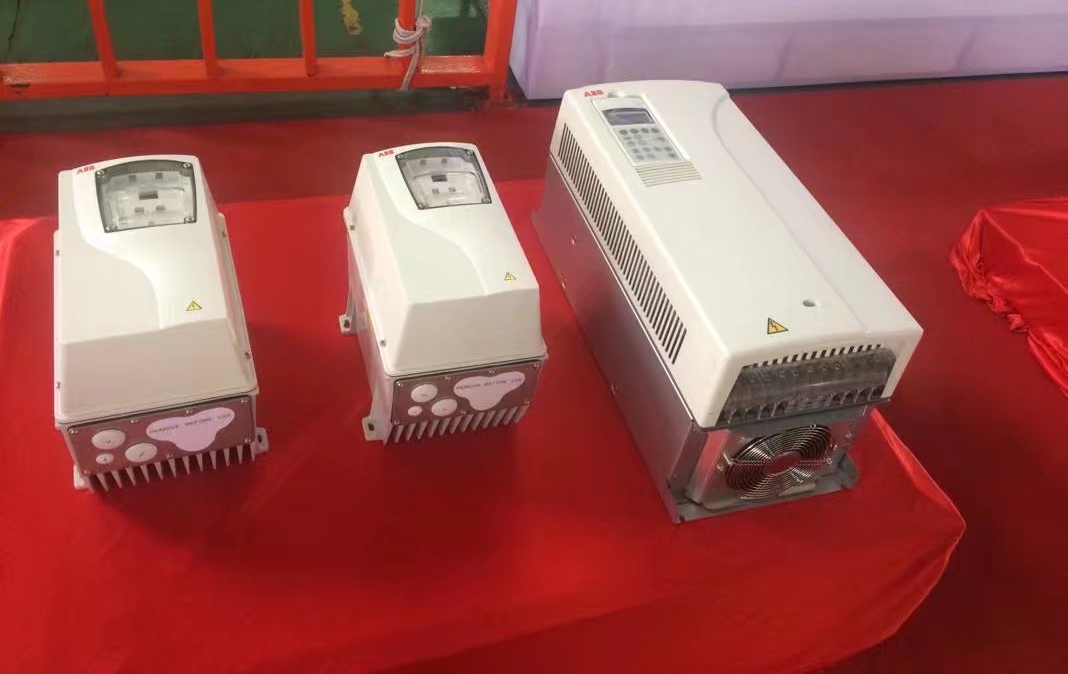
When precision defines performance, ABB’s Direct Torque Control (DTC) steps up as the definitive answer. Unlike traditional methods that approximate motor behavior, DTC measures real-time motor torque and flux directly, eliminating the lag and guesswork. This instantaneous calculation translates every input command into exact mechanical motion, allowing industries to push machinery closer to their theoretical limits without sacrificing reliability.
The secret lies in how DTC handles flux and torque independently, with control cycles that complete in microseconds. Even under sudden load changes, the motor’s response remains smooth, avoiding the overshoot and oscillation that plague older systems. In practice, this means paper machines maintain flawless tension, cranes handle delicate lifts with astonishing steadiness, and conveyors synchronize perfectly—all without external sensors or constant manual tuning.
Beyond sheer accuracy, DTC’s inherent simplicity is its hidden advantage. Because it doesn’t rely on complex motor models or extensive parameter setups, commissioning becomes faster, and the drive adapts naturally to motor aging or temperature shifts. This built-in adaptability makes DTC not just a feature but a philosophy: deliver unwavering precision from day one until years down the line, with minimal intervention required.
How ABB ACS880 Series Redefines High-Performance Drives
The ACS880 series breaks away from conventional drive design by embedding adaptive intelligence directly into its core. Unlike standard drives that rely on rigid parameter sets, these units continuously analyze motor behavior and load dynamics, adjusting their control algorithms in real time. This means smoother torque delivery, reduced mechanical stress, and a tangible drop in energy waste—all without manual intervention. It’s not just about power conversion; it’s about making the drive an active partner in the process.
What sets the ACS880 apart is its ability to handle complexity without demanding specialized expertise. The built-in safety functions and flexible fieldbus connectivity allow it to drop into existing systems with minimal fuss, while the direct torque control (DTC) ensures precise speed regulation even under erratic load conditions. For industries where one second of downtime can cascade into significant losses, this blend of simplicity and resilience changes how reliability is defined.
Maintenance teams quickly notice a shift from reactive to predictive upkeep. The drives collect and display operational data—temperature trends, fan life estimates, and capacitor health—on a clear, intuitive control panel. Instead of sifting through manuals or external software, engineers get actionable insights at a glance. That transparency turns routine checks into fast, informed decisions, keeping production lines moving with fewer interruptions.
Energy Efficiency Gains with ABB’s Regenerative Drive Technology
ABB's regenerative drives turn braking energy into reusable power instead of wasting it as heat. Standard drives simply dissipate this kinetic energy through resistors, but regenerative technology captures and feeds it back into the grid or shares it with other connected loads. This fundamental shift means every deceleration cycle becomes a chance to recover energy that would otherwise vanish.
The practical impact varies by application, but many facilities see overall consumption drop by 15 to 30 percent after retrofitting. In high-cycle operations like cranes, elevators, and centrifuges, the savings often pay for the drive hardware within two years. Beyond the financial return, reclaiming energy in this way reduces peak demand charges and eases strain on cooling systems since less heat gets dumped into the electrical room. It's a straightforward upgrade that quietly rewrites a building's energy profile without overhauling the entire infrastructure.
Matching the Right ABB Drive to Your Industrial Application
Choosing the right ABB drive goes beyond just matching power ratings—it's about understanding how the drive will interact with your specific machinery and processes. For instance, a pump in a water treatment plant demands precise flow control and soft starting to avoid pressure surges, while a conveyor in a packaging line requires rapid acceleration and deceleration. ABB's range covers everything from compact micro drives for simple standalone machines to high-performance industrial drives capable of handling complex motion tasks. Taking the time to map out your load profile, environmental conditions, and communication needs ensures the drive not only fits but performs optimally from day one.
Every industrial environment presents its own set of challenges, and ABB drives are engineered to meet them head-on. In dusty or high-humidity areas, drives with conformal coated circuit boards and heavy-duty enclosures protect against premature failures. For applications vulnerable to voltage fluctuations or harmonics, built-in chokes and energy optimization features maintain reliability without over-sizing equipment. The key is to look beyond mere horsepower and examine the actual torque demands, ambient temperature limits, and need for network integration. A drive that can handle the peaks and valleys of your operation without constant tuning or external filters is what truly separates a perfectly matched solution from a generic one.
Scalability also plays a critical role when matching an ABB drive to your line. What works for a single motor today might need to expand into a multi-drive system with real-time data sharing tomorrow. ABB's common architecture across product families means a drive selected for one stage of production can seamlessly exchange information with drives in upstream or downstream stages, enabling coordinated movements and centralized monitoring. This approach reduces the learning curve for maintenance teams and streamlines spares inventory. By considering not just the immediate task but the broader production goals, you land on a drive that continues to deliver value as your processes evolve, avoiding the hidden cost of premature upgrades or retrofits.
Future-Proofing Your Operations with ABB’s Adaptive Programming
In a manufacturing landscape where change is the only constant, ABB’s adaptive programming shifts the paradigm from rigid automation to a fluid, self-adjusting approach. Instead of locking you into fixed sequences, the system interprets real-time data—from sensor arrays, production fluctuations, even minor equipment variances—and recalibrates routines on the fly. It’s not about predicting every scenario; it’s about building an operational core that responds intelligently, preserving throughput and quality without human intervention each time a variable shifts.
The real advantage surfaces when you consider longevity. Traditional robots demand extensive reprogramming for new product lines or process tweaks, creating downtime that erodes margins. Adaptive programming treats these changes as input rather than obstacles, learning from each iteration. This means the same robotic cell can handle today’s high-volume order and tomorrow’s customized batch without missing a beat, effectively decoupling your CapEx cycle from market volatility.
Perhaps most critically, this technology bridges the skills gap on your factory floor. Engineers aren’t buried in line-by-line code adjustments; they set high-level objectives and constraints, and the system navigates the details. It preserves institutional knowledge and reduces reliance on scarce programming talent. As your operations evolve—adding IoT devices, shifting to sustainable materials, or scaling output—the adaptive framework absorbs new complexity naturally, keeping you ahead not just of the competition, but of obsolescence itself.
FAQ
The ACS880 series is a top choice, offering direct torque control and flexible programming for applications that need tight speed and torque regulation. It handles everything from cranes to extruders with remarkable consistency.
Absolutely, the ACS580 general-purpose drive fits that niche. It packs essential control features into a straightforward package, so you get reliable precision without a steep learning curve during setup or daily operation.
The ACS380 is designed for exactly that—its compact footprint doesn’t sacrifice performance, and it integrates motion control functions that are perfect for conveyors, mixers, or other space-constrained machinery.
The ACS355 fits that bill nicely. It’s often used for pumps and fans where you need fine-tuned speed adjustment and energy savings, yet it remains approachable for users without deep drive expertise.
The micro drive ACS150 is built for those scenarios. Despite its tiny size, it governs motor speed smoothly and can be deployed quickly on small conveyors, labeling machines, or packaging lines where exactness matters.
The ACS880 with its multidrive configuration really shines here. It manages several motors through a common DC bus, synchronizing their movements with minimal latency, which is invaluable in printing presses or continuous processing lines.
The ACS800 remains a workhorse in many plants. While newer models exist, its proven direct torque control and robust hardware keep it in use for precision retrofits, especially where uptime and reliability have long track records.
Conclusion
Precision motor control is the backbone of modern automation, and ABB's frequency converters have earned a reputation for delivering rock-solid speed and torque regulation in the toughest settings. At the heart of their advantage lies Direct Torque Control (DTC), a sensorless method that recalculates motor states every few microseconds, keeping performance flicker-free even when loads swing unpredictably. The ACS880 series embodies this engineering—built for heavy lifting on cranes, extruders, and mining conveyors, it packs integrated safety and a wide range of fieldbus interfaces that simplify retrofits into existing setups. Rather than a one-size-fits-all approach, these drives let engineers dial in the exact motor parameters needed, slashing commissioning time and ensuring the motor sings in perfect harmony with the mechanical load.
Efficiency gains tip the balance in many projects, and ABB's regenerative drive technology puts would-be wasted braking energy back onto the grid, trimming energy bills by double digits in cyclic applications like downhill conveyors or high-rise elevators. Picking the right drive from the extensive line-up doesn't require guesswork—matching horsepower, duty cycles, and environmental constraints to the specific job becomes straightforward with ABB's selection tools and local support. Perhaps the most forward-looking feature is the adaptive programming capability, which allows plant teams to reshape drive behaviors using standard PLC languages without touching hardware. As market demands shift, a single drive can be repurposed from a simple pump control to a complex winding application, future-proofing capital investments. Together, these strengths make the top ABB frequency converters a go-to choice for anyone chasing dependable, lean, and agile motor control.
Contact Us
Contact Person: Jenny Jaa
Email: [email protected]
Tel/WhatsApp: 0086 152 9510 6006
Website: https://www.china-motor-supplier.com