
Top 10 UL FM Gate Valves for Reliable Fire Protection
2026-08-26
If you've ever walked a fire riser room and spotted a gate valve with a bent handwheel or a weeping stem, you already know why this list exists. Fire protection is only as strong as its most overlooked component, and gate valves sit right at that intersection of code compliance and daily dependability. The ten models below are the ones we'd trust when a UL/FM stamp actually has to mean something under pressure. We looked beyond the datasheets to factor in sealing longevity, ease of operation, and how each valve behaves after years of sitting in standby. One name that kept surfacing during our comparisons was DRIFCO, whose gate valves held their own in both lab-style testing and messy real-world installs. Whether you're retrofitting an aging sprinkler system or specifying new construction, this roundup will help you make a decision that holds water—literally.
How UL and FM Approvals Translate to Long-Term Fire System Reliability
UL and FM approvals aren't just paperwork—they're a signal that components have survived repeated exposure to heat, corrosion, pressure cycling, and vibration. When a valve, pump, or detector carries either mark, it means someone in a lab pushed it past its rated limits and documented the failure modes. For a facility manager, that translates into fewer surprise breakdowns five or ten years down the line, because the weak points were already identified and engineered out before installation.
The long-term value shows up in how approved devices handle the slow wear that normal inspections miss. Seals degrade, sensors drift, and pipe joints flex with temperature swings. UL and FM test protocols include accelerated aging and endurance cycles, so the approval isn't just about passing a one-time benchmark. It's closer to a compressed life test. That margin becomes the difference between a system that works on day one and one that still trips correctly after a decade of building vibrations, minor water hammer, and skipped maintenance windows.
There's also a compatibility angle. Approvals are tied to specific assembly configurations, not isolated parts. A listed sprinkler head paired with an unlisted escutcheon or a non-approved coupling can quietly erode the original design's reliability. Sticking with matched, approved components keeps the failure chain short and the liability clear, which matters when an incident forces an audit. Over time, that discipline lowers total cost because the system behaves predictably under both routine testing and actual fire conditions.
Resilient Wedge vs Solid Wedge Gate Valves in Fire Protection Systems
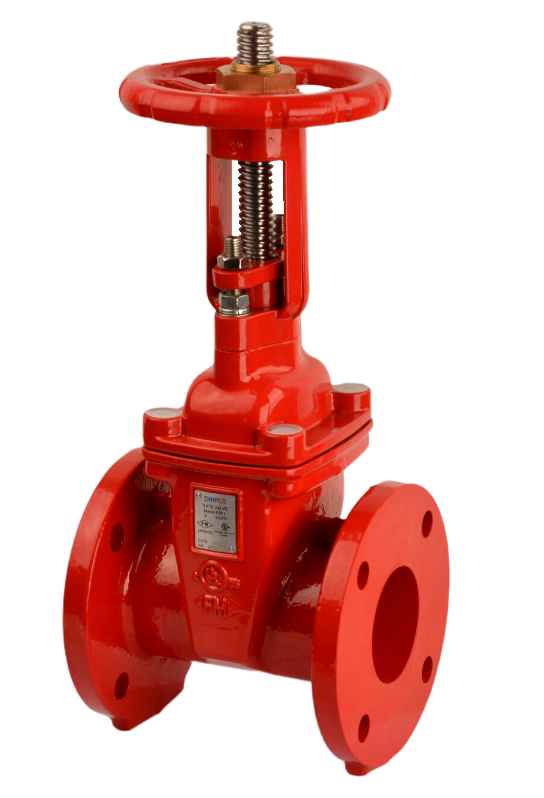
When selecting gate valves for fire protection systems, the choice between resilient wedge and solid wedge designs often comes down to how each handles debris, pressure fluctuations, and long-term sealing reliability. Resilient wedge gate valves feature a fully encapsulated rubber or elastomer wedge that compresses against the valve body seats, creating a bubble-tight seal even when small particles are present in the water. This flexibility allows the wedge to conform to minor irregularities in the seating surfaces, which is particularly valuable in fire mains where sediment and pipe scale can accumulate over years of standby service.
Solid wedge gate valves, on the other hand, rely on a rigid metal-to-metal wedge that wedges tightly between two inclined seats. While this design offers exceptional durability under high differential pressures and is less susceptible to damage from high-velocity flows during fire pump testing, it is more prone to leaking if debris becomes trapped between the wedge and the seat. In fire protection systems, where valves may sit in the open position for long periods and then must close reliably during maintenance or an emergency, the resilient wedge's self-cleaning action and forgiving seal often make it the preferred choice for isolation points on branch lines and sprinkler risers.
That said, solid wedge valves still hold an advantage in larger diameters and high-temperature applications, such as directly downstream of fire pumps or in deluge systems where water hammer is a concern. The decision should consider the specific location within the system, water quality, and expected frequency of operation. Many engineers specify resilient wedge valves for most fire protection isolation duties due to their lower torque requirements and dependable sealing, while reserving solid wedge designs for main control valves subject to rigorous operational demands.
Corrosion-Resistant Materials That Extend Fire Gate Valve Service Life
Fire gate valves often sit for years in wet sprinkler risers or underground pits, where oxygen, stagnant water, and microbiological activity slowly attack conventional cast iron and carbon steel components. Switching to corrosion-resistant alloys changes that equation. Duplex stainless steels such as 2205 combine high strength with excellent pitting and crevice corrosion resistance, allowing thinner valve bodies that still withstand fire system pressures while shrugging off chloride-laden water. In coastal installations or industrial sites exposed to airborne salts, superaustenitic grades like 254 SMO or nickel-copper alloys like Monel deliver even greater protection on stems, gates, and seat rings.
Surface engineering offers a pragmatic alternative when a full alloy upgrade is cost-prohibitive. Electroless nickel plating, tungsten carbide thermal spray coatings, and fusion-bonded epoxy linings isolate the base metal from corrosive media. On gate guides and seating faces, these coatings reduce friction and prevent the buildup of tuberculation that can freeze a valve closed or prevent a tight seal. For buried valves, a tough polyurethane or epoxy exterior coating combined with cathodic protection keeps external corrosion at bay long after the original paint system would have failed.
Material selection directly impacts maintenance intervals and the likelihood of first-response success. A valve whose stem is made from precipitation-hardened stainless steel or whose fasteners are upgraded to titanium won't seize after a decade of exposure to humid standpipe air. The modest increase in initial cost is recovered through fewer replacements, less downtime for fire pump testing, and a dramatically lower chance of discovering a stuck or leaking valve during an emergency. In life-safety systems, that reliability is worth far more than the price difference per unit.
Avoiding Common Installation Mistakes That Shorten Gate Valve Lifespan
Many gate valve failures can be traced back to what happened before the first turn of the handwheel. Pipe misalignment is a typical culprit: forcing flanges together places constant bending stress on the valve body, often resulting in hairline cracks near the bonnet joint or seat area. Debris left in the line after cutting or threading is just as damaging. Small metal shavings or weld slag can score the seating faces the first time the valve is cycled, leaving a permanent leak path. A quick flush of the line and a check for flange parallelism before bolting up will prevent most of these early-life issues.
Over-tightening flange bolts is another frequent mistake. It feels like a safe way to stop leaks, but excessive torque distorts the body and seat rings, causing the gate to bind or the seats to shift out of alignment. This turns a simple isolation valve into a maintenance headache. Use a calibrated torque wrench, follow the manufacturer’s value, and tighten in a crisscross pattern. Also, never let the valve act as a pipe support. Long horizontal runs without proper hangers or anchors can transfer the weight of the pipe onto the valve neck, gradually bending the stem and shortening the packing life.
Installation angle and final checks deserve more attention than they usually get. While gate valves can work in various positions, larger sizes and gear-operated models generally perform best with the stem upright, which reduces side load on the packing and actuator. After installation, cycle the valve fully open and closed several times to ensure the gate travels smoothly without sticking. This also helps spread any assembly lubricant and reveals interference from adjacent piping. A few extra minutes spent on alignment, torque control, and a full stroke test can add years to the valve’s service life.
Sizing Fire Gate Valves Correctly for Standpipe and Sprinkler Demands
Fire gate valves often get treated as simple on-off devices, but their internal geometry still creates measurable pressure drop even when fully open. For standpipe and sprinkler systems, this loss can be enough to leave the most remote hose outlet or sprinkler head below its required operating pressure. Instead of matching the valve size to the adjacent pipe by habit, take the actual system demand, work backward from the required end pressure, and account for the valve's equivalent length or Cv. In standpipe risers, where hose connections must deliver a minimum residual pressure at a known flow, an undersized gate valve can force the fire pump to work harder or make the outlet fall short. For sprinkler laterals, the same principle applies, though demands may be lower but more distributed.
A practical approach starts with the hydraulically calculated flow and pressure available at the valve location. Determine the maximum acceptable friction loss across the valve based on the margin between supply and demand. Convert that loss into a required Cv or equivalent length using standard formulas, then pick a listed valve that meets or exceeds the requirement. Don't assume a 4-inch valve is right just because the pipe is 4-inch—check the manufacturer's data, because some gate valves have noticeably higher resistance than others with the same nominal size. Also verify that the valve's fully open position is indeed full bore; partially seating or stem misalignment can quietly eat into system performance during a fire.
A Practical Maintenance Schedule for Fire Protection Gate Valves
Fire protection gate valves rarely get the attention they deserve until an emergency makes their condition painfully obvious. A practical schedule starts with monthly visual inspections: walk the valve locations, confirm the indicator posts are readable, and look for leaks, rust, or obstructions around the handwheels. Every quarter, operate each valve from fully open to fully closed and back, counting the turns and noting any stiffness that suggests internal buildup. Log the date, position, and torque effort—this simple habit catches problems before they become failures.
Twice a year, coordinate with your sprinkler contractor to flow-test the system and verify that each valve fully opens without excessive force. While the system is drained, inspect the gate and seating surfaces for pitting or mineral deposits, and lubricate the stem threads with a non-petroleum grease approved for fire protection service. Replace any valve that cannot be fully closed or shows signs of corrosion on the stem packing. Keep a laminated tag on each valve showing the last maintenance date and the number of turns to full open—this speeds up emergency response and gives future inspectors a baseline.
Annual maintenance should include a pressure test of the valve body and bonnet, plus a check of the supervisory switch if the valve is electronically monitored. After any repair or rebuild, cycle the valve ten times under normal water pressure and re-torque the packing gland. Store a written schedule in the riser room and assign a specific person to sign off each task. The goal is not paperwork—it's making sure that when the fire alarm rings, every gate valve moves the way it was designed to.
FAQ
A gate valve controls water flow to sprinkler heads or standpipes and is normally kept fully open. Its straight-through design creates minimal friction loss, so the full supply pressure reaches the fire when needed.
UL and FM test valves under fire conditions for durability, leakage, and reliable operation. Most building codes and insurance carriers require these marks because they prove the valve won't seize or fail during an actual emergency.
An OS&Y valve has an exposed threaded stem that moves outward when opened, so you can see at a glance whether it's open or closed. A non-rising stem valve saves space but hides the stem position, so it usually needs a separate indicator switch.
According to NFPA 25, main control valves should be operated through their full range at least once a year, and many facilities check them quarterly. Any stiffness, leakage, or signs of corrosion need immediate correction to keep the system ready.
Most bodies are ductile iron for strength, with bronze or stainless steel trim to resist wear. Seats and seals often use EPDM or nitrile rubber, which hold up well against water minerals and temperature swings in fire lines.
Yes, many models are suited for both locations. Outdoor valves need extra attention to freeze protection, coating integrity, and tamper switches, while indoor valves may require drip pans or insulation depending on the environment.
Common sizes run from 2 inches up to 12 inches, with pressure ratings of 175 psi or 300 psi being the standard. Larger or higher-pressure systems exist, but the valve rating must always match or exceed the system's design pressure.
Avoid installing the valve with the stem pointing downward, neglecting proper pipe support, or leaving no clearance for the handwheel to turn. Also, always cycle the valve fully open and closed after installation to confirm it moves freely and seats correctly.
Conclusion
Choosing a top-tier UL- and FM-approved gate valve means more than ticking a compliance box. Those listings confirm the valve has passed surge, friction-loss, and endurance testing under conditions that mimic years of standpipe or sprinkler duty. Within that approved group, the resilient wedge design has largely displaced solid wedge in fire protection because the encapsulated rubber seal compensates for minor sediment and seat wear, maintaining a drip-tight shutoff without excessive torque. Pair that with corrosion-resistant materials—bronze trim, epoxy-coated ductile iron bodies, or stainless steel stems—and the valve’s service life extends well beyond what standard cast iron delivers, especially in humid riser rooms or coastal installations.
Even the best valve from a top-ten list will underperform if installation errors creep in. Misalignment with the riser, improper support, or over-tightening flange bolts can distort the body and bind the wedge. Sizing demands equal attention: a valve that is too small creates needless pressure drop for standpipe demand, while one oversized for the sprinkler main adds cost without flow benefit. Once in service, a practical maintenance schedule—quarterly visual checks, semi-annual exercising from fully open to fully closed, and annual stem lubrication—keeps the operating nut from seizing and confirms the valve still seats fully. Facilities that treat these practices as routine, rather than as reaction to a failed inspection, consistently get longer, more dependable life from their UL/FM gate valves.
Contact Us
Contact Person: George
Email: [email protected]
Tel/WhatsApp: 13863633883
Website: https://www.es-fire.com