
Top Healthcare RFID Tags for Real-Time Patient and Asset Tracking
2026-11-16
In the fast-paced environment of healthcare, every second counts—and knowing exactly where your patients, staff, and critical equipment are can mean the difference between smooth operations and costly delays. RFID technology has moved far beyond simple inventory tracking; today’s top healthcare RFID tags offer real‑time visibility that improves patient safety, streamlines workflows, and reduces asset loss. But with so many options on the market, how do you choose the right one? From durable wristbands to tamper‑evident asset labels, the right tag can transform your facility. At OSRFID, we specialize in high‑performance RFID solutions tailored for demanding medical environments. In this post, we’ll explore the leading RFID tags designed for real‑time patient and asset tracking, helping you make an informed decision for your healthcare facility.
What Actually Changes When a Hospital Switches to RFID Patient Wristbands
The shift from barcode or handwritten wristbands to RFID isn't just a label swap—it reframes how staff interact with patient identity at every step. Nurses stop squinting at smudged barcodes under dim ward lighting; instead, a quick wave of a handheld reader pulls up the full record without waking a sleeping patient. That small change ripples outward: fewer repeated scans, less time hunting for a wrist that's buried under blankets or IV lines, and a quieter, smoother workflow during overnight rounds.
Beyond convenience, the real difference shows up in the moments that used to stall care. With RFID, a patient can be identified through clothing or bedding, which matters during emergencies when every second counts. Medication administration no longer depends on a perfect line-of-sight angle, and transfers between departments trigger instant location updates rather than manual log entries. It's not that barcodes were broken—RFID simply removes the friction points that staff had learned to work around, often without realizing how much time those workarounds consumed.
What also changes is the kind of data a wristband can carry. RFID tags open the door to sensor integration—temperature logging for cold chain meds, automatic tracking of patient movement for fall risk protocols, or even integration with smart infusion pumps that cross-check the wristband before starting a drip. That turns a simple identifier into a quiet, always-on safety net, one that doesn't demand extra documentation from already stretched teams.
Tracking IV Pumps and Wheelchairs Without Extra Scanning Steps
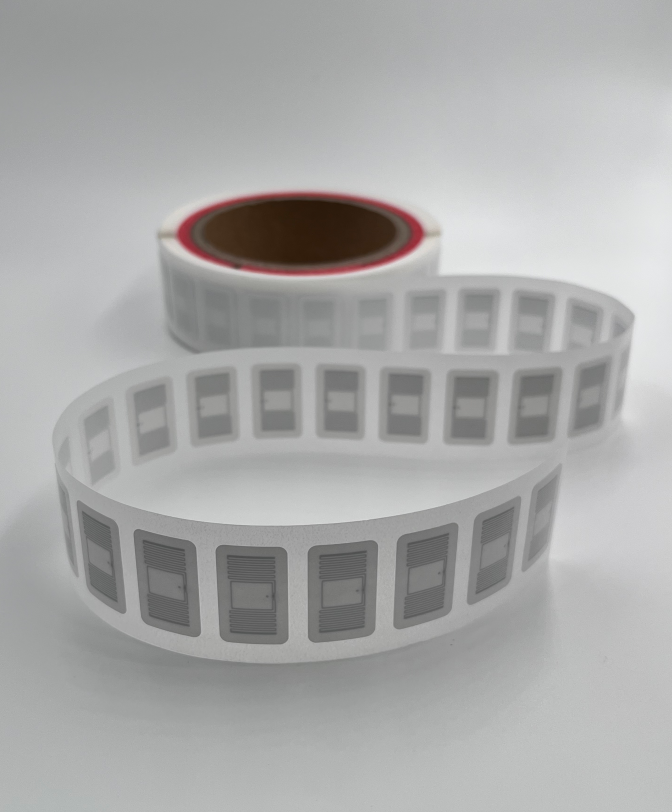
Hospitals often struggle with the hidden cost of locating moveable assets. Nurses and support staff lose valuable minutes hunting for an available IV pump or a wheelchair that has wandered to another floor. Real-time tracking has existed for years, but many systems demand an extra step—scanning a barcode or tapping an RFID tag at every handoff. That friction is exactly what busy clinical teams do not need.
Newer approaches rely on passive location technology that works in the background. Small Bluetooth or ultra-wideband tags attached to equipment broadcast their position to ceiling-mounted sensors or existing Wi-Fi access points. Staff simply move the pump or wheelchair as they always have. The system records the new location automatically, so the next person checking a floor map sees the true location without anyone pausing to scan a thing.
The payoff is cleaner workflows and fewer workarounds. When tracking does not add a single extra second to a handoff, adoption stays high and data stays accurate. Equipment pooling becomes practical because staff can trust the location shown on a screen. Over time, hospitals adjust inventory levels, reduce rental costs, and spend less time phoning other units to ask if they have a spare wheelchair hidden in a hallway.
The Difference Between Passive and Battery-Assisted Tags in Neonatal Units
In a neonatal unit, passive RFID tags are the usual starting point for tracking infants because they are light enough to attach to a tiny ankle band without causing any noticeable drag. These tags carry no internal battery; instead, a nearby reader emits a radio pulse that energises the tag's chip just long enough for it to bounce back a unique ID. That design keeps the tag paper-thin and completely sealed, so there is no risk of a leaking cell or a sharp casing against a newborn's skin. The limitation is real, though. A passive tag's signal is weak and can struggle to reach a reader from more than a metre away, especially when a metal incubator, a pile of linens, or the baby's own body sits between the tag and the antenna.
Battery-assisted passive tags, often shortened to BAP tags, solve part of that problem by adding a small coin-cell battery that powers only the chip's response circuitry, not a full radio transmitter. The reader still sends out an interrogation signal, but the tag no longer has to harvest every microwatt from that signal just to wake up. The result is a much stronger reply that cuts through blankets, crib rails, and even the cluttered shelves of a supply cart. Nurses get reliable reads from doorways or across a room, which matters when a baby is moved quickly from the NICU to imaging and someone needs to confirm the last known location. That reliability comes at a cost beyond the higher price per tag: the battery adds bulk, making the tag closer in thickness to a stack of three credit cards, and every battery has a finite life. A drained BAP tag fails silently, so staff must keep a replacement schedule or risk thinking an infant is being tracked when the tag has gone dark.
In practice, many neonatal units use both. Passive tags work well for bedside matching, for example, checking that a mother's wristband ID matches her infant's ankle tag during feeding or medication rounds. Battery-assisted tags are reserved for situations where read range and consistency trump size and cost, such as real-time location tracking across multiple wards or monitoring high-risk transfers. The decision often hinges on a simple question: can the unit tolerate a few missed reads in exchange for a cheaper, thinner tag, or does the safety workflow require a strong signal every single time? Once that question is answered, the choice between passive and battery-assisted tags becomes less about the technology itself and more about how the neonatal team actually works hour to hour.
Keeping Lab Samples and Medications Visible During Transfers
Keeping lab samples and medications visible during transfers starts with choosing the right containers. Clear, shatter-resistant secondary bins with labels on all four sides let staff verify contents without opening lids, which helps maintain temperature and sterility. Avoid opaque wrappings unless a substance is light-sensitive; in that case, use amber see-through packaging and mark it clearly on the outside.
During handoffs, set up a dedicated, well-lit transfer area and use open-top trays or transparent inner bags. This keeps everything in direct line of sight from pickup to delivery, reducing the chance that a vial or dose gets left inside a cart or temporary storage. For controlled medications, a visible chain of custody on the container itself—such as a color-coded tag or barcode—allows real-time confirmation without breaking the cold chain.
At each checkpoint, compare the visible identifiers against the transfer list before moving on. This simple visual check catches discrepancies immediately and keeps accountability high. When items stay in clear view throughout the entire journey, teams spend less time searching and more time focusing on patient safety.
How Real-Time Location Data Feeds Into Existing Nurse Call Systems
Most nurse call setups already rely on a central console and bedside pull cords or wall buttons. Adding real-time location data doesn't require ripping those out. A small badge or wristband tag worn by each staff member communicates with low-power sensors placed in hallways, patient rooms, and common areas. When a call is triggered, the system checks which staff members are physically closest to that room—not just who is assigned to that wing on paper. The integration happens at the software layer, where the call server combines the alert with current tag positions and routes the notification to the nearest available responder's mobile device or a hallway display.
The real shift is in how the existing system interprets a call. Instead of broadcasting to an entire unit, the call can be directed with room-level precision. If a nurse is already inside an adjacent room helping another patient, the system can hold the alert for a few seconds until movement indicates they've stepped out, rather than interrupting care with a hallway-wide chime. The location feed also lets the system suppress duplicate alerts if two staff members are already at the bedside, or escalate if no one has entered the room within a set window.
What makes this work without a major overhaul is that most modern nurse call servers already expose an interface for external triggers and logic. The location engine simply becomes another input, much like a bed exit sensor or a code blue button. Facility staff don't need to learn a new workflow—they still see a call, they still respond—but the routing behind the scenes is now based on live positions rather than static assignments. Over time, this also generates a movement history that can highlight recurring bottlenecks, like one hallway consistently drawing response times over two minutes, which gives maintenance and nursing leadership something concrete to act on.
Why Some RFID Tags Fail Near MRI Rooms and How to Avoid That
RFID tags rely on radio waves to communicate, but the powerful magnetic fields generated by MRI machines can easily disrupt their operation. Inside the MRI suite, the magnet is always on, creating a static field that can saturate the ferrite cores found in many passive tags, causing them to become unreadable. Even outside the designated safety zone, gradient coils and RF pulses during scans emit bursts of energy that can confuse tag readers or corrupt data stored on the chip.
The failure isn't limited to just the tag itself. Metallic components in some RFID labels can act like tiny antennas, picking up induced currents from the MRI's fluctuating fields. This can lead to overheating or even sparking in rare cases, which is a serious safety hazard. Tags attached to medical equipment or patient wristbands may also be physically pulled toward the magnet if they contain ferromagnetic materials, creating a projectile risk.
To prevent these issues, choose RFID tags specifically engineered for high-magnetic-field environments. Look for tags with non-ferromagnetic substrates and antennas made from copper or aluminum rather than nickel or iron. For critical applications, consider active RFID systems that operate on different frequencies less affected by MRI interference, or use barcode fallback inside the MRI suite. Always test tags in the actual MRI room under worst-case scan conditions before full deployment.
FAQ
Most hospitals end up mixing UHF passive tags for equipment and inventory with active or BLE-enabled tags for people, because no single frequency covers both well. UHF gives you longer read range at lower cost per tag, but it can struggle near metal or liquid, while active tags are better for room-level location updates but need batteries and cost more.
Yes, several industrial-grade tags are rated for repeated exposure to quaternary ammonium cleaners, hydrogen peroxide vapor, and isopropyl alcohol. You want a tag with an IP68 rating or higher, plus a housing material like medical-grade silicone or epoxy that won't crack after hundreds of wipe-downs.
Modern passive UHF and active RFID systems operate at very low power and are generally considered safe, but the bigger issue is electromagnetic compatibility with older monitoring equipment. Most hospitals do a small pilot on a single ward, keep readers at least one meter from sensitive devices, and check with biomedical engineering before full rollout.
In practice, yes. Hospitals that tag wheelchairs, IV pumps, and telemetry packs often see search time drop from 15–20 minutes per shift to under 2 minutes. The gains are most visible on larger campuses or older buildings where equipment drifts between departments.
With properly placed active RFID or BLE readers at doorways and in corridors, you can usually achieve 90–95% room-level accuracy. Exact bed-level tracking is harder and usually requires additional infrared or ultrasound anchors, which adds cost and complexity.
Beyond the tags and readers, budget for middleware licensing, network upgrades, staff training, and ongoing tag replacement due to loss or damage. Many sites underestimate the cost of integrating location data into nurse call or EHR workflows, which can be equal to the hardware spend.
A phased rollout of 3–6 months is realistic if you start with one department, validate read rates, then expand. Trying to tag every asset in a 400-bed facility all at once usually leads to reader dead zones and staff frustration, so most teams prefer a slower deployment.
Conclusion
Switching to RFID patient wristbands reshapes daily workflows more subtly than many expect. Instead of line-of-sight barcode scans at every medication pass or transfer, staff simply walk into a room and the system registers who is there, tied to the wristband's unique ID. The same infrastructure that tracks patients can also locate IV pumps and wheelchairs without any extra scanning steps—assets just appear on floor-plan views as they move through chokepoints or near ceiling-mounted readers. In neonatal units, the choice between passive and battery-assisted tags matters because tiny patients need minimal weight and no battery replacement risks, while staff still want reliable reads through incubator walls and blankets. Battery-assisted tags offer longer read range and more frequent updates, but passive tags often suffice for room-level tracking if reader density is high enough.
Lab samples and medications often go missing during handoffs between departments, but RFID tags designed for small vials and syringes keep them visible on dashboards the moment they leave a refrigerator or pharmacy shelf. That real-time location data can feed directly into existing nurse call systems, so a wandering patient triggers a silent alert at the nursing station instead of a loud alarm, and a stuck wheelchair outside an MRI suite gets flagged before it blocks a corridor. Speaking of MRI rooms, many standard RFID tags fail near the strong magnetic field because their antennas detune or their chips get damaged. To avoid that, hospitals should select tags with non-ferromagnetic materials and tested shielding, or place readers outside the MRI zone and rely on doorway detection rather than in-room reads.
Contact Us
Contact Person: Esme Mo
Email: [email protected]
Tel/WhatsApp: 0086 191 2931 7837
Website: https://www.osrfidglobal.com/