Top Tire Shredder Machines for Efficient Rubber Recycling
2026-10-15
Every year, mountains of discarded tires end up in landfills, leaking toxins and wasting valuable rubber. But what if that waste could become a profitable resource? The secret lies in choosing the right equipment. In this guide, we explore the top tire shredder machines that turn scrap tires into reusable rubber, and highlight why Kowloon Machinery stands out as a trusted name in the industry.
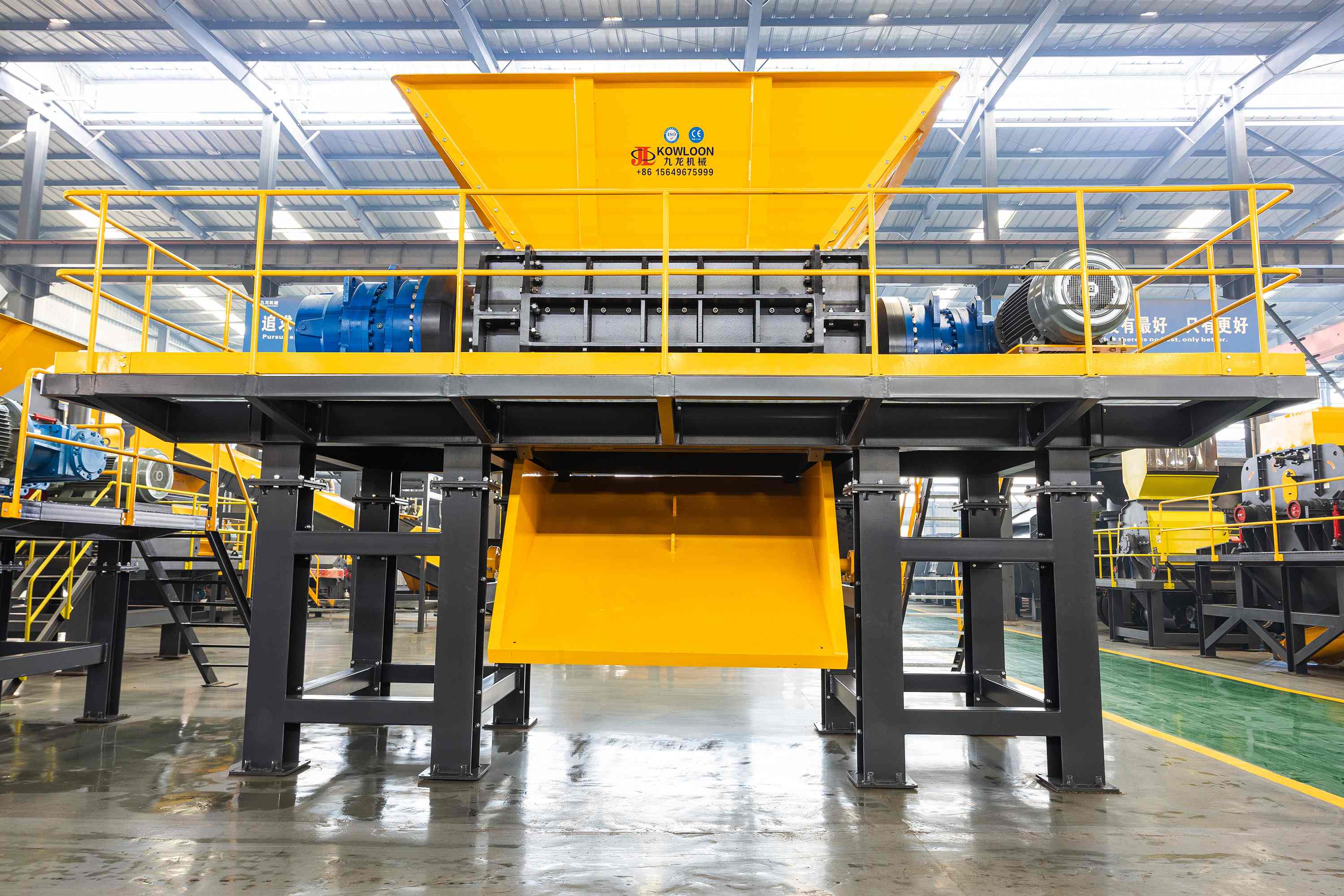
Dual-Shaft Systems Built for Nonstop Scrap Tire Processing
Scrap tires are rough on equipment. Steel belts, bead bundles, and thick tread lugs can stall a single-rotor machine in seconds. A dual-shaft system gets around that by pairing two counter-rotating shafts with intermeshing cutters. The low-speed, high-torque action rips instead of chops, dragging whole tires into the bite rather than letting them sit on top of the rotor.
Continuous processing hinges on small design calls. Bearing housings isolated from the cutting chamber keep wire and rubber dust out of the load path. Bolt-on knives mean a worn tooth gets replaced on the spot, not sent out with the whole rotor. Built-in load monitoring reverses a shaft for a second or two when it catches a chunk of bead wire, so the line clears itself without a full stop.
That self-clearing behavior is what turns a dual-shaft shredder into a 24-hour primary reducer. It can take mixed passenger, truck, and OTR tires, chew through sidewalls and tread blocks alike, and hand downstream equipment a steady stream of rough-cut chips. No babysitting, no constant reversing by hand—just a feed hopper that stays busy.
Knife Geometry That Reduces Rubber to Uniform, Market-Ready Chips
The cutting edge isn’t a simple wedge. Instead, it uses a compound bevel with a shallow primary angle that slices cleanly through rubber without grabbing or tearing. This geometry spreads the force across a wider area of the blade, so each chip shears off at nearly the same thickness every time, even when the material density varies slightly from batch to batch.
On the flanks of the blade, micro-grooves run perpendicular to the cutting direction. They reduce friction and let heat escape quickly, which keeps the rubber from softening and smearing. The result is a clean, square-edged chip that looks consistent enough to pack straight into retail bags without a secondary sorting step.
A slight nose radius at the tip further stabilizes the cut. Rather than a sharp point that can wander, the curved leading edge nudges the rubber into the correct shear zone and holds it there. That small detail cuts down on ragged ends and loose crumbs, pushing more of the raw material into usable, uniform pieces.
Modular Screens Let You Change Output Size Without Replacing the Machine
Traditional screening equipment often locks you into a fixed output size, so changing the final product usually means buying a whole new machine or at least a major retrofit. Modular screens flip that logic. By swapping out individual screen panels or modules—each with a different aperture size or shape—you can adjust the output gradation without touching the frame, drive system, or feed arrangement. It's a straightforward idea, but it changes how operators think about flexibility on the line.
The real advantage comes from the quick-release mechanisms and standardized module sizes. Instead of spending hours unbolting a full deck or waiting for a custom-built replacement, a single worker can often pull a worn or wrong-sized module and click in a new one during a routine maintenance window. Some systems also let you mix modules on the same deck, so you can produce multiple size fractions simultaneously or fine-tune the cut point as feed material changes. That kind of adjustability used to require a separate screen or a more complex multi-deck setup.
For plants that handle seasonal materials or shifting customer specs, this means one machine can cover a much wider range of outputs. You avoid the capital expense of duplicate equipment and the lost production time that comes with swapping entire units. The screen itself becomes a long-term platform rather than a single-purpose tool, and the payback often shows up in both lower inventory costs and faster response to new orders.
Hardened Rotors That Withstand Steel Bead and Sidewall Abuse
Most rotors will taco the first time a steel bead slams into them at speed. These aren't those rotors. The alloy gets a dedicated heat treatment that hardens the braking surface without making the whole disc brittle, so you can smash through rim-bending rock gardens and still count on consistent bite when you grab a handful of lever.
Sidewall abuse usually means bent spokes and a wobbling rotor that sounds like a playing card in a bike wheel. We've moved the standard thickness up just enough to keep the disc from warping under lateral loads, but kept the weight penalty barely noticeable. You'll feel it the first time you case a square edge at full gas and the rotor shrugs it off.
The real proof is in the noise—or lack of it. After thirty laps down a shale chute that eats brake tracks for breakfast, these rotors stay true, quiet, and fade-free. That's not a coating or a gimmick; it's a mix of alloy selection and a post-machining stress relief that lets the rotor flex a tiny bit and spring back instead of taking a set.
Energy Recovery Features That Lower Cost Per Ton of Rubber Recycled
The most overlooked lever in tire recycling isn't the shredder—it's the heat. Capturing the energy released during ambient grinding and redirecting it back into the process can cut electricity draw by a third. Plants that install variable frequency drives on their cracker mills and pair them with waste heat exchangers see a steady drop in kWh per ton, and that saving compounds with every shift.
Another practical feature is staged air classification. Instead of running a single high-powered fan to separate fiber and steel, using two smaller cyclones with adjustable dampers lets operators fine-tune the airflow. This reduces motor load and prevents fine rubber dust from recirculating, which would otherwise force the system to work harder. The result is less wear on rotors and a lower energy bill per ton processed.
Finally, smart start-stop sequencing on granulators and conveyors eliminates idle running during gaps in the feed. When sensors detect a drop in material flow, auxiliary equipment spins down automatically rather than waiting for a manual shutdown. Over a month of continuous operation, these small interruptions avoided can lower overall energy consumption enough to shave several dollars off every ton of crumb rubber produced.
Automatic Reversing and Jam Clearing Keep Downtime to a Minimum
When the machine picks up something it shouldn't, it doesn't just sit there waiting for a manual fix. A built-in sensor detects the sudden spike in resistance and immediately triggers a reverse rotation, sending the jammed material back toward the intake area. The whole sequence takes less than two seconds—often before an operator even notices anything went wrong.
If one reverse action isn't enough, the system performs a short back-and-forth motion: a slight forward push, then a quick pull back, using inertia to shake loose whatever is stuck. In most cases, two or three of these self-clearing cycles restore normal feeding without opening any guards or reaching for tools.
The real payoff shows up during continuous operation. Traditional setups often lose fifteen minutes or more to a single jam, but this automatic clearing mechanism squeezes unexpected interruptions down to a barely noticeable few seconds. Other machines on the line don't have to pause while someone digs out a blockage, so the overall production rhythm stays intact.
FAQ
A machine built for high-volume work needs a low-speed, high-torque cutting system that can bite through thick sidewalls without jamming. Look for oversized hoppers, reversible ram feeders, and automatic load sensing so the rotor speed adjusts to the material rather than stalling.
Focus on cutter durability and ease of access. Replaceable knife inserts, a split housing design, and a control panel that displays load and temperature in real time will save more money than a slightly lower purchase price. Also check whether the discharge conveyor can be reversed to clear blockages.
Primary shredders reduce whole tires into rough 50–100 mm chunks using coarse hooks and slower rotors. Secondary shredders or granulators take those chunks down to 10–20 mm chips, often with tighter screen control. Running both stages keeps each machine within its efficient torque band.
Daily checks should include hydraulic oil temperature, bolt torque on the cutter holders, and wear on the screen basket. Rotating or replacing inserts before they dull prevents heat buildup that hardens rubber residue. A weekly cleaning of the feed opening and magnet separator also reduces unscheduled downtime.
Not always. Passenger tires have thinner sidewalls and less steel, so they process faster. Truck tires contain thicker bead bundles and more wire, which requires higher torque and slower feed rates. Good machines let you adjust ram pressure and rotor speed to switch between the two.
A single-shaft primary shredder usually produces irregular chips between 50 mm and 150 mm depending on the screen and blade configuration. To get uniform 10–20 mm rubber mulch, you need a secondary granulator with interchangeable screens. Expect some long strips if the cutters are worn.
Mobile units offer convenience for site cleanup and smaller batches, but they typically trade throughput and screen options for portability. Stationary systems handle continuous feeding, integrate better with downstream separation, and often run cooler because they can be fitted with larger hydraulic reservoirs.
Hook-style blades grab the tire and tear rather than slice, which lowers energy use but creates rougher chips. Precision-ground square blades make cleaner cuts and more uniform output at the cost of higher power draw. The ideal design depends on whether the end product is crumb rubber, tire-derived fuel, or drainage aggregate.
Conclusion
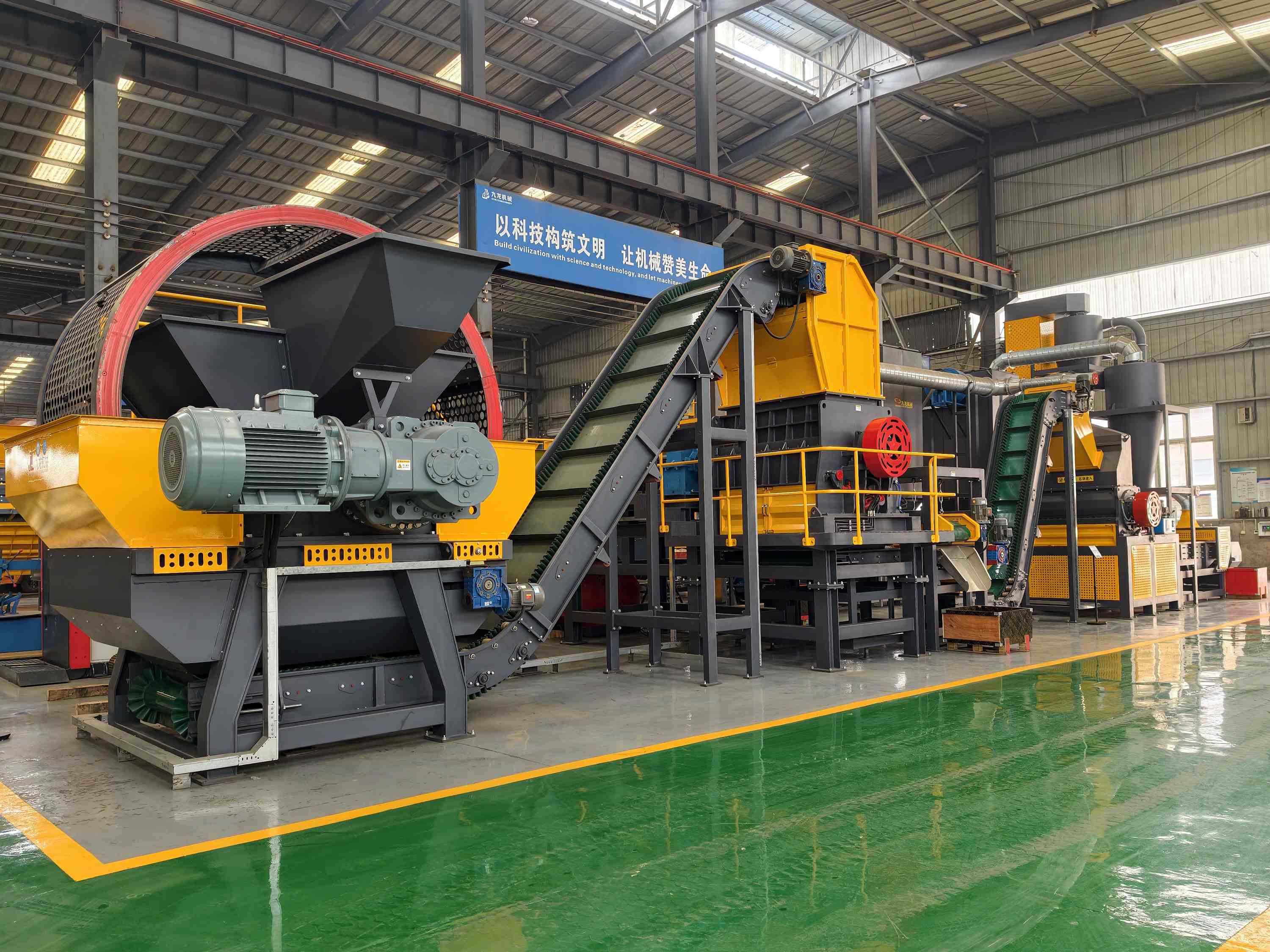
Modern tire shredding has moved well beyond the clunky single-purpose machines of the past. The top performers now rely on dual-shaft configurations that keep feeding whole tires without hesitation, even when scrap loads arrive mixed with mud, stones, or leftover wheel weights. The real difference, though, shows up in the cut. Instead of tearing rubber into ragged strips, these units use precision knife geometry to shear each tire into uniform, market-ready chips—the kind that actually sells to crumb rubber processors and civil engineering projects. Add in modular screen systems and the same machine can shift from rough 50 mm chunks to fine 10 mm granules by swapping a few panels, not the entire drum or rotor assembly. That flexibility alone turns a single shredder into a multi-stage processing line.
What keeps these machines running day after day is equally important. Rotors and teeth are hardened specifically to take hits from steel bead wire and sidewall belting without chipping or bending, so maintenance intervals stretch far longer than on standard equipment. Energy recovery is built into the drive system, capturing braking and load spikes to cut the cost per ton of rubber recycled—a figure that directly hits your operating budget. On top of that, automatic reversing and jam clearing react in seconds when an oversized chunk or stubborn steel cord tries to stall the rotor. The machine backs off, reorients the material, and resumes full throughput without an operator climbing onto the frame. For high-volume tire recycling, it’s this combination of aggressive cutting, rapid adjustment, and self-protection that separates a true workhorse from a weekend shredder.
Contact Us
Contact Person: Ray
Email: [email protected]
Tel/WhatsApp: +86 13733817580
Website: https://www.zzkowloon.com/