
Top Vacuum Casting Services Manufacturer: Precision, Quality, and Innovation
2026-06-12
Precision in vacuum casting isn't just a goal—it's the foundation for transforming great designs into flawless parts. Yet, true innovation happens when speed and quality converge seamlessly. ProtoMat has built its reputation on mastering this intersection, delivering services that push the boundaries of what's possible with rapid, high-fidelity parts. Curious how they turn the complex into the consistent? Here's a closer look at the precision, quality, and forward-thinking approach behind their process.
Mastering the Vacuum: The Art of Bubble-Free Molds
Getting rid of air bubbles in molds isn't just a technical step—it’s the difference between a flawless finish and a flawed piece. When you're working with resins, silicones, or plasters, trapped air can ruin surface details and weaken the final cast. The real trick lies in understanding how vacuum pressure coaxes bubbles out before the material starts to set. It’s not about instantly yanking all the air out; instead, you let the vacuum gently expand the bubbles until they rise and burst, leaving a perfectly homogenized mixture behind.
Timing and technique matter as much as the equipment. Once the material is mixed—often with careful folding to minimize introduced air—it goes straight into a vacuum chamber. You’ll watch it foam up dramatically, but pulling the vacuum too hard or too long can make things worse, causing volatiles to boil off or the material to flash-set. A pulsing approach, where you release and reapply pressure in cycles, often gives better results for thick resins. And don’t forget that degassing isn’t the end; pouring slowly into a corner of the mold and letting the material flow across the surface keeps new air from sneaking in.
The real artistry shows when you adapt to each material’s personality. Some silicones degas easily with a simple deep vacuum, while others need an extra kick—a slight warm-up or a vibration table after pouring. For complex molds with undercuts or fine textures, a pressure pot after the pour can compress any remaining bubbles to microscopic size, rendering them invisible. Mastering these subtle shifts turns a series of steps into a reliable craft, where every cast comes out crisp and glassy smooth.
From CAD to Cast Part in Days, Not Weeks
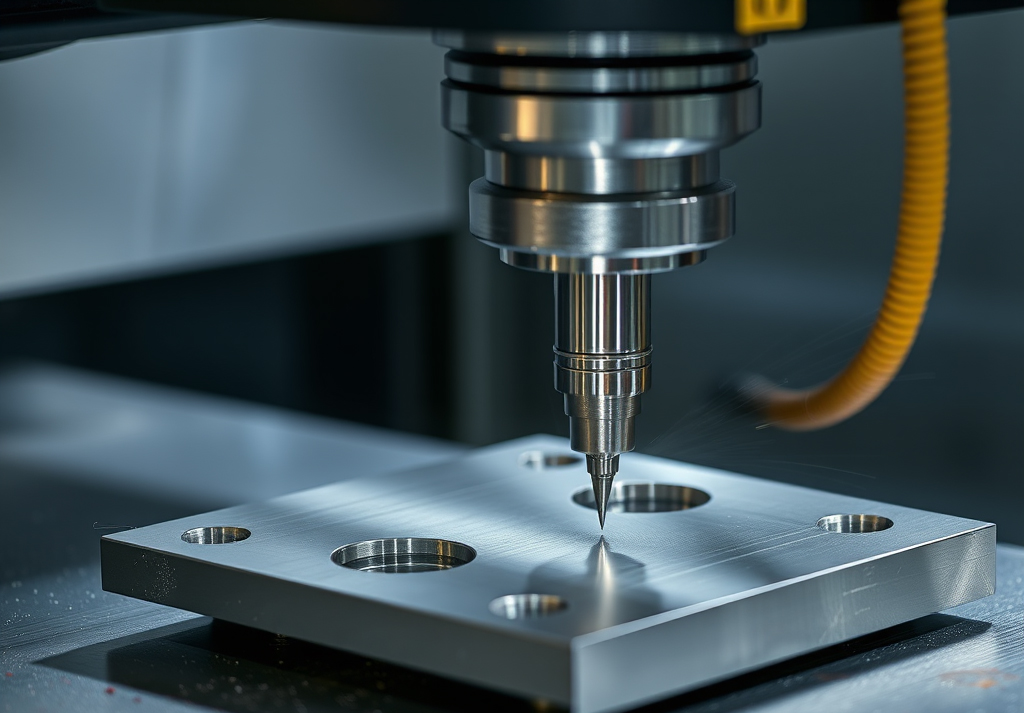
The traditional casting workflow typically involves days of back-and-forth between design and tooling teams, with manual pattern creation and mold setup dragging timelines into weeks. By leveraging direct digital manufacturing, that entire sequence collapses. CAD models are sent straight to additive fabrication of sand molds or investment patterns, bypassing tooling entirely. This shift eliminates multi-stage approvals and the need to wait for hard tooling, allowing first metal to be poured within hours of design completion.
The real acceleration, however, lies in the feedback loop. When a design iteration is required, a new mold can be printed overnight and cast the next morning, without altering production schedules or wasting existing tooling inventory. This rapid iteration isn’t just faster—it shifts the conversation from “when can we test” to “how many variants can we evaluate.” Engineers can pursue optioneering approaches that were previously too time-consuming, resulting in better optimized geometries without schedule penalties.
Crucially, speed does not sacrifice quality. Process controls adapted for digital printing ensure consistent mold permeability and surface finish, matching or exceeding traditional tolerances. The result is a compressed development cycle that hands foundries a printable mold file rather than a machining drawing, turning complex cast part delivery from a multi-week ordeal into a predictable, daily output.
Materials That Mimic Production Plastics Perfectly
The ideal drop-in material should behave just like the plastic it replaces on existing tooling. A growing number of polymers now offer the same tensile strength, melt flow, and finish quality as ABS, polypropylene, or PET, so factories don’t have to rejig their entire setup. This is practical mimicry, not just wishful thinking.
Take certain plant-based resins, for example. They handle injection molding, blow molding, and thermoforming with the same predictability as petroleum-derived pellets. Even the scrap rates stay low. Advanced compounding has closed the performance gap, meaning designers can specify them without sacrificing function or appearance.
You’ll find them in phone cases, auto trim, appliance housings, and disposable cutlery that feels just like the fossil-fuel version. The real win is that these materials slot into the circular economy more gracefully, yet they don’t ask manufacturers to change their ways.
Tooling Ingenuity: Saving Costs Without Sacrificing Detail
In bringing our product to life, we faced a tough balance: the housing demanded intricate lattice patterns that shouted for expensive steel molds, yet the project budget whispered limits. By crafting hybrid tools—combining a standardized base with 3D-printed high-detail inserts—we mirrored the original design’s complexity while keeping initial outlay under a tenth of conventional tooling costs.
The hinge mechanism presented another challenge where tight tolerances were non-negotiable. Instead of machining the entire cavity from a block of hardened steel, we used localized EDM-sinked inserts for the critical pivot areas, inserted into a softer, less costly frame. This pinpoint approach preserved motion smoothness without wasting money on hardened surfaces where they weren’t needed.
Even in production, we used hot stamping rather than pad printing for the logo, ensuring crispness on the textured surface. The texture itself was achieved through chemical etching of the mold, bypassing the need for secondary coatings. Every decision revolved around asking: how can we get exactly the same tactile and visual outcome with fewer resources?
When Tolerances Tighten: Our Take on Precision
Precision isn’t just a number on a drawing—it’s a conversation between intent and reality. When tolerances shrink, that conversation gets louder and more demanding. The instinct is often to reach for better machines, tighter processes, or simply to push harder. But in our experience, chasing microns without understanding the “why” behind them is a fast track to frustration and scrap.
We’ve learned to treat tightening tolerances as a signal, not a sentence. It’s a prompt to re-examine the entire chain: material stability, thermal behavior, tool wear, and even measurement methods. Too often, the real limit isn’t the equipment—it’s unaccounted variables that quietly eat away at consistency. Addressing those first changes everything.
The truth? Chasing precision can make you better at what you do, even if you never hit that perfect zero. We’ve seen shops transform their whole workflow after a tough tolerance job forced them to rethink setup, fixturing, and in-process checks. When you stop seeing tight tolerances as a barrier and start treating them as a mirror reflecting your process, you gain a clarity that loose specs never demand.
Innovation in the Mix: Blending Technologies for Better Results
Bringing together disparate technologies often unlocks possibilities that isolated systems can't match. The real breakthrough isn't in a single tool but in how we weave them into a cohesive fabric. When data pipelines merge with real-time analytics, or edge computing meets advanced machine learning, the result is a solution that adapts on the fly, learning from every interaction. This blend doesn't just add features; it multiplies impact.
Practical fusion often starts with a simple question: what if? What if your IoT sensors didn't just collect data but also fed a predictive maintenance model that triggers automated workflows? That question leads to architectures where cloud services, on-premise legacy systems, and modern APIs coexist. The magic happens in the seams—the handshake between a containerized microservice and a decades-old database, or the way a language model can turn unstructured text into a structured dashboard. These connections demand careful orchestration, but the payoff is resilience and fresh capabilities without a ground-up rebuild.
The true art lies in knowing when to merge and when to let components stand apart. Not every technology needs to be tightly coupled; loose couplings often allow for more graceful evolution. A well-blended stack feels intuitive, almost inevitable, yet it's the product of deliberate choices—choosing protocols that stay out of the way, designing interfaces that respect each system's strengths. When done right, the whole becomes something no one would have predicted from the parts list alone.
FAQ
A top manufacturer puts precision first, ensuring every detail matches the master model, then backs it with strict quality checks and a mindset for constant improvement. Innovation is woven into how they refine each step—from material mixing to final curing—so the output not only looks accurate but performs reliably under real-world conditions.
Leading providers control shrinkage by fine-tuning mold temperatures and pressure levels, use high-grade silicone molds that capture micro-details, and often employ experienced technicians who hand-finish parts. Many also cross-check dimensions with advanced metrology tools to catch even minor deviations before delivery.
Quality control catches defects that can compromise a part’s function—like air bubbles, surface imperfections, or dimensional drift. For manufacturers, it’s the line between delivering a usable component and a flawed one, especially when parts head into medical devices or aerospace applications where failure isn’t an option.
Top shops now integrate rapid tooling with 3D-printed masters to slash turnaround times, experiment with hybrid resins that mimic engineering plastics, and use computer-aided mold flow analysis to predict fill patterns. Some even layer multiple materials in a single pour to create parts with varied textures or flexibility zones.
Absolutely. It bridges the gap between one-off prototypes and full-scale injection molding. Designers often use it for 10–50 functional samples to test fit and feel, then seamlessly scale to a few hundred units for market validation or bridge tooling, all while maintaining consistent part quality.
Premium providers offer a wide palette: rigid polyurethanes that simulate ABS or PC, flexible elastomers mimicking rubber, transparent resins for lenses, and even flame-retardant grades. They’ll often recommend custom formulations to match specific mechanical properties like heat deflection or impact resistance.
An innovative approach pushes beyond standard recipes. It means refining degassing cycles to eliminate porosity, developing proprietary post-curing that boosts strength, or building client-specific color matching systems. The outcome is parts that don’t just meet the spec—they outperform expectations in durability and surface finish.
Look for a manufacturer with a track record in your industry, clear communication about tolerances, in-house finishing capabilities, and the flexibility to handle design changes quickly. Ask to see sample parts that highlight their precision, and check if they offer consultative support on material selection and part optimization.
Conclusion
In the demanding world of vacuum casting, true mastery lies in the seamless elimination of bubbles and flaws, a craft we’ve refined to an art. Our process transforms CAD designs into flawless, production-grade parts in a matter of days, not weeks, leveraging a curated selection of materials that perfectly mimic the mechanical properties and finish of injection-molded plastics. This speed and fidelity are made possible by tooling ingenuity that sidesteps traditional costs without ever compromising on the crisp details that define a high-quality prototype or low-volume run.
When tolerances tighten to the edge of feasibility, our approach to precision ensures every micron counts, backed by an innovative fusion of technologies—silicone molding, advanced metrology, and in-house finishing—that delivers results beyond the ordinary. It’s this blend of reliability, exacting standards, and forward-thinking methods that positions us as a partner capable of handling complex geometries and evolving project demands, all while keeping a sharp eye on efficiency and the finer points of every cast.
Contact Us
Contact Person: Joe
Email: [email protected]
Tel/WhatsApp: +8613799507208
Website: https://www.3dprotomat.com/