
Trimethyl Phosphate Exporter Standards Every Chemical Buyer Should Know
2026-11-16
Most chemical buyers don't realize how quickly a trimethyl phosphate shipment can turn into a compliance headache. The exporters worth keeping aren't the ones with the lowest quote—they're the ones whose standards hold up under scrutiny. Fortune has spent years refining exactly those standards, and this guide breaks down what to look for before your next purchase.
Purity Verification Moves That Catch Low-Grade Batches
One of the fastest ways to trip up a low-grade batch is to hit it with a cross-check of its physical constants. A melting point reading that comes in broad or off by more than two degrees is rarely a calibration issue — it usually means the material has been cut or poorly crystallized. Pair that with a density check and a refractive index reading, and you create a narrow window that most diluted batches cannot sneak through. The trick is not to accept any single value in isolation, but to treat the three as a fingerprint. If one shifts while the others stay put, you are likely looking at contamination rather than degradation.
Chromatography still carries the most weight, but only if you read it with suspicion. A low-grade batch can produce a clean-looking HPLC trace if the adulterant elutes near the main peak or if the method is not set to catch it. For that reason, changing the mobile phase composition or using a shorter column with a steeper gradient often exposes shoulder peaks that routine runs miss. The same goes for GC-MS: a library match is not confirmation. Compare retention time, ion ratios, and the shape of the baseline. Many rejected batches pass the first look because the analyst stopped at the headline purity number instead of interrogating the trace.
Physical appearance and dissolution behavior can also expose a batch before any instrument gets switched on. Low-grade material often shows irregular crystal size, a dull or greasy surface, or a color that is slightly off from the reference standard. Grind a small portion and watch how it dissolves: a pure batch tends to go into solution cleanly, while a compromised one leaves a faint haze or takes noticeably longer to wet. Keeping a sealed retention sample from a known-good lot on hand makes these side-by-side checks far more reliable than relying on memory. The goal is to build a few cheap, fast moves that reject dubious material before it ever reaches a production scale.
The Paper Trail Customs Officials Actually Read
When you hand over your passport at border control, the officer isn't just glancing at your photo. Behind the counter sits a stack of documents that tells a more detailed story: arrival cards, customs declarations, and sometimes printed itineraries or hotel confirmations. These pieces of paper get cross-checked against electronic watchlists and travel histories, not because anyone doubts your vacation plans, but because mismatches are often the first sign of trouble.
For commercial shipments, the paper trail thickens considerably. Bills of lading, commercial invoices, packing lists, and certificates of origin each carry specific legal weight. A customs official reading these isn't looking for typos; they're tracing whether the declared value matches the goods, whether the origin aligns with trade agreements, and whether the shipment description could hide restricted items. One missing or contradictory page can hold a container at port for days.
Even personal mail and parcels leave a readable trail. Customs declarations on packages include item descriptions, quantities, and values, and officials do read them—often comparing the label against X-ray images or physical inspection results. Handwritten forms with vague entries like gift or samples tend to attract more scrutiny than a precise list, because ambiguity creates extra work for everyone involved.
Bulk Container Prep That Prevents Contamination Claims
A single overlooked residue inside a bulk container can turn a routine shipment into a costly dispute. The most effective prep starts long before loading, with a visual and tactile sweep of every interior corner, seam, and discharge gate. Run a clean, dry rag along weld lines and around valve openings—if it picks up dust, rust flakes, or a film that feels slick, the container isn't ready. For food-grade or sensitive chemical loads, follow up with a food-safe solvent wipe and let the container air out completely, so no odor from the previous cargo lingers.
Documentation is just as critical as the physical cleaning. Photograph the interior from both ends, focusing on floor grooves, ceiling hatches, and any areas where product could hide. Timestamp those images and attach them to the shipping order before the container leaves the yard. If a receiver later claims contamination, those dated photos become hard evidence that the container was inspected and clean at origin. Don't rely on a wash ticket alone—many claims hinge on what you can prove with your own eyes and camera.
Finally, think about what goes inside with the cargo. Desiccant packs, liners, or dunnage should be inspected for tears, moisture, or signs of prior use. A single damp cardboard corner or a punctured liner can introduce fibers or condensation that contaminates the load. Replace anything questionable rather than patching it. And when sealing the doors, use a clean, new gasket and a numbered seal, then record that seal number in the freight documents. It's a small habit that closes the gap between "probably clean" and "provably clean."
New Export Rules That Quietly Change Your Sourcing Map
The latest export controls might not make front-page headlines, but they have already begun to redraw the practical boundaries of where you can buy, sell, and ship without friction. While most sourcing teams still rely on a mental map drawn from tariffs and lead times, the newest compliance requirements quietly add new layers: end-use restrictions, re-export clauses, and expanded denied-party screening. What used to be a simple question of price and delivery now includes a harder test—will this component, or even this production line, remain legally shippable six months from now?
In practice, the shifts show up in unexpected places. A fastener that was harmless last quarter may suddenly carry a license requirement because of its alloy composition or because the buyer’s end product falls under a newly controlled category. The rules also push more responsibility onto intermediaries: a distributor in one country may be fine, but if that distributor resells to a third country on a watchlist, the original exporter can face penalties. As a result, smart sourcing maps now include compliance checkpoints at each handoff, not just at the final border crossing.
The quiet part is that many companies are not updating their vendor lists or routing logic fast enough. Teams that treat export rules as a once-a-year legal review will keep discovering problems after the fact—cancelled orders, stuck shipments, or worse, exposure to enforcement actions. The more durable approach is to build real-time screening and country-risk flags directly into the sourcing workflow, so that every new supplier, transit route, or product change is evaluated against the newest rule set before it becomes a commitment.
Third-Party Lab Checks Worth the Extra Fee
Most supplement companies run their own quality tests, which is a bit like letting a student mark their own exam. Third-party lab checks add a noticeable upcharge, but they exist to catch what internal teams sometimes miss—heavy metal contamination, hidden fillers, or a batch that drifted below label strength. That extra fee isn't just paying for a fancy seal on the tub; it buys an outside pair of eyes that has no reason to protect the brand's reputation.
When a product shows a certificate from an independent lab like USP, NSF, or Eurofins, you're paying for accountability that can't be quietly buried. These labs don't care if a brand loses sales over a failed result—they publish what they find, and brands that hire them accept that risk. That kind of transparency is rare, and for anyone who relies on supplements daily, it's a premium genuinely worth covering.
Contract Language That Locks in Consistent Quality
Vague promises don’t survive contact with a vendor’s bottom line. The clauses that actually protect consistency are the ones that define quality in operational terms: tolerances, defect rates, response times, and the exact test methods used to verify each. Instead of saying “high-quality materials,” the contract should name the grade, the finish, and the inspection checklist that must pass before any shipment leaves the dock.
Another lever is the recurring audit clause. Giving the buyer the right to pull samples from live production, unannounced, and run them against agreed benchmarks keeps pressure on the supplier long after the ink dries. Tie those benchmarks to price adjustments or replacement obligations, and the contract stops being a piece of paper and starts acting like a quality control system.
Finally, write the change-control language so that any substitution of material, process, or subcontractor requires written approval with fresh test data attached. This closes the loophole where a supplier quietly “optimizes” cost and quality erodes. Lock those three mechanisms together, and consistency stops being a hope and becomes a contractual default.
FAQ
TMP is a methyl ester of phosphoric acid used widely as a solvent, flame retardant intermediate, and catalyst. Because small impurities can disrupt sensitive applications like lithium battery electrolytes or pharmaceutical synthesis, exporter quality control has a direct impact on your production yield.
Insist on 99.0% minimum assay by GC, with moisture below 0.1% and acidity below 0.05 mg KOH/g. Many top exporters can offer 99.5%+ as standard, which gives extra safety margin for high-end uses.
Request a batch-specific COA with actual test results, not just a generic data sheet. Ask for the original manufacturer name and production date. If the exporter refuses or delays, they may be blending or reselling without traceability.
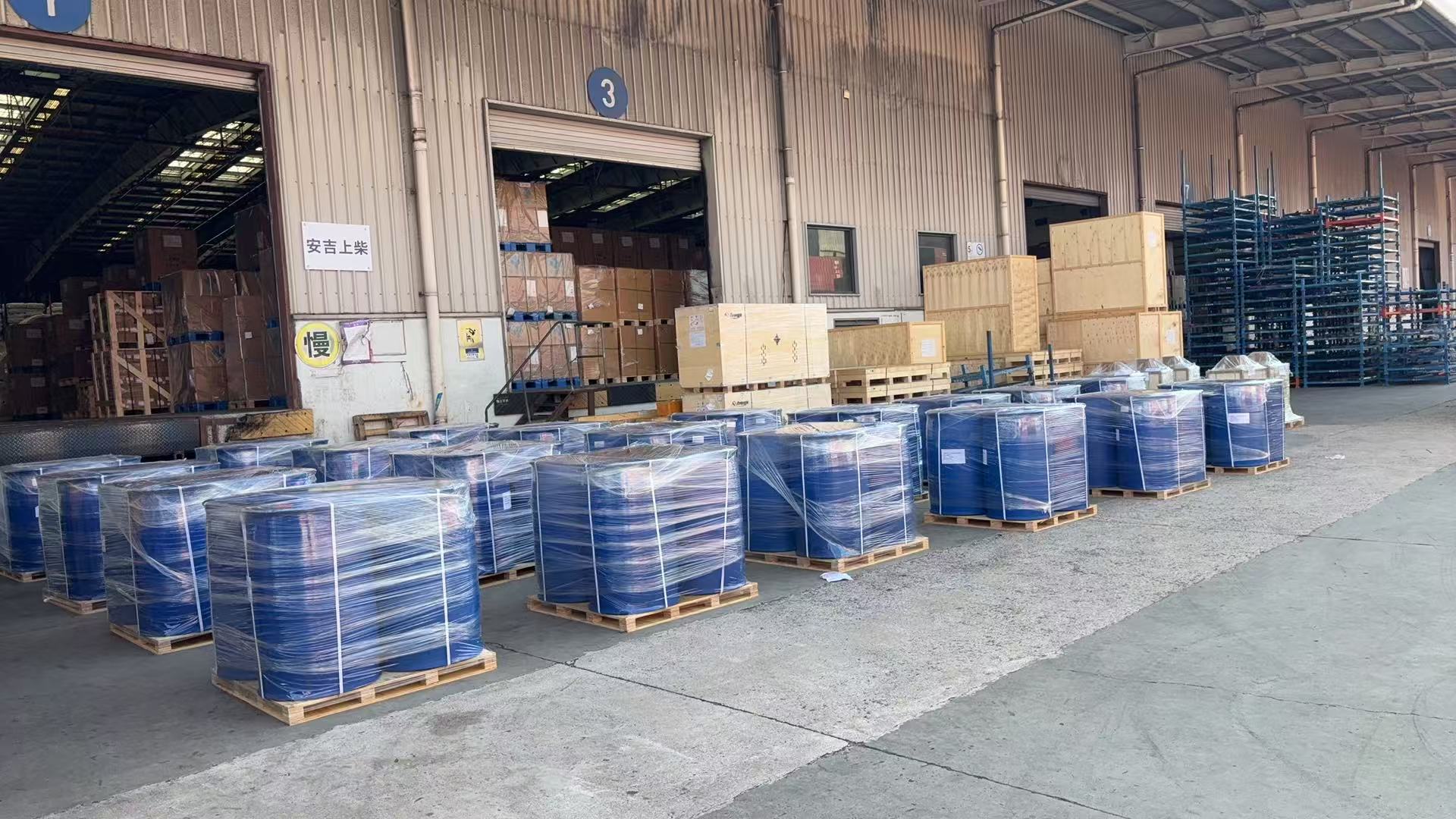
For ocean freight, use UN-approved 200L steel drums with PTFE-lined caps or IBC totes with nitrogen blanketing for large volumes. Labels must include GHS pictograms, proper shipping name, batch number, and net weight. Double-check that the drum lining is compatible with phosphoric esters to prevent rust contamination.
Yes—at minimum a Safety Data Sheet (SDS) compliant with GHS, a Certificate of Analysis, a Certificate of Origin, and a packing list. For shipments to Europe, REACH registration or a letter of access is essential; for the US, TSCA compliance may be requested.
Vague purity claims like 'technical grade' without numeric specs, refusal to send pre-shipment samples, no physical address or plant audit possibility, and inconsistent batch numbers on documents. Also, extremely low pricing often means hidden moisture or acidity issues.
Moisture can hydrolyze TMP into dimethyl phosphate and methanol over time, reducing purity and creating corrosive byproducts. Excess acidity attacks metal equipment and can poison catalysts in polymer or pharmaceutical reactions. That is why top exporters control moisture to ≤0.1% and acidity to ≤0.05 mg KOH/g.
At a minimum, they should run GC purity, Karl Fischer moisture, acid value, and color (APHA) tests on every batch. Many also do a 48-hour stability test at elevated temperature to confirm no degradation. Ask for a copy of the internal QC release form—not just the customer-facing COA.
Conclusion
Smart buyers don't settle for the certificate that arrives with the drums. Ask the exporter how they verified the batch: Was a retention sample pulled at the filling line? Which impurity profile method did they run? Low-grade trimethyl phosphate often slips through when the spec sheet looks perfect but the actual lot has moisture, methanol, or acid traces. Customs officers read every line of the export documentation, and a missing dangerous goods note or a sloppy HS code will hold your container for weeks. Bulk prep matters just as much: unlined steel, reused ISO tanks without a wash certificate, or a missing nitrogen pad can spark a contamination dispute before you even test the cargo.
Export rules have shifted quietly over the past year. Several Southeast Asian ports now want prior informed consent for phosphate esters, and a few EU gateways demand extra environmental permits, so a supplier that worked last quarter might be off your map now. Independent lab checks are worth the extra fee because they close the gap between the exporter's word and the material at your door. Have a third party draw a sample at loading and another at discharge, then compare both against the same ASTM method. Finally, write the contract so quality is not a hope. Spell out allowable impurity ceilings, test methods, retest rights, and a clear rejection formula. If a batch drifts, you want the leverage to return it or claim a discount without a long argument.
Contact Us
Contact Person: WANG SIHAI
Email: [email protected]
Tel/WhatsApp: +86-13815295628
Website: https://www.fortunechemtech.com/index_en.html