Understanding the Known Pusher Furnace: Key Features and Industrial Applications
2026-08-01
In the world of industrial heating, pusher furnaces are workhorses that deserve a closer look. Understanding their design and capabilities can unlock new efficiencies in your process. At THINKING-LONG, we've seen firsthand how the right furnace transforms production lines. This post explores the key features and real-world applications that make pusher furnaces indispensable.
What Makes the Pusher Furnace a Staple in Heavy Industries?
Pusher furnaces have earned their reputation in heavy industries not through flashy innovation but through sheer, unyielding reliability. In environments where downtime can cost thousands per hour, these furnaces keep running with minimal intervention. Their design is straightforward: a mechanical pusher advances materials through a heated chamber in a controlled, continuous cycle. This simplicity translates into fewer breakdowns and easy maintenance. Operators appreciate that when something does go wrong, diagnosing and fixing the issue rarely requires specialized expertise.
Beyond reliability, the pusher furnace delivers unmatched throughput for high-volume, uniform products. Because the material moves in a steady stream, there's no need to batch loads or wait for temperature cycling. This constant flow is ideal for processes like annealing, sintering, or hardening of large quantities of similar parts. The consistent push rate also ensures each piece receives near-identical heat treatment, resulting in tight quality control that manual or semi-automated systems struggle to match. For manufacturers churning out components by the pallet-load, this consistency directly reduces scrap and rework.
Perhaps the real secret to its longevity is adaptability. While the basic concept hasn't changed much in decades, modern pusher furnaces integrate sophisticated controls, multi-zone heating, and atmosphere management. They can handle a surprising range of materials—from powders and pellets in trays to solid billets and automotive parts—all within the same fundamental architecture. This flexibility means a single furnace line can be reconfigured for different product runs without major retooling, giving heavy industries a future-proof asset that evolves alongside their production needs.
Inside the Workings: How a Pusher Furnace Transforms Raw Materials
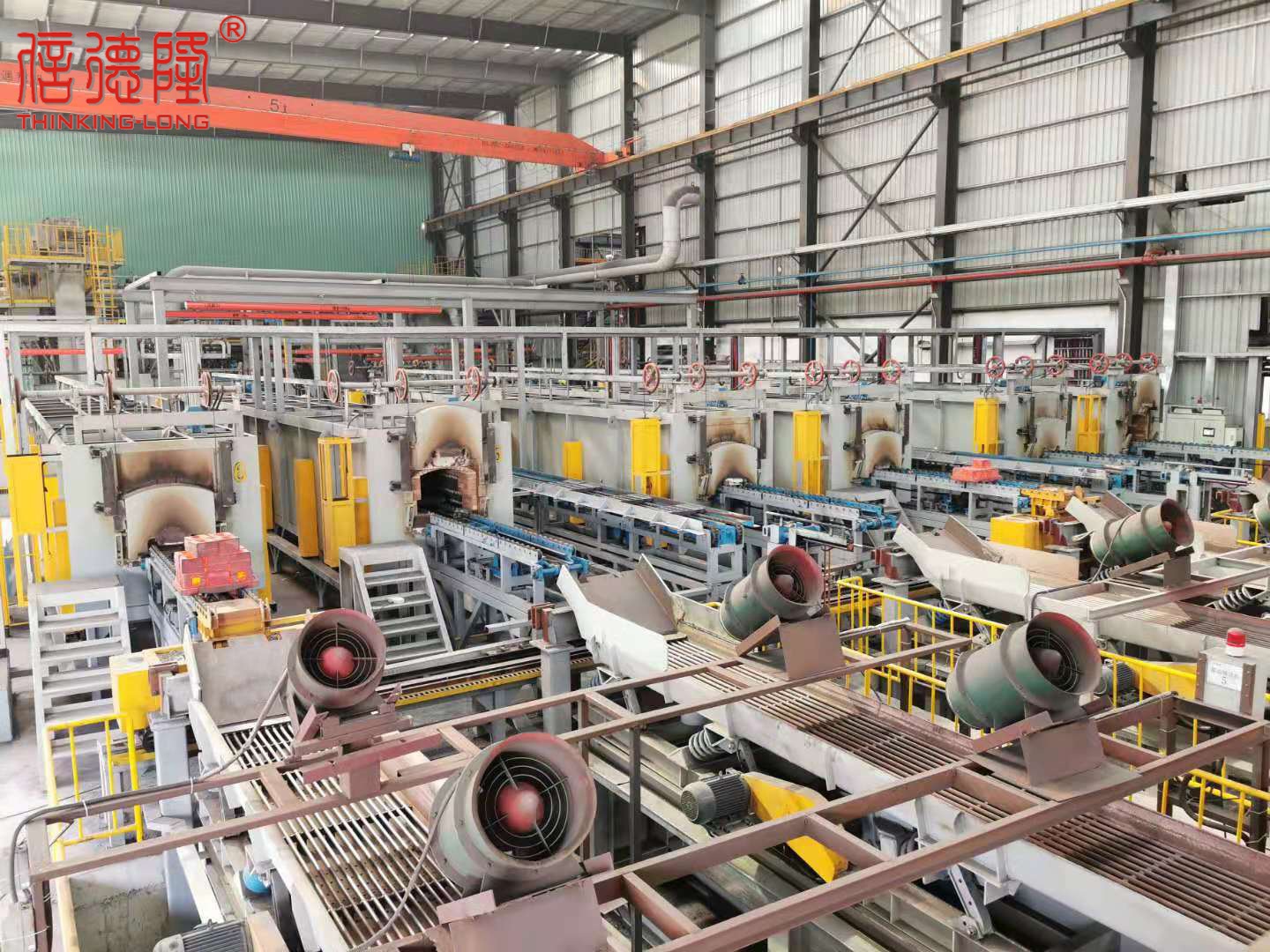
Raw materials enter the furnace on trays or boats, pushed inch by inch through a controlled thermal journey. Unlike batch systems, this continuous flow exposes each piece to precisely timed heating and cooling zones. The gentle, steady progression prevents thermal shock while allowing gases to circulate evenly, ensuring that every particle undergoes the intended chemical or physical change without rushing the transformation.
At the heart of the operation is the pusher mechanism itself—a hydraulic or mechanical arm that advances the entire line with each stroke. Timing is critical; too fast and the material may not fully sinter or react, too slow and throughput suffers. Temperature profiles are segmented into distinct zones, where burners or electric elements raise the heat gradually. In ceramic or powder metal processing, for instance, the binder burns off first, followed by densification at peak temperature, and finally a controlled cooldown to lock in the desired structure.
What sets the pusher furnace apart is its ability to handle high-volume production with remarkable consistency. Each tray acts as a mini-batch, yet the uninterrupted movement yields uniform properties from the first piece to the last. Operators monitor atmosphere composition, belt speed, and zone temperatures closely, tweaking parameters to accommodate different raw material blends. Over time, the furnace’s refractory lining and pusher plates develop a seasoned patina that actually improves thermal stability, turning a simple pushing action into a finely tuned manufacturing art.
Beyond Basic Heating: Distinctive Design Elements That Set It Apart
What truly elevates a heating solution isn’t just its ability to warm a space—it’s the thoughtful integration of form and function that makes it feel like a natural part of the home. From sculptural silhouettes that double as conversation pieces to customizable panels that mimic fine textiles or wood grains, the latest designs blur the line between appliance and art. These aren’t radiators you’ll want to hide behind furniture; they’re focal points that command attention, often using materials like volcanic stone or tempered glass to radiate heat differently, and more beautifully, than conventional metal.
Color and finish play an unexpectedly powerful role, too. Moving beyond sterile white, brands now offer deep matte blacks, brushed brass, or even custom hues that match your wall paint perfectly. Some models incorporate ambient LED lighting that shifts with the temperature, turning the device into a subtle mood setter. The real magic, however, lies in how these elements coexist with practical innovation—think ultra-thin profiles that mount flush to the wall, freeing up floor space, or modular systems that can be arranged into unique geometric patterns, turning an entire wall into a gentle, radiant canvas.
Quiet luxury in heating also means tactile satisfaction: controls that click with precision, surfaces that are warm but never scalding, and a visual weightlessness that defies their output. Whether it’s a freestanding unit with the poise of mid-century furniture or a ceiling-mounted panel that disappears into the architecture, the distinction is in the details. These design-forward choices signal a shift—heat is no longer just a utility; it’s an opportunity to express personal style and elevate everyday living.
From Steel Mills to Forging Lines: Where Pusher Furnaces Prove Their Worth
Pusher furnaces are the quiet workhorses of heavy industry, seamlessly bridging the gap between massive steel production and precision forging. In steel mills, they tackle the demanding task of reheating slabs, blooms, and billets to uniform temperatures before rolling, ensuring that each piece moves smoothly through subsequent reduction passes. The straightforward pusher mechanism—using hydraulic or mechanical rams to advance stock along a refractory hearth—delivers reliability in high-volume environments where downtime is simply not an option.
Beyond primary steelmaking, these furnaces shine in forging operations that require consistent, controlled heating of bar stock or pre-cut blanks. Whether preparing alloy steels for automotive crankshafts or titanium billets for aerospace components, pusher furnaces maintain tight temperature profiles across every charge. Their design minimizes scale formation and decarburization, preserving material integrity and surface quality—critical factors when parts must meet rigorous mechanical specifications without excessive machining allowances.
What truly sets pusher furnaces apart across these diverse settings is their adaptability to automated workflows. From integration with roller tables and charging robots in mills to synchronized discharge with forging presses, they become a natural extension of the production line. This harmony between brute thermal capacity and delicate process control explains why, even in an era of advanced induction and rotary hearth systems, pusher furnaces continue to prove their worth wherever efficiency and metallurgical precision intersect.
The Unsung Efficiency: Energy Savings and Operational Consistency
When systems run smoothly, the energy they consume often goes unnoticed. But true efficiency isn't just about flashy green certifications or cutting-edge technology—it's about the quiet, persistent reduction in waste that happens when operations are consistent. Day after day, well-maintained equipment and streamlined processes hum along, using only the power they truly need. This ignored virtue delivers real savings, not through dramatic overhauls but through the steady avoidance of leaks, friction, and redundant efforts.
Operational consistency is the bedrock of this efficiency. When machines aren't pushed to their limits by erratic demands or neglected maintenance, they draw less energy and last longer. The same holds for human workflows: when routines are predictable, energy isn't squandered on scrambling to correct errors or redoing tasks. Small, regular adjustments—a calibrated thermostat, a cleaned filter, a standardized procedure—compound into substantial savings, often hiding in plain sight on a utility bill.
The irony is that the most energy-efficient operations rarely make headlines. They don't rely on clever marketing or trending buzzwords; they simply work. The real challenge is recognizing that the absence of problems isn't an absence of effort. It's the result of deliberate, consistent practices that keep energy use lean and reliable—an unsung efficiency that deserves more than a passing nod.
Future-Proofing Thermal Processing: Innovations in Pusher Furnace Technology
The industrial landscape is shifting beneath our feet, and pusher furnaces are quietly evolving to meet demands that didn't exist a decade ago. It's no longer enough to simply heat and push; modern operations require agility, data transparency, and an almost obsessive focus on energy efficiency. Manufacturers are integrating adaptive heating zones that respond in real time to variations in product load and composition, ensuring consistent outcomes without manual tweaking. This isn't just automation—it's the furnace learning its job, adapting to new materials and throughput rates with minimal human intervention, which is critical when production lines need to switch between batches at a moment's notice.
Beneath the surface, the real transformation lies in the control architecture. Traditional PLC-based systems are giving way to decentralized intelligence where sensors act as local decision-makers, feeding a central brain that orchestrates everything from atmosphere flow to belt tension. This mesh of edge computing and predictive maintenance algorithms turns the furnace into a self-aware asset. Technicians no longer wait for a failure; the system flags a degrading heating element two weeks before it fails and schedules its replacement during planned downtime. The result is a dramatic reduction in unplanned outages and a steady rise in overall equipment effectiveness that plant managers once thought impossible in high-temperature environments.
But future-proofing isn't just about smart electronics—it's also about physical durability and material science. New refractory linings and advanced alloy formulations allow pusher furnaces to handle more aggressive atmospheres and higher peak temperatures without the chronic wear that used to limit cycle life. Combined with modular design principles, these furnaces can now be reconfigured rather than replaced. A line built for automotive gears today can be adjusted for aerospace components tomorrow, with minimal rebuild time. It's this blend of digital and physical innovation that ensures a pusher furnace installed now won't become a bottleneck in ten years, but instead a flexible platform that keeps pace with whatever the market throws at it.
FAQ
A pusher furnace is a continuous heat treatment system where materials are pushed through a heated chamber on trays or skids. It uses a hydraulic or mechanical pusher mechanism to move the load step by step through preheating, heating, and cooling zones, ensuring uniform processing.
Their modular design allows for long, multi-zone heating chambers that can be tailored to specific process requirements. They excel in consistent temperature control, high throughput, and the ability to handle heavy loads, making them ideal for manufacturing lines needing reliable, around-the-clock operation.
They are widely used in the automotive sector for sintering and carburizing of components, in the metal processing industry for annealing and normalizing, and in ceramics manufacturing for firing advanced materials. Powder metallurgy plants also rely heavily on them for sintering metal parts.
Unlike belt furnaces, pusher furnaces can handle much heavier loads and higher temperatures because the trays are more robust than a moving belt. Compared to roller hearth furnaces, they are simpler mechanically and often more cost-effective for applications where the load doesn't need to be rotated.
Regular inspection of the pusher mechanism and trays is critical, as wear can lead to misalignment. Maintaining the integrity of the refractory lining and cleaning burner nozzles or heating elements prevents energy loss. Proper atmosphere control and schedule-based replacement of wear parts keep the system running efficiently.
Absolutely. The length and number of zones can be adjusted for different cycle times, and the furnace can be equipped with various atmosphere systems (e.g., nitrogen, hydrogen, or vacuum) to suit processes like brazing, sintering, or carburizing. Custom tray designs also accommodate diverse part geometries.
Modern systems integrate PLC controls for precise temperature profiling, push timing, and atmosphere management. Automated loading and unloading systems reduce manual handling, improve safety, and ensure consistent process repeatability, which is essential for meeting strict quality standards.
One challenge is that the trays themselves consume a significant amount of energy, impacting overall efficiency. Also, the batch-like nature of the tray movement can cause slight temperature variations if not managed properly. Careful design and operation can mitigate these issues, but it's a trade-off for their heavy-load capability.
Conclusion
The pusher furnace remains a cornerstone of heavy industry, reliably handling massive volumes of steel slabs, billets, and other stock in demanding environments. Its mechanical simplicity—a hydraulic or mechanical pusher advancing material through a heated chamber—enables continuous, high‑throughput processing that few alternatives can match. Unlike batch systems, it sustains uniform temperature profiles across long cycles, making it essential for hot rolling, forging, and heat treatment where consistent metallurgical properties are non‑negotiable. This steadfast performance stems from rugged construction and time‑tested engineering that prioritizes uptime over complexity, securing its place in mills that operate around the clock.
Beyond brute force, the design has evolved to embrace modern demands. Contemporary pusher furnaces integrate regenerative burners and advanced insulation to slash fuel consumption, while intelligent zone controls maintain precise heating curves that minimize scale and decarburization. Innovations like predictive maintenance sensors and adaptive loading sequences are quietly future‑proofing these workhorses, transforming them from simple conveyors of heat into nodes of smart manufacturing. From forging lines forging automotive components to foundries preheating ingots, the pusher furnace endures not just because it works, but because it continuously adapts—proving that in thermal processing, familiar shapes often hide the deepest ingenuity.
Contact Us
Contact Person: Qian Xijun
Email: [email protected]
Tel/WhatsApp: 8613961736750
Website: https://www.thinkinglong.com/